Equipment · Back
Seated Row Machines: Building Mid-Back Thickness and Strength
How to use seated and chest-supported row machines to build a thicker, stronger mid-back. Grip, technique, and the row options at Inception Gym Christchurch.
By Inception Gym · 16 May 2026
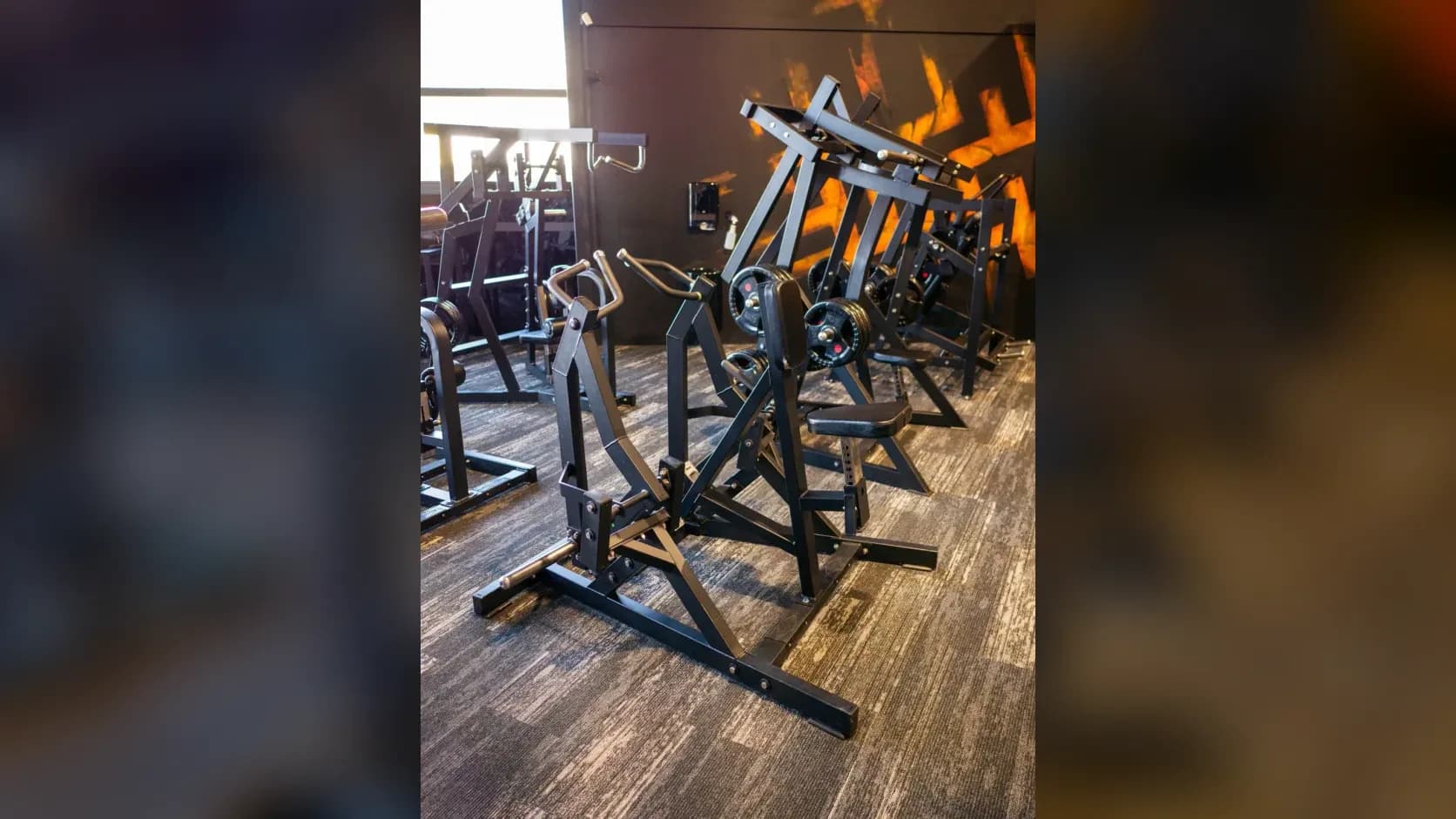
If you want a thicker back, you row. Pulldowns and pull-ups build width by working the lats through a vertical pull, but the dense mid-back that fills out a frame comes from horizontal pulling: rhomboids, mid and lower trapezius, rear delts and the lats working together to drag the elbows back past the torso. The seated row machine is the most reliable tool for that job, because it lets you load the movement heavily without your lower back or momentum getting in the way.
This guide covers the muscles behind mid-back development, why chest-supported and seated machine rows earn a permanent place in a back programme, how grip and handle choice shift the emphasis, the technique cues that matter, and the row options on the floor at Inception Gym.
What the mid-back actually is
"Mid-back" is shorthand for a group of muscles that sit between and below the shoulder blades:
Rhomboids: run from the spine to the inner edge of the shoulder blade. They retract the scapula, pulling the shoulder blades together. Every rowing rep trains them if the shoulder blades actually move.
Middle and lower trapezius: the traps are more than the upper portion you see from the front. The middle fibres retract the scapula alongside the rhomboids; the lower fibres depress and stabilise it. Well-developed mid and lower traps are what give a back its dense, plated look and keep the shoulders sitting in a healthy position.
Latissimus dorsi: the lats extend the shoulder, driving the upper arm down and back. In a horizontal row they work hard, particularly with a closer, neutral grip and elbows tucked toward the ribs.
Rear deltoids: the back of the shoulder assists in pulling the arm rearward. Wider, more elbows-out rowing positions load them more directly.
A complete back programme trains both pulling planes. Vertical pulls bias the lats for width; horizontal pulls bias the scapular retractors for thickness. If your training already covers the vertical side, our guide to lat pulldown variations pairs directly with this one.
Why machine rows instead of just barbell rows
Free-weight rows are valuable, and the barbell row remains a genuine strength builder. But it carries two costs that get more expensive as the weight climbs.
First, your lower back becomes the limiting factor. In a bent-over row the spinal erectors work isometrically to hold your torso position the entire set. For many lifters, the erectors fatigue before the mid-back does, so the set ends when the lower back gives out rather than when the target muscles are fully worked.
Second, momentum creeps in. As a barbell row gets heavy, hips and torso start heaving the weight up. Some body English is defensible for advanced lifters chasing top-end strength; for hypertrophy it mostly transfers the work away from the muscles you are trying to grow.
Seated and chest-supported machine rows remove both problems. A seated cable-style or plate-loaded row supports you at the hips and lets you brace against a chest pad or fixed torso position; a chest-supported row eliminates the lower back from the equation entirely. With your torso fixed, every kilogram on the machine has to be moved by the pulling muscles. You can take sets close to failure safely, control the negative without your posture collapsing, and progress the load in small, honest increments.
That is the general case for machines in back training: stability buys targeted effort. The broader trade-offs between the two approaches are covered in free weights vs machines; for back work specifically, the answer is rarely either-or. Machines let you push the target muscles harder, free weights build the stabilising strength around them. Use both.
Grip and handle variations: how they shift the emphasis
The seated row is really a family of exercises, and the handle you pick decides which part of the back does most of the work. Three broad options:
Wide, pronated grip
Hands wide, palms down, elbows tracking out at roughly 45 to 60 degrees from the torso. The wide position shortens the lats' contribution and shifts load toward the rhomboids, mid traps and rear delts. Pull to the upper abdomen or lower chest. This is the version to choose when upper-back thickness and rear delt development are the priority.
Neutral, shoulder-width grip
Palms facing each other, elbows tracking at a moderate angle. This is the most natural pulling position for most shoulders and lets you handle the most weight. It spreads the work across lats, rhomboids and traps fairly evenly, which makes it the sensible default for a main heavy row.
Close, neutral grip
Hands close together, elbows tucked tight to the ribs, pulling low toward the navel. The tucked elbow path puts the lats in their strongest line of pull, so this version biases lat thickness through the lower portion of the muscle. Expect a strong stretch at the front of the rep; use it.
None of these is superior. Rotating grips across a training block, or running two row variations in the same week with different handles, covers the whole mid-back rather than hammering one line of pull.
Technique: the cues that matter
Machine rows are forgiving, which is exactly why sloppy reps are common on them. The cues below apply across every variation.
Set the torso first. On a seated row, sit tall with a slight forward hinge at the hips and the chest up. On a chest-supported machine, press the sternum into the pad and keep it there for the whole set. If your torso whips backward to start each rep, the weight is too heavy.
Drive the elbows, not the hands. Think of the hands as hooks and pull the elbows back past the torso. Lifters who think about pulling with their hands tend to over-involve the biceps and cut the range short.
Squeeze the shoulder blades together. At the end of each rep the scapulae should retract fully, as if pinching a pencil between them. This is the rhomboid and mid-trap contraction the exercise exists to produce. A brief pause in the squeezed position confirms you got there.
Control the negative. Let the weight pull your arms forward over two to three seconds and allow the shoulder blades to protract at the end, giving the mid-back a loaded stretch. The lengthened position under tension is where a large share of the growth stimulus lives; dropping the weight back to the stack throws it away.
Full range, honest load. A deep stretch at the front and a complete squeeze at the back beats a heavier half-rep every time.
The row machines at Inception Gym
Inception's floor carries 92 machines, 43 of them plate-loaded, and the horizontal pulling section is one of the deepest in the building:
Plate-loaded seated row: the workhorse. Fixed torso position, plate loading for small precise jumps, and enough capacity to remain challenging for advanced lifters. This is the machine to build a heavy progressive row around.
T-bar row: a chest-supported plate-loaded row with a more upright pulling angle. It handles heavy loads well and the chest pad removes the lower back entirely, so it suits high-effort sets late in a session when your erectors are already fatigued from earlier work.
Iso-lateral high row: each arm loads and moves independently, which exposes and corrects side-to-side strength imbalances. The higher pulling angle sits between a row and a pulldown, loading the lats through a long range while still demanding scapular control.
Plate-loaded bent-over row: a guided version of the classic barbell row. The fixed path keeps the back-thickness benefit of the bent-over position without your lower back holding the hinge unassisted, which makes it the bridge between the free-weight movement and the fully supported machines above.
Four distinct machines means four distinct lines of pull, and it means you are not queuing for the one row station on a busy evening. The full inventory, including every handle and attachment, is listed on the equipment page, and the wider back line-up gets its own walkthrough in back training machines at Inception.
Slotting machine rows into your week
A simple structure that covers the whole back:
- Session 1: heavy vertical pull (pulldown or pull-up), then plate-loaded seated row with a neutral grip, 3 to 4 sets of 6 to 10 reps.
- Session 2: chest-supported T-bar or iso-lateral high row, 3 sets of 10 to 15 reps, then a wide-grip row or rear delt work for the upper back.
Take most sets within one or two reps of failure, add load or reps week to week, and give the mid-back the same progression discipline you give pressing. Rowing responds to volume and consistency, not novelty.
---
The plate-loaded seated row, T-bar row, iso-lateral high row and bent-over row are part of the 92-machine floor at Inception Gym, Tower Junction, Addington. [View all equipment](/facilities/equipment) or [start with a free trial](/memberships/free-trial) and try every one of them.