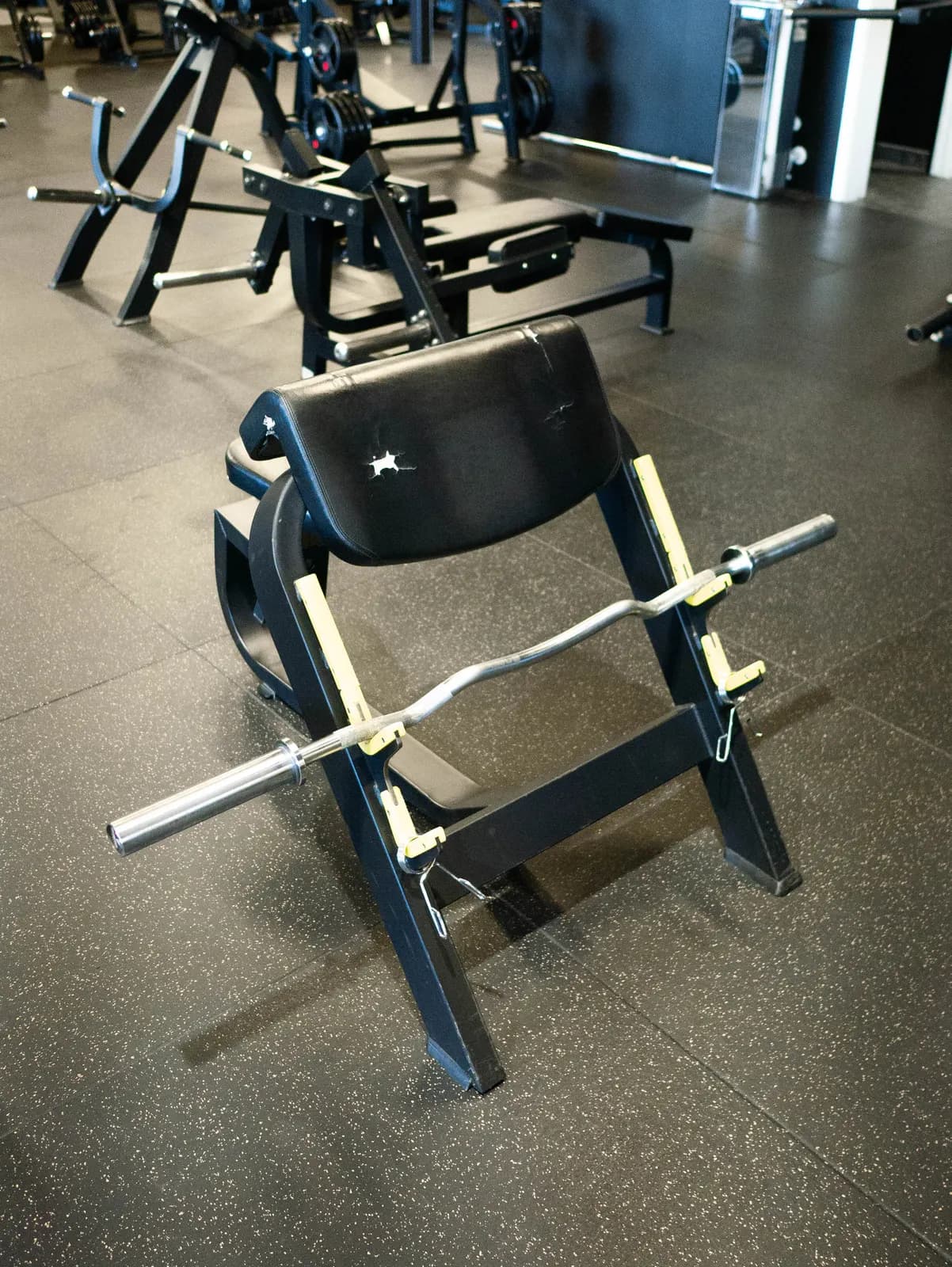
Plate Loaded Barbell Preacher Curl Pad
ArmsPlate-Loaded
A preacher curl bench paired with a barbell pad for strict, isolated bicep work. The preacher angle stops the elbows drifting and locks the contraction.
Default order: plate-loaded first, then pin-loaded, then free weights, then cardio. Filter by machine type or muscle group. Items with multiple variants (e.g. dumbbells) carousel through the photos.
Filter equipment
Machine type
Muscle group
Showing 71 machines
A preacher curl bench paired with a barbell pad for strict, isolated bicep work. The preacher angle stops the elbows drifting and locks the contraction.
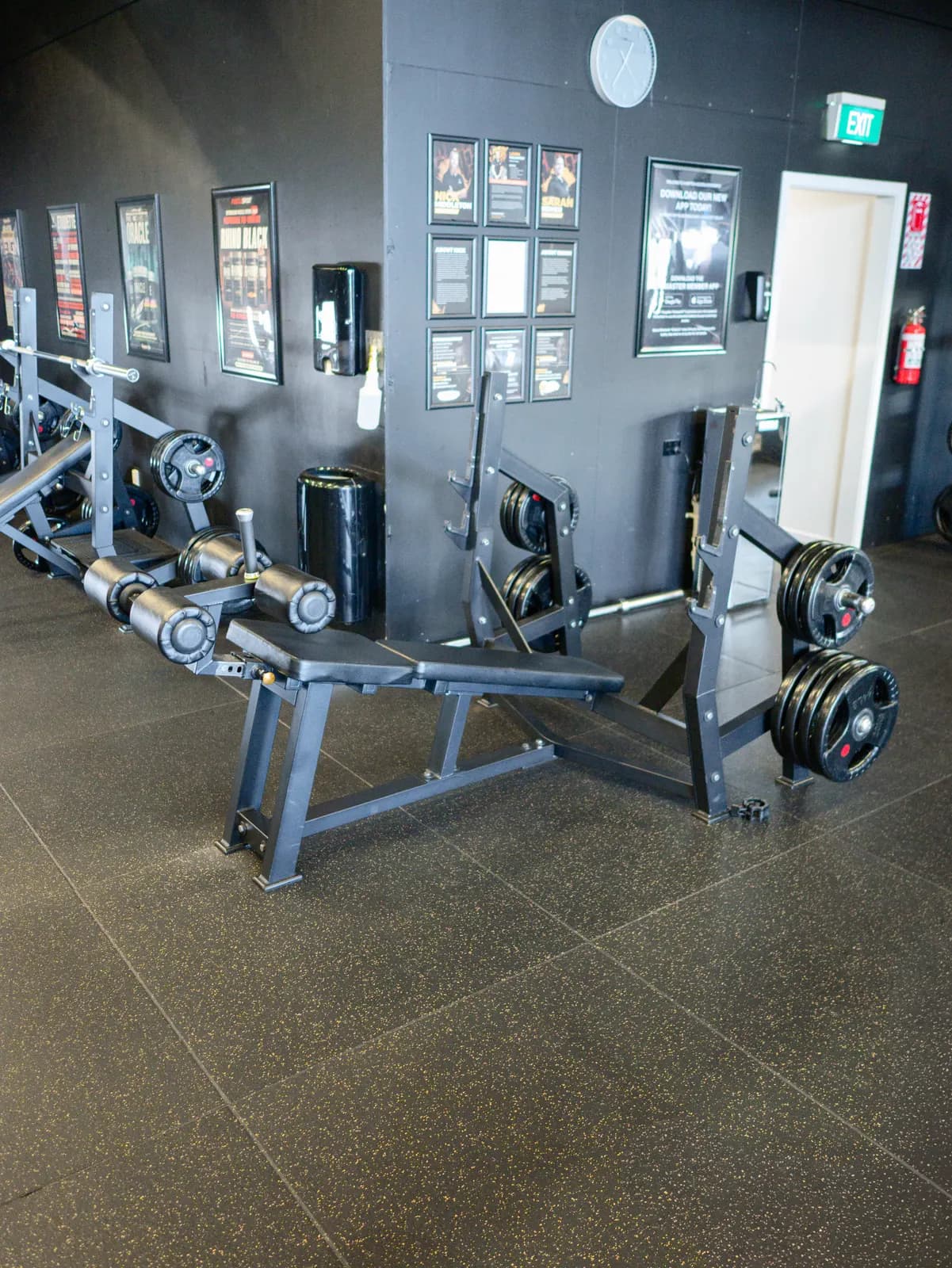
Decline barbell bench press for the lower chest. Plate-loaded and stable enough for heavy press work as a triceps and lower-pec finisher.
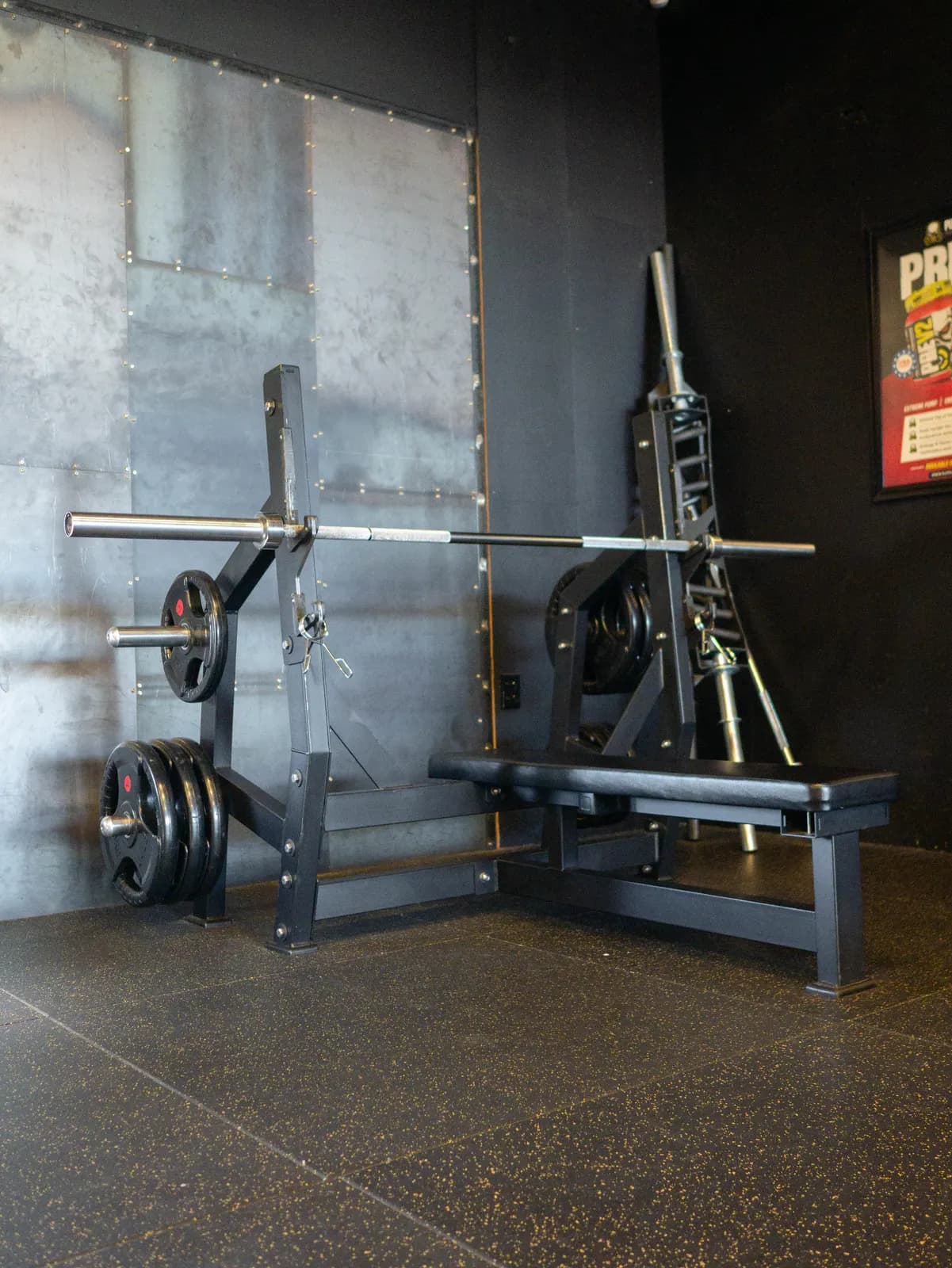
A standard flat barbell bench press station. Plates loaded, fixed safeties, the bread-and-butter station for upper-body pressing strength.
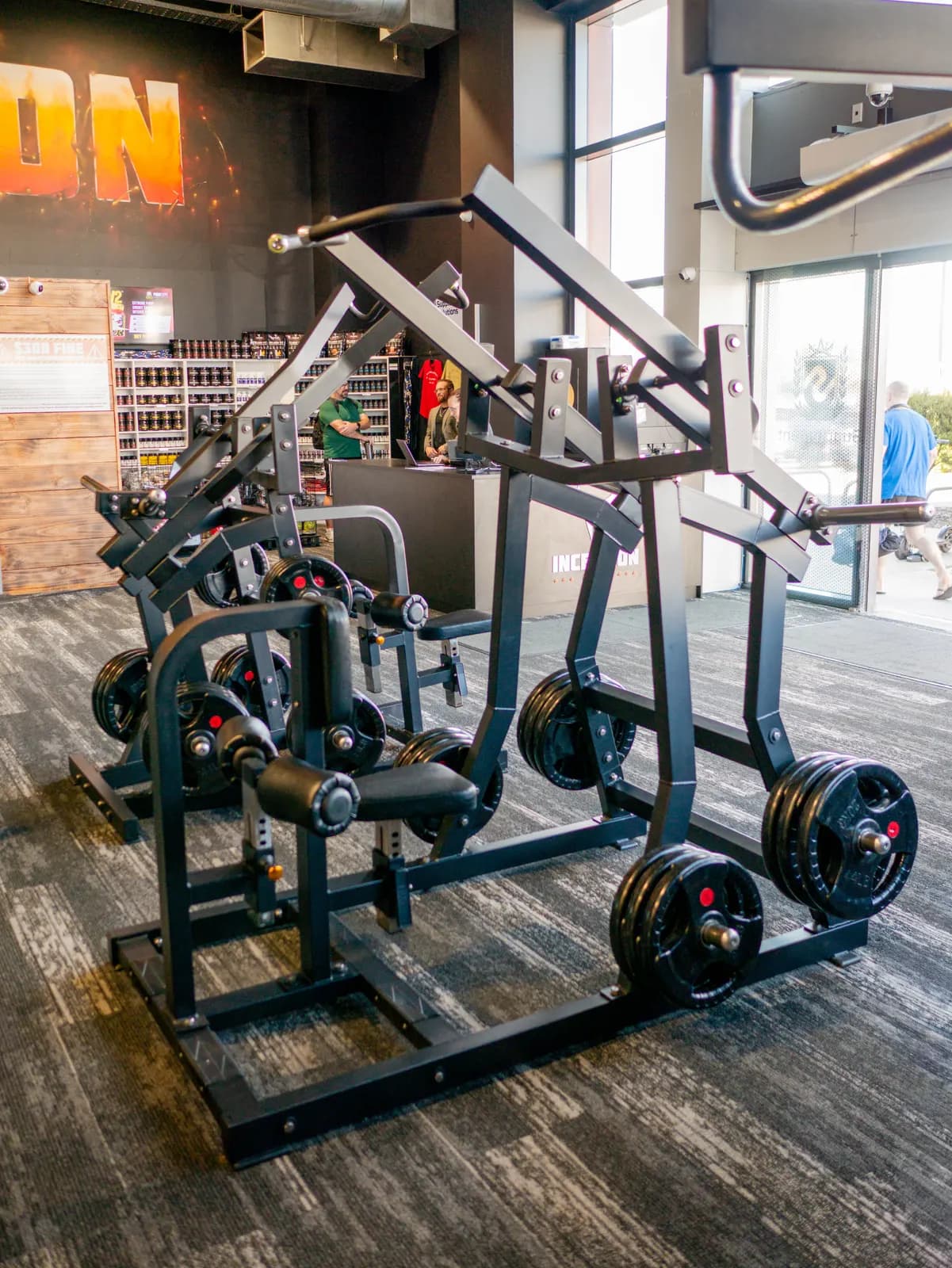
Plate-loaded front lat pull-down. Progressive overload isn't capped by the top of a weight stack. Useful for building back width.
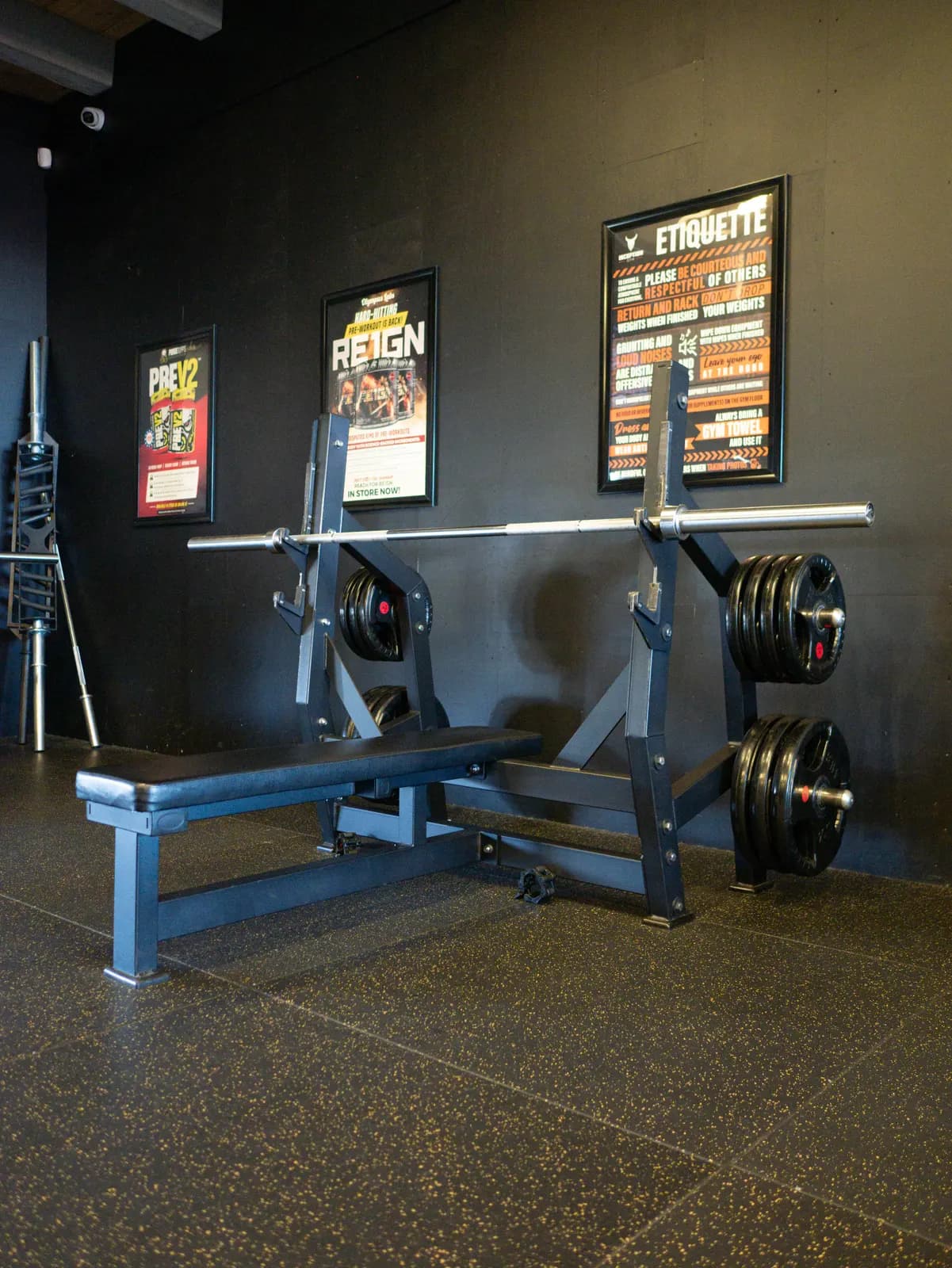
A horizontal-track flat barbell bench setup that supports the bar through the press for a guided lift. Useful for high-volume chest pressing without a spotter.
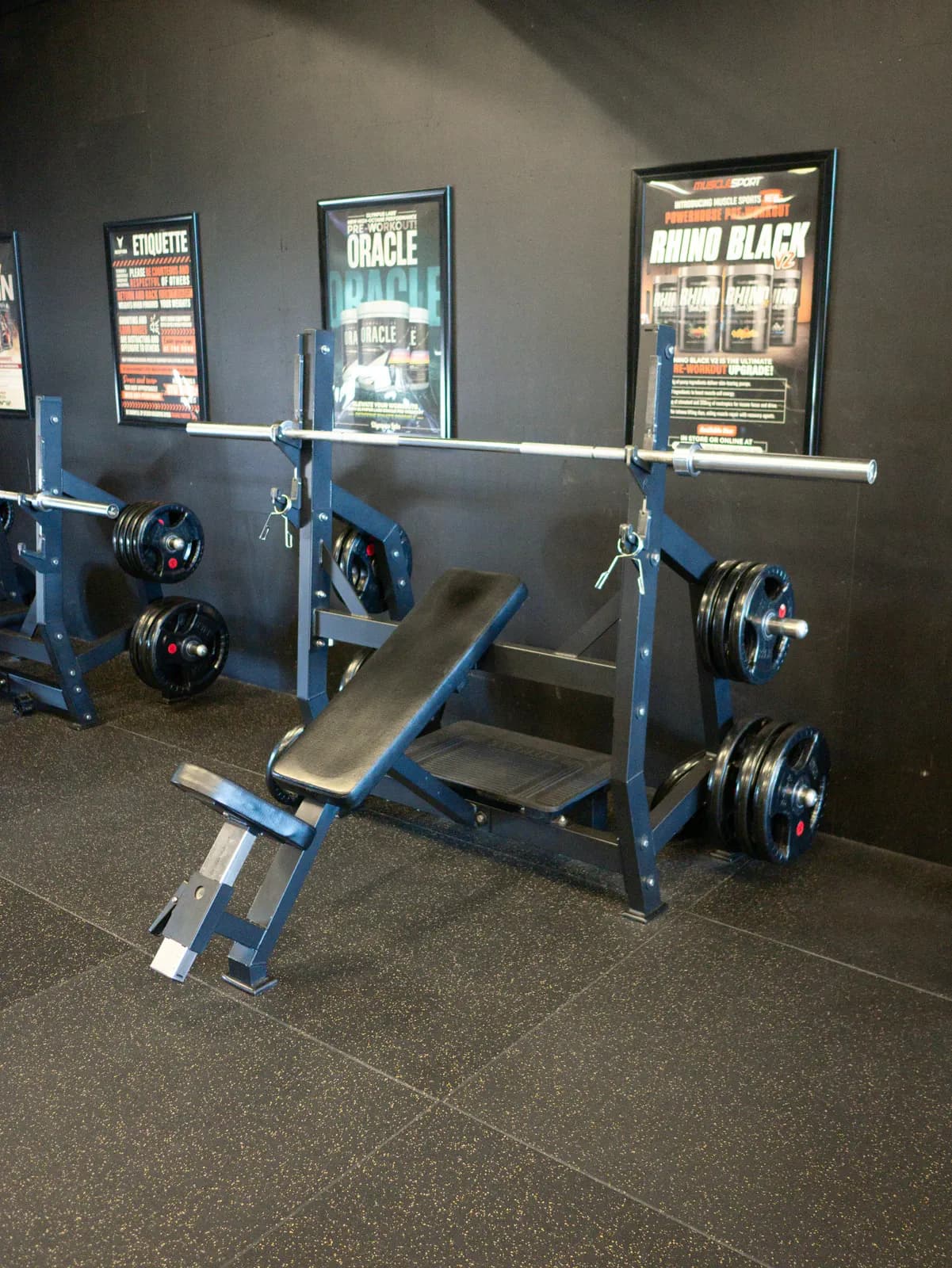
Incline barbell bench press that targets upper chest and front delts. Plate-loaded with a fixed angle that keeps shoulders in a strong position throughout.
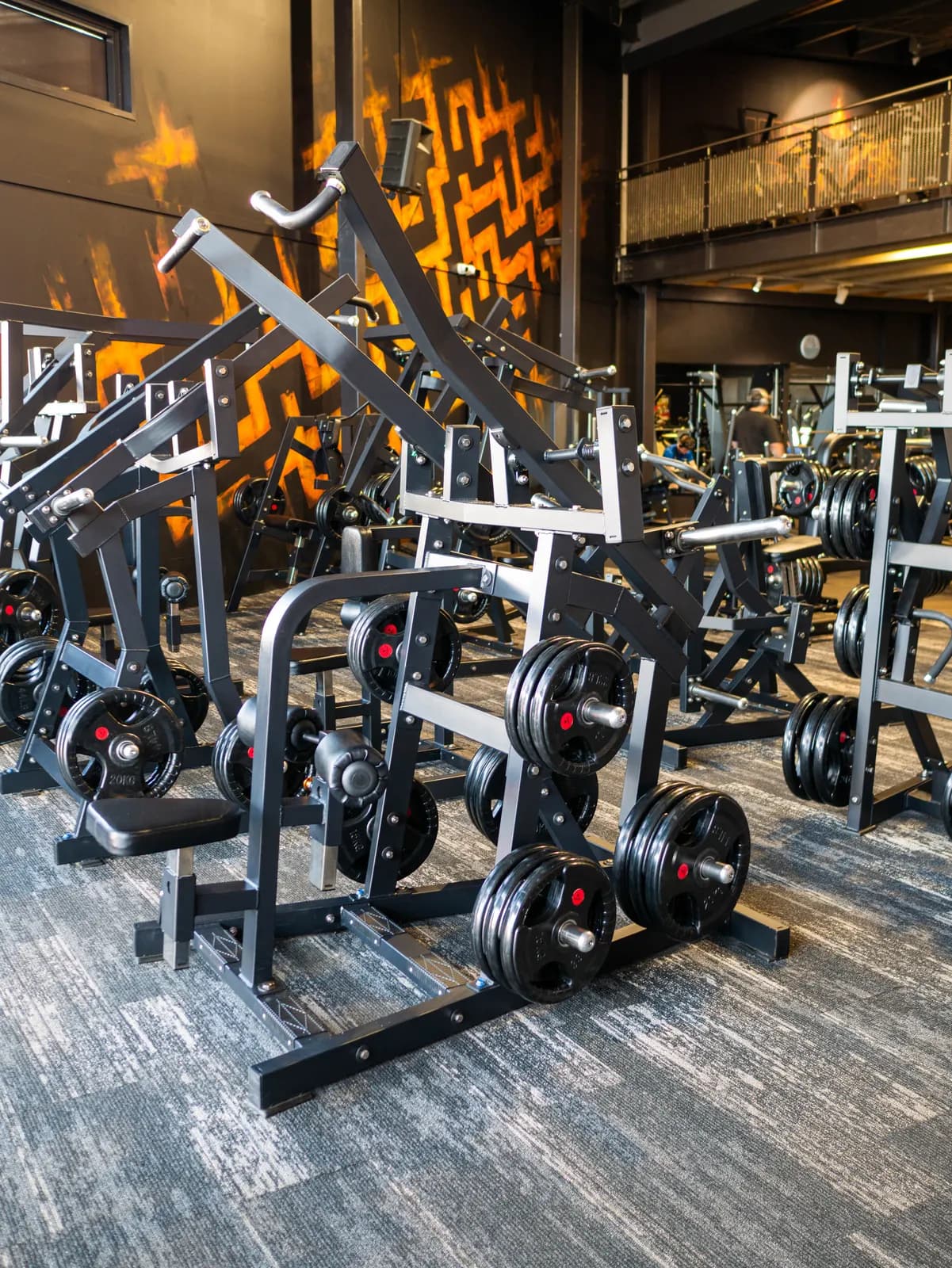
A standard plate-loaded lat pull-down for back width and mid-back strength. Different grips shift the emphasis from outer lats to mid-back.
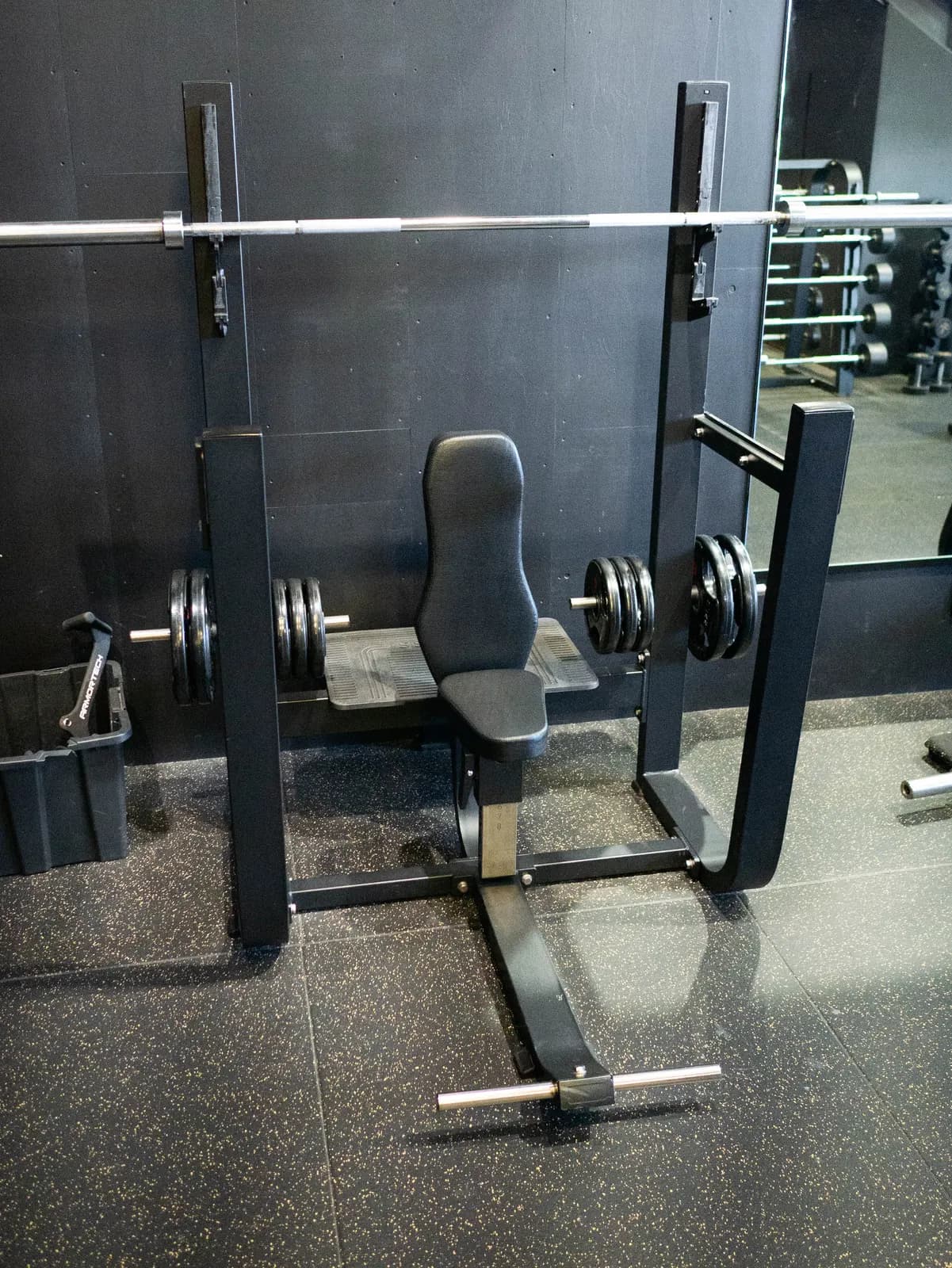
A guided overhead barbell press machine. Locks the bar path, so you can train heavy shoulder pressing without losing position under fatigue.
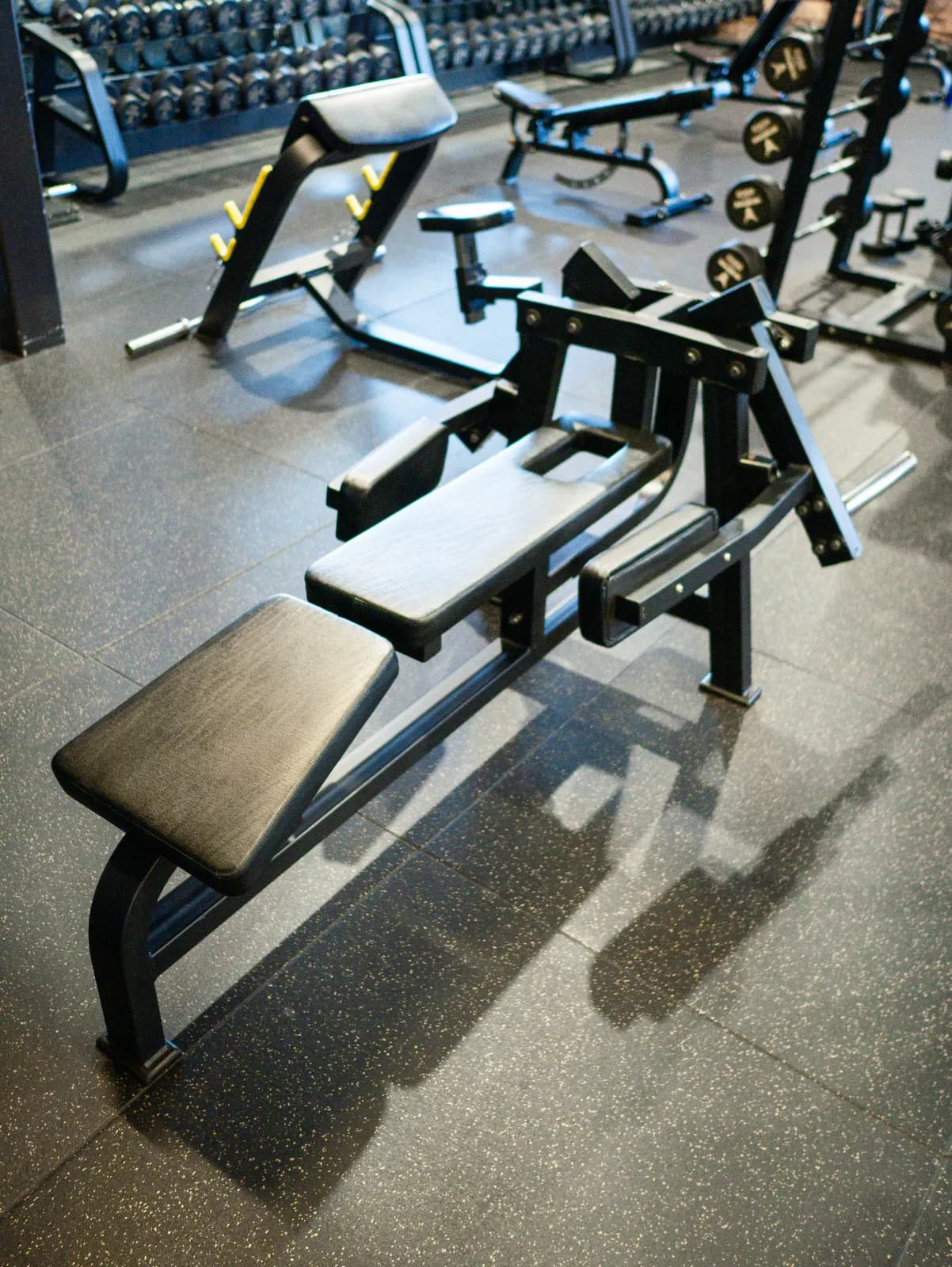
A rear delt fly machine that targets the back of the shoulder, which most lifters undertrain. Useful for posture, shoulder health, and finishing a back or pull day.
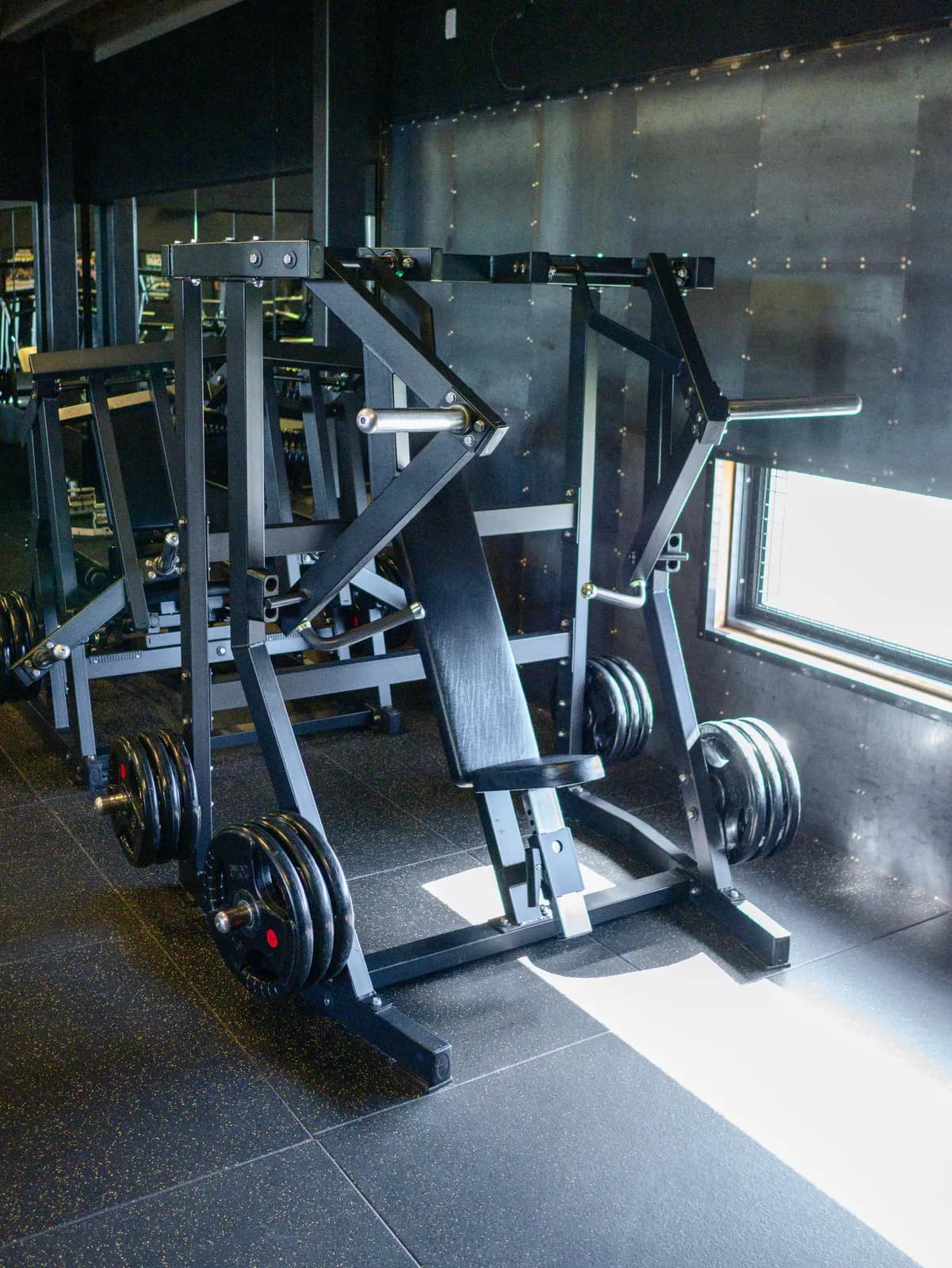
An upright seated chest press loaded by plates. Easier on the shoulders than a free-weight bench for many lifters, and useful for chasing volume without a spotter.
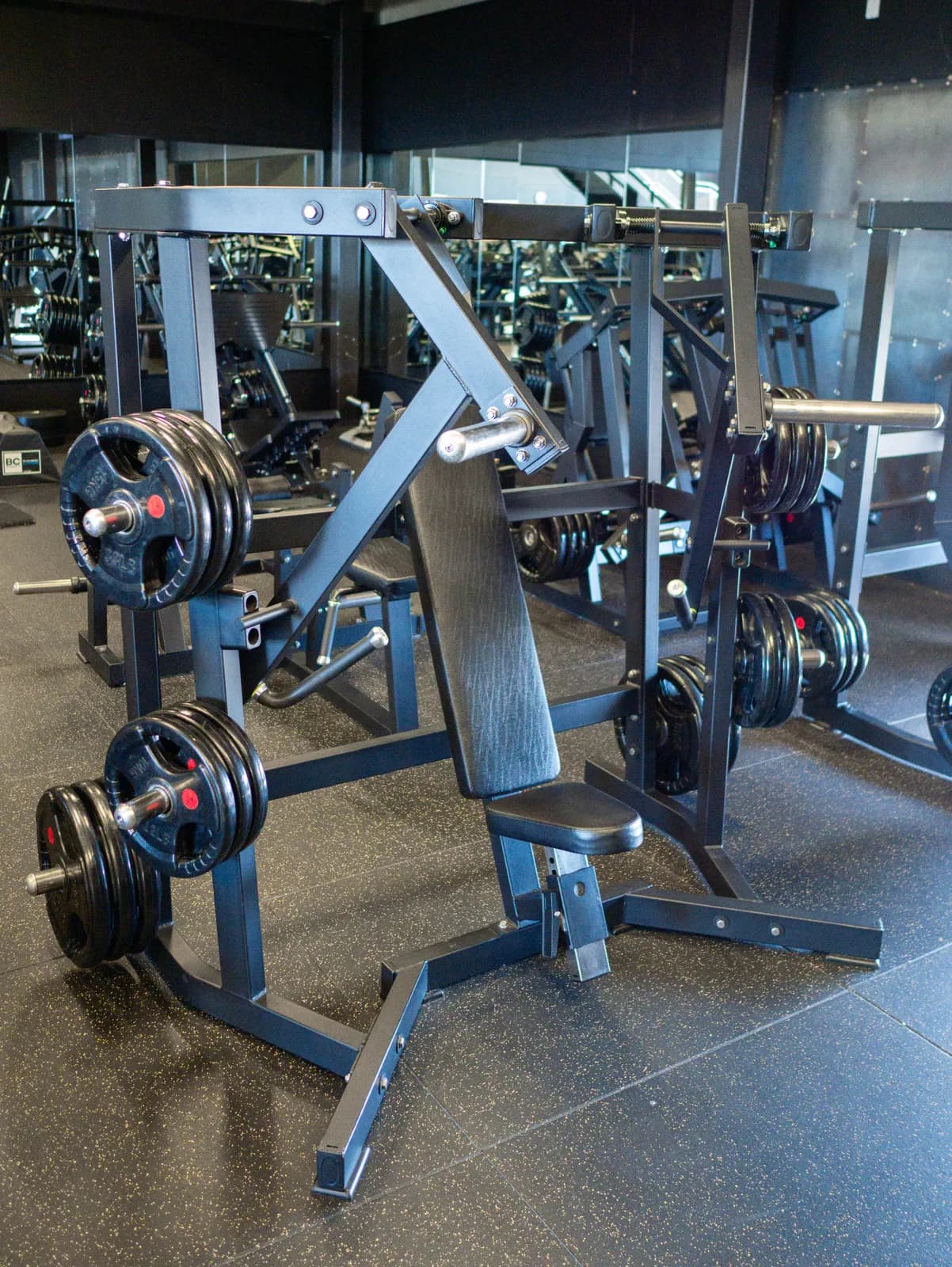
A converging-arm chest press where the handles drive together at lockout. Fires the inner-pec contraction harder than a parallel-track press.
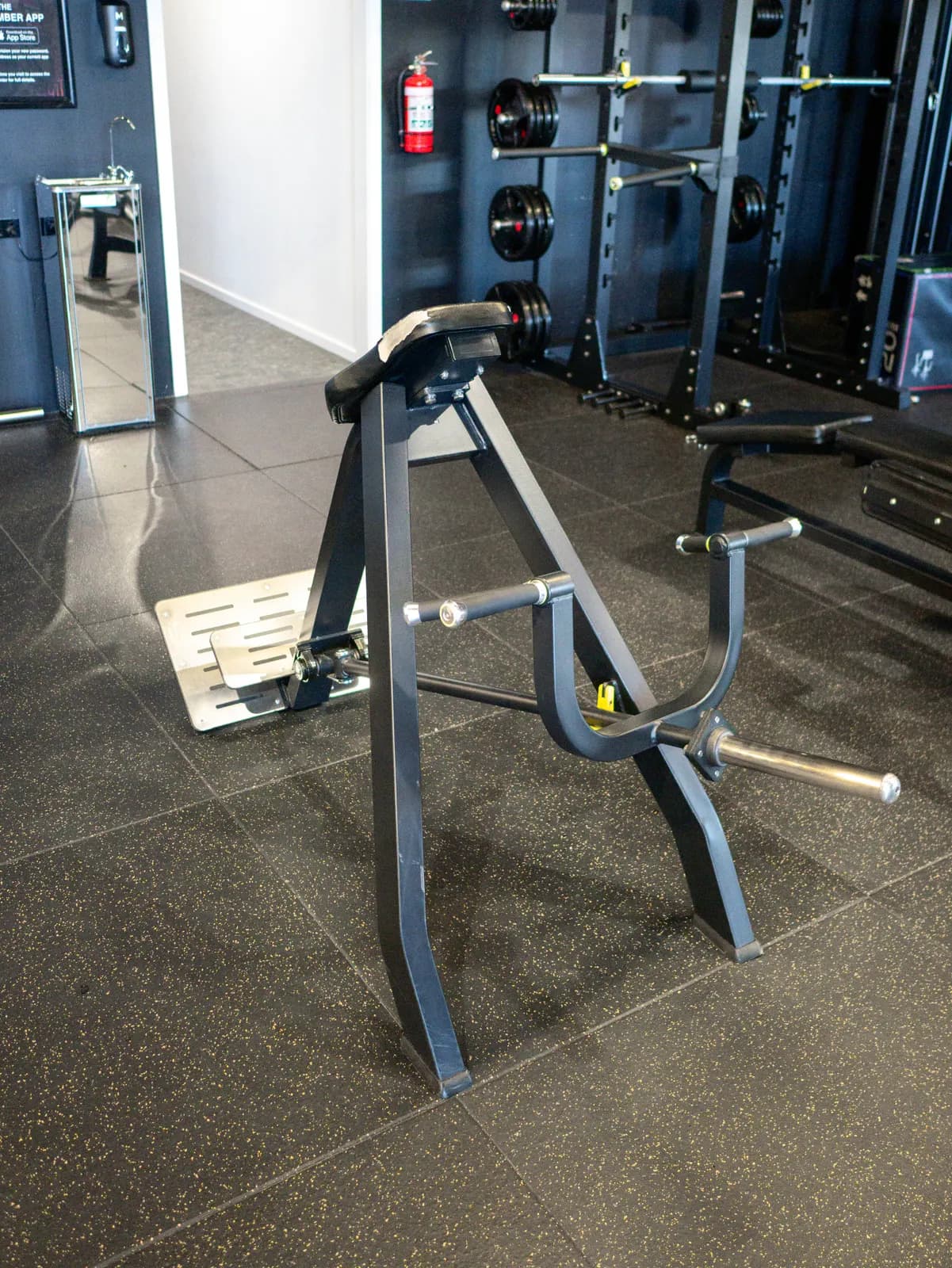
A landmine-style T-bar row for thick mid-back development. Hits the lats, traps, and rhomboids, and takes loads close to deadlift weights.
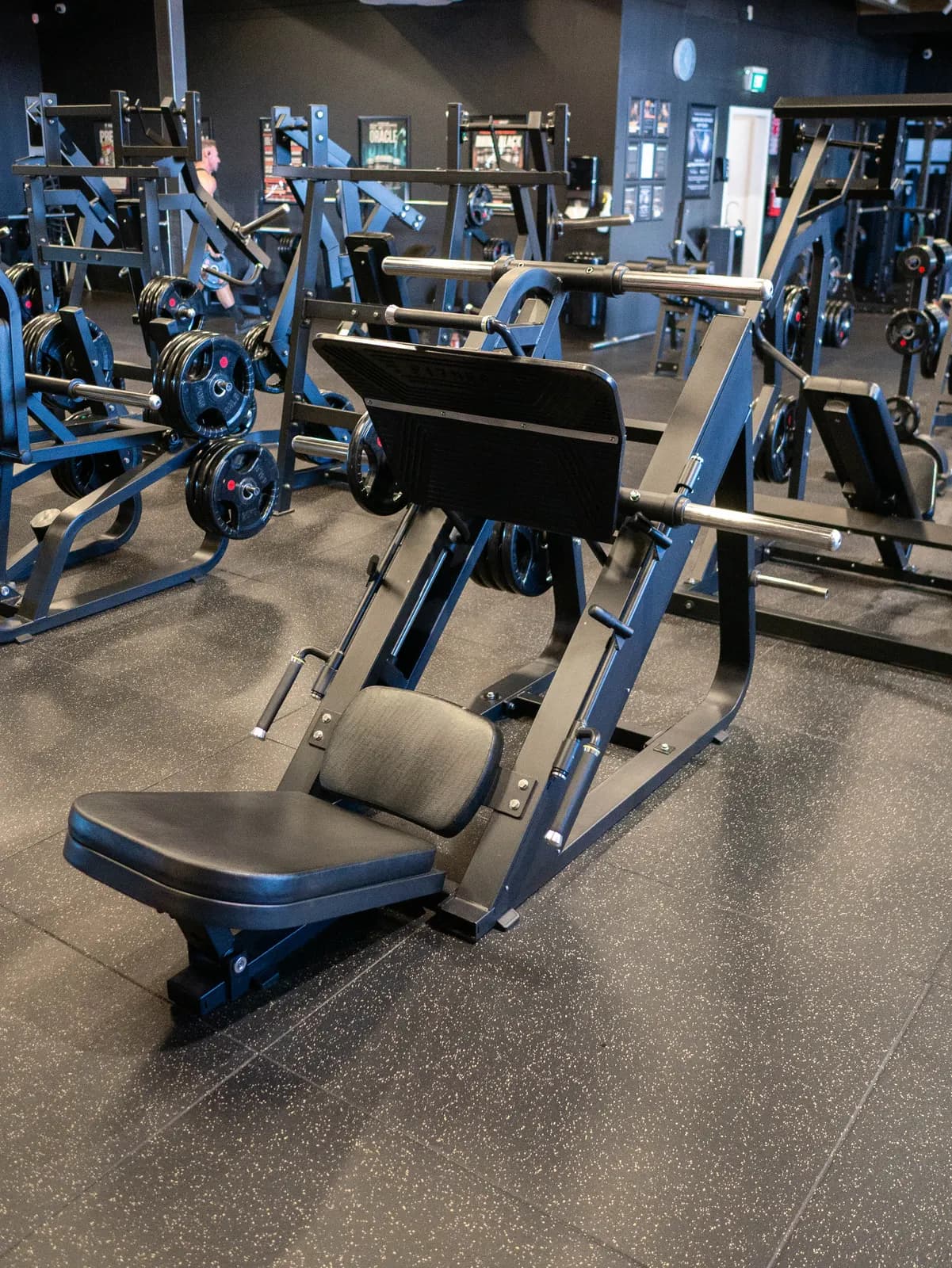
An angled seated leg press with a deeper range of motion than the vertical-back version. A staple of leg day for intermediate lifters and anyone training around lower-back issues.
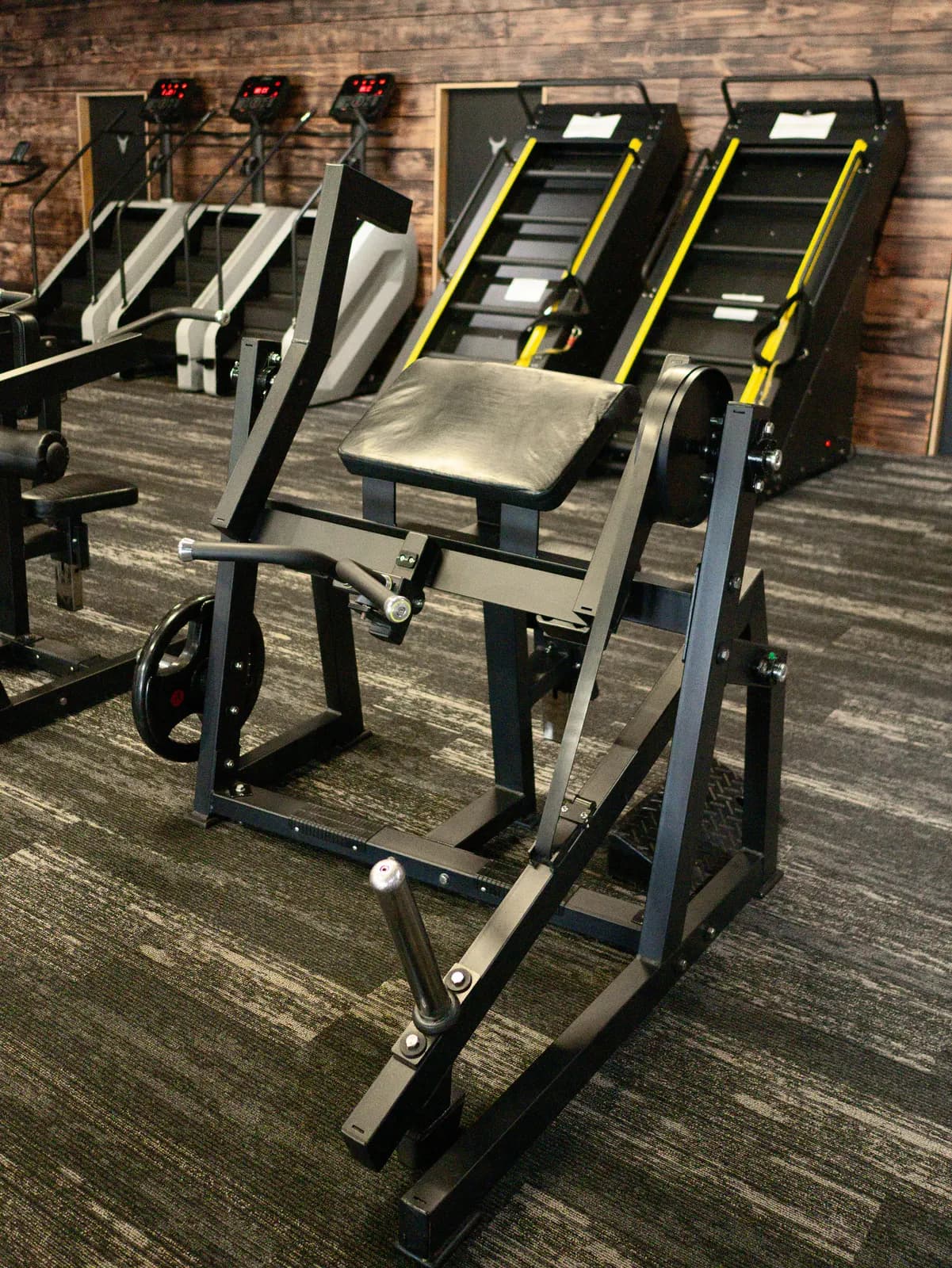
A guided barbell bicep curl station. Removes momentum and forces strict form. Useful for chasing arm hypertrophy without a partner calling form cues.
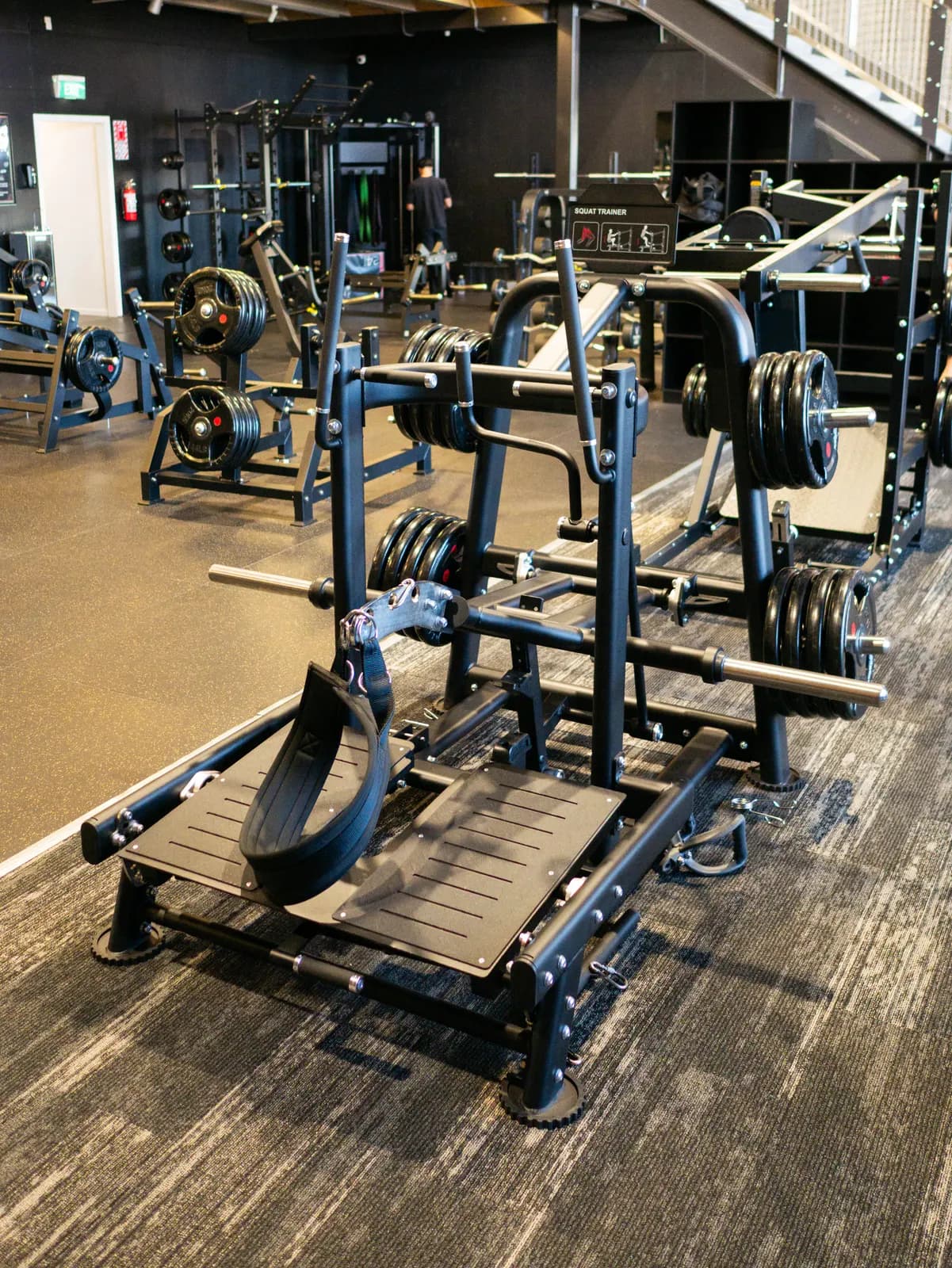
Loads the legs through a hip belt instead of the upper back, so the lower back stays neutral. Useful for high-volume leg days, returning to training after a back niggle, or quad and glute work without bar compression.
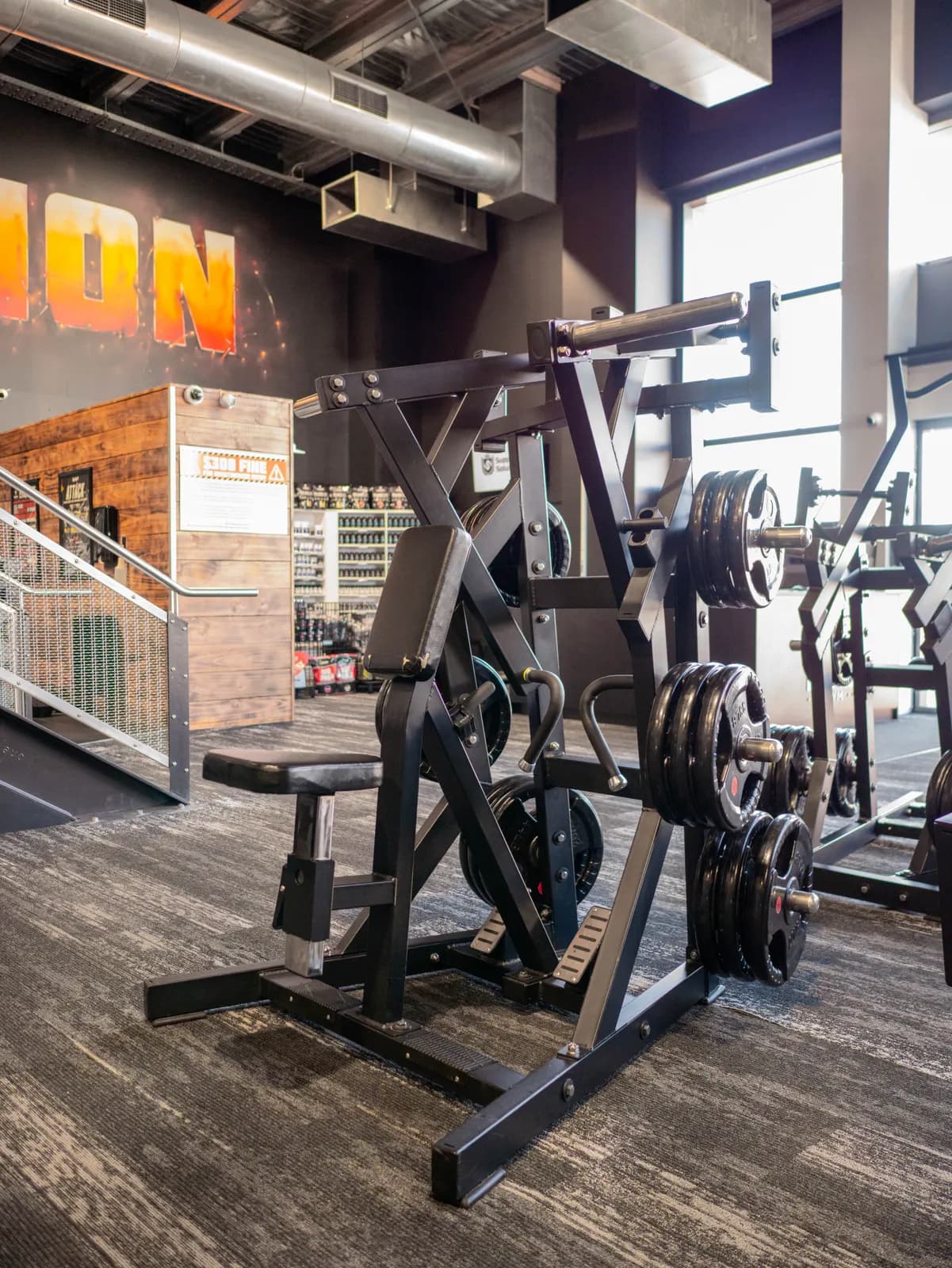
A guided bent-over row that gives you the back-thickness benefit of a barbell row without the lower-back fatigue of holding the position free-weight.
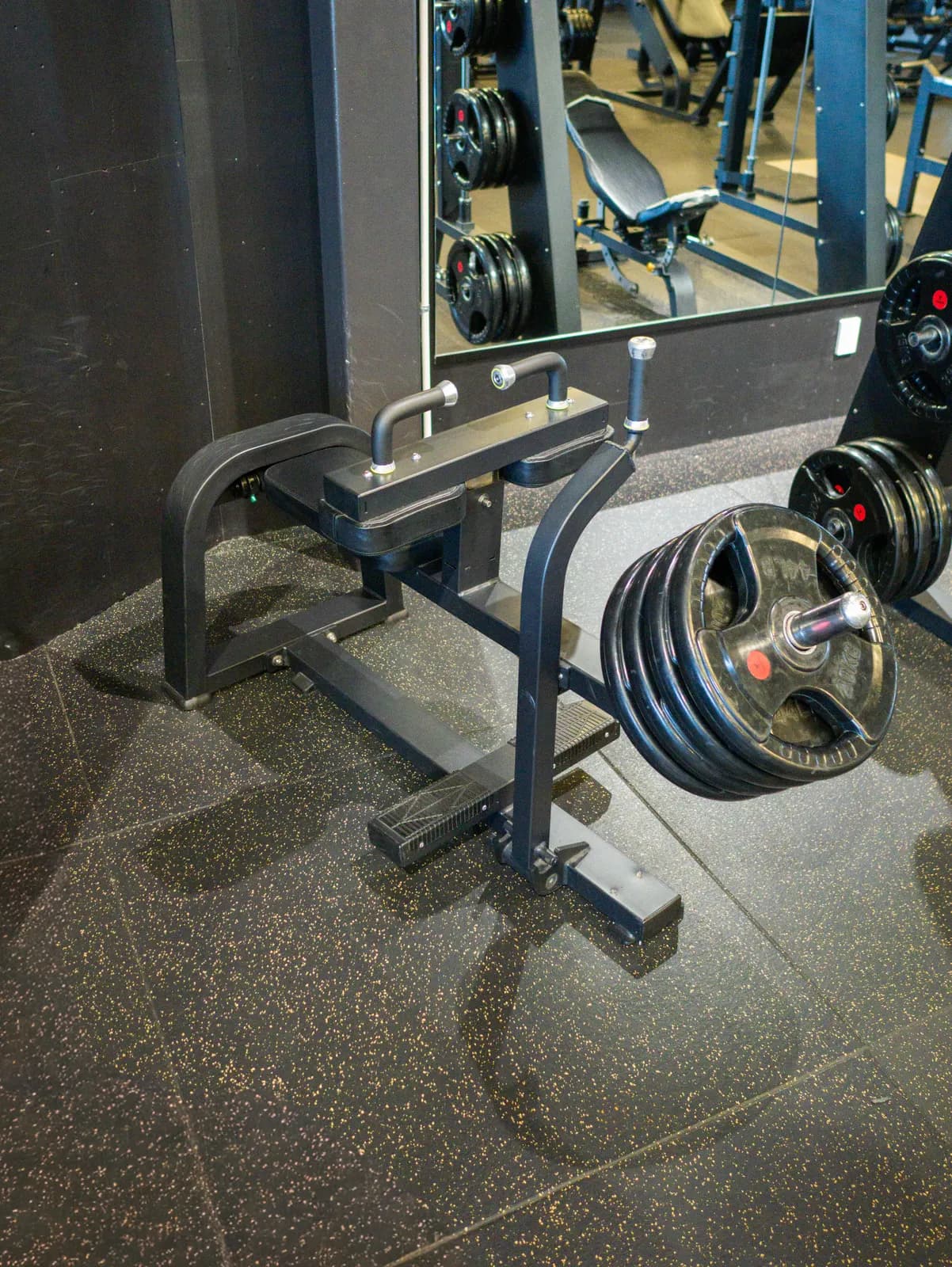
Standing calf raise loaded by plates with a deep stretch at the bottom and a hard contraction at the top. For calves that have stopped responding to bodyweight or smith-machine work.
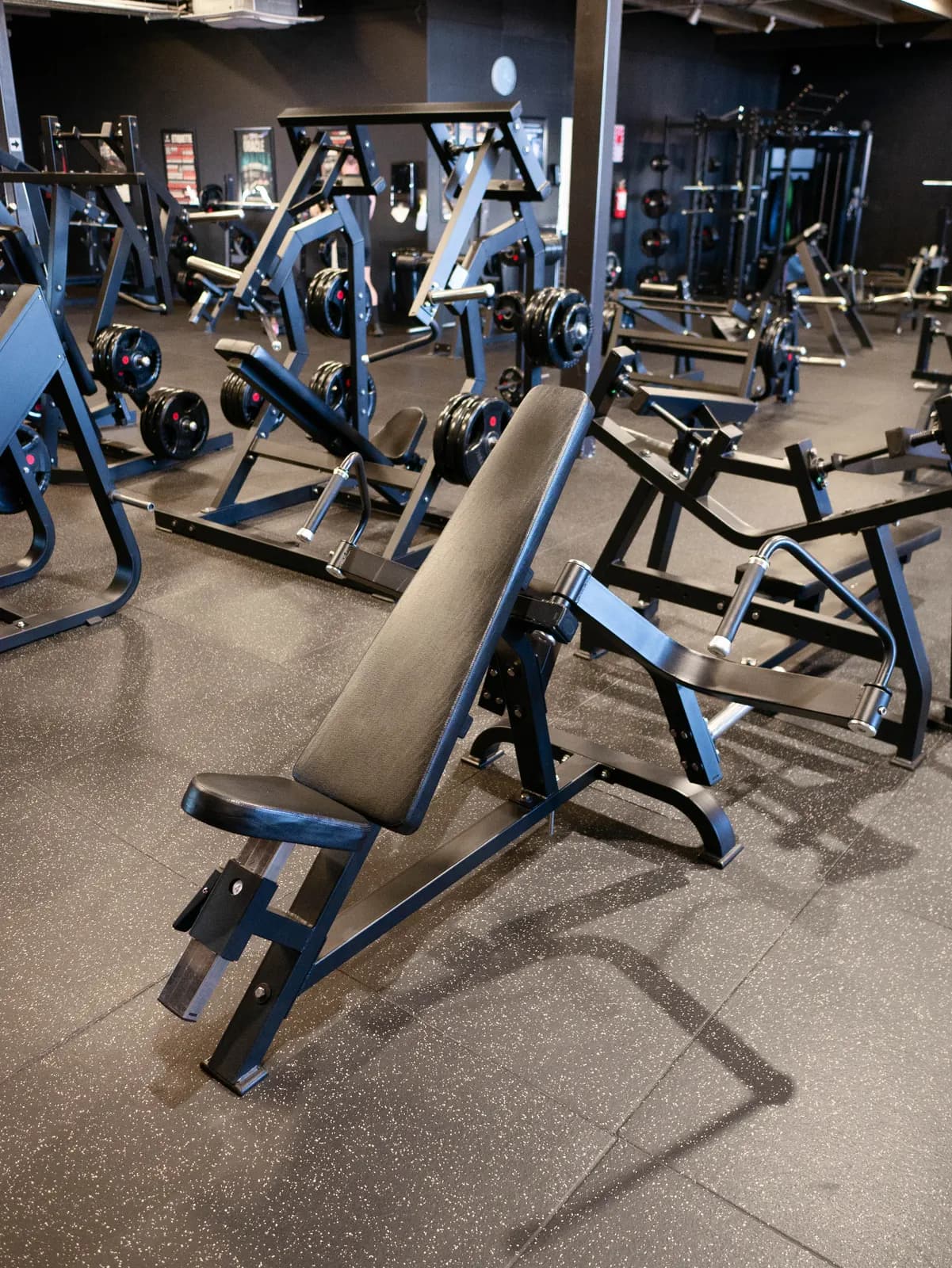
A pec deck with a long stretch and a clean contraction. Use it for hypertrophy work, supersets after pressing, or a warm-up to wake the pecs up.
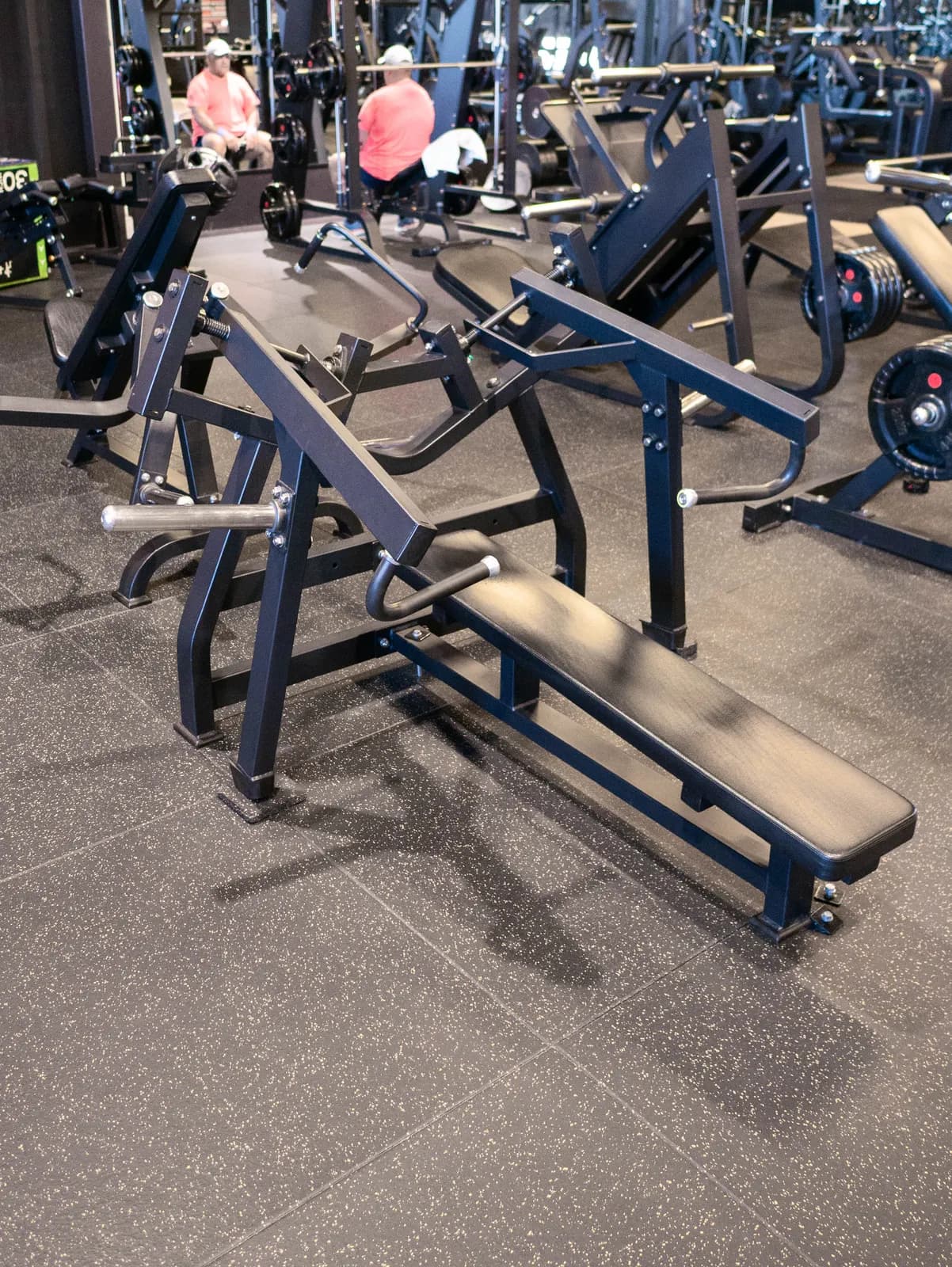
A guided flat chest press that mimics a flat bench but fixes the path and removes the need for a spotter. Lets you push closer to failure on chest, anterior delt, and triceps.
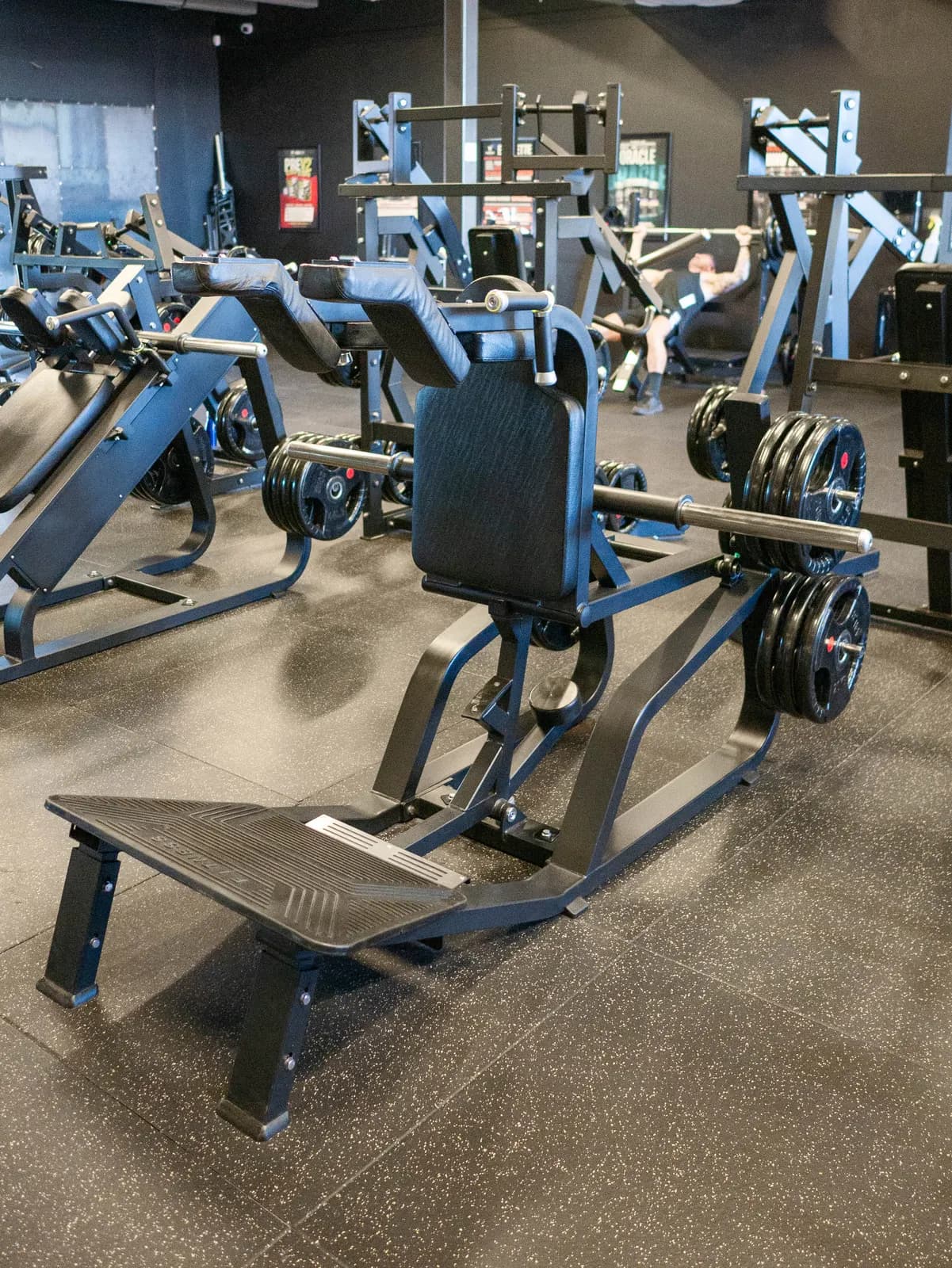
A guided front-squat platform with shoulder pads instead of a clean grip. Good for quad development if wrists or shoulders limit a true front squat.
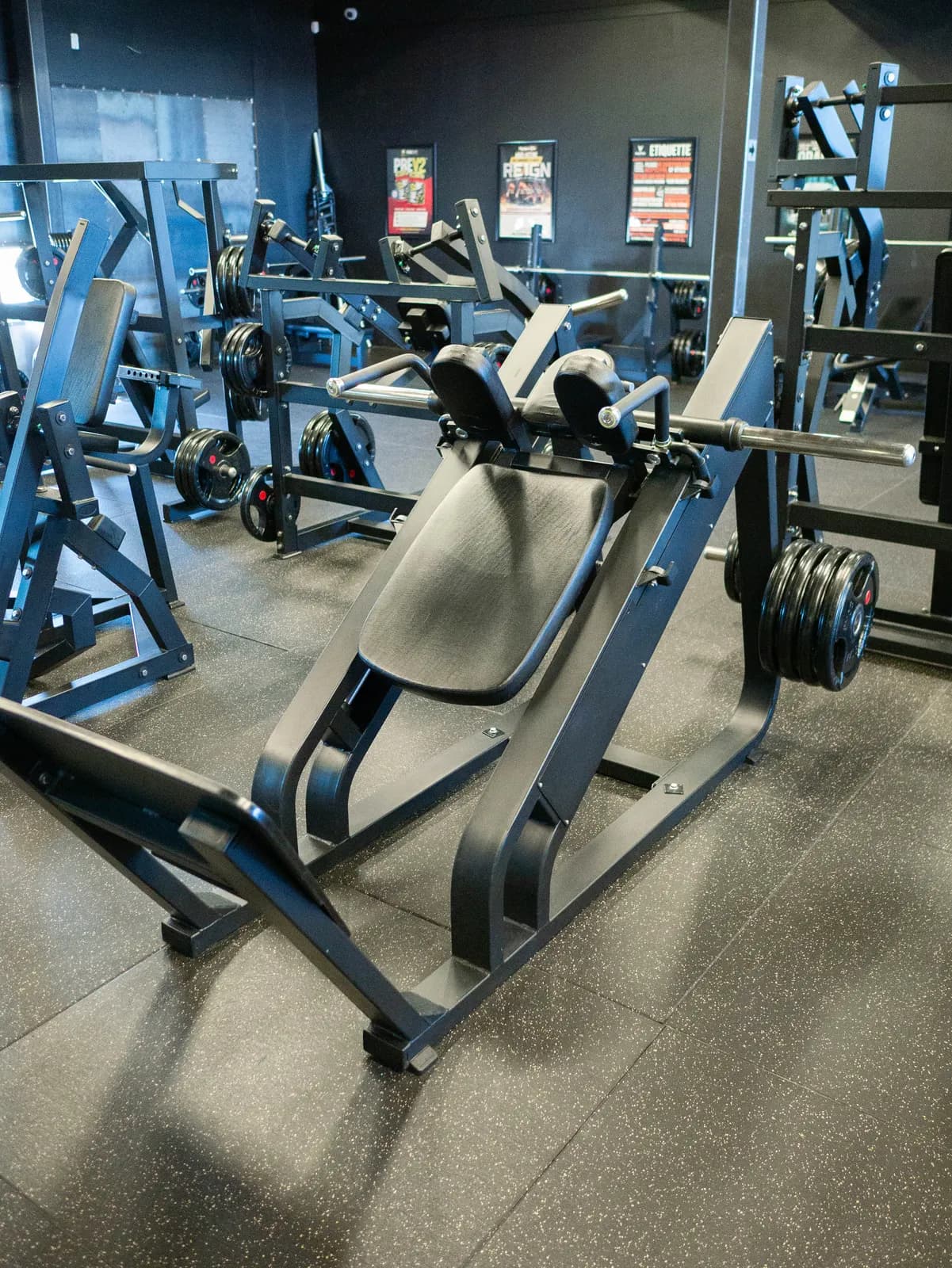
A 45-degree sled that locks you into a strong squat position and lets you load the quads heavily without a spotter. Foot position shifts the emphasis: low for quads, high for glutes and hamstrings.
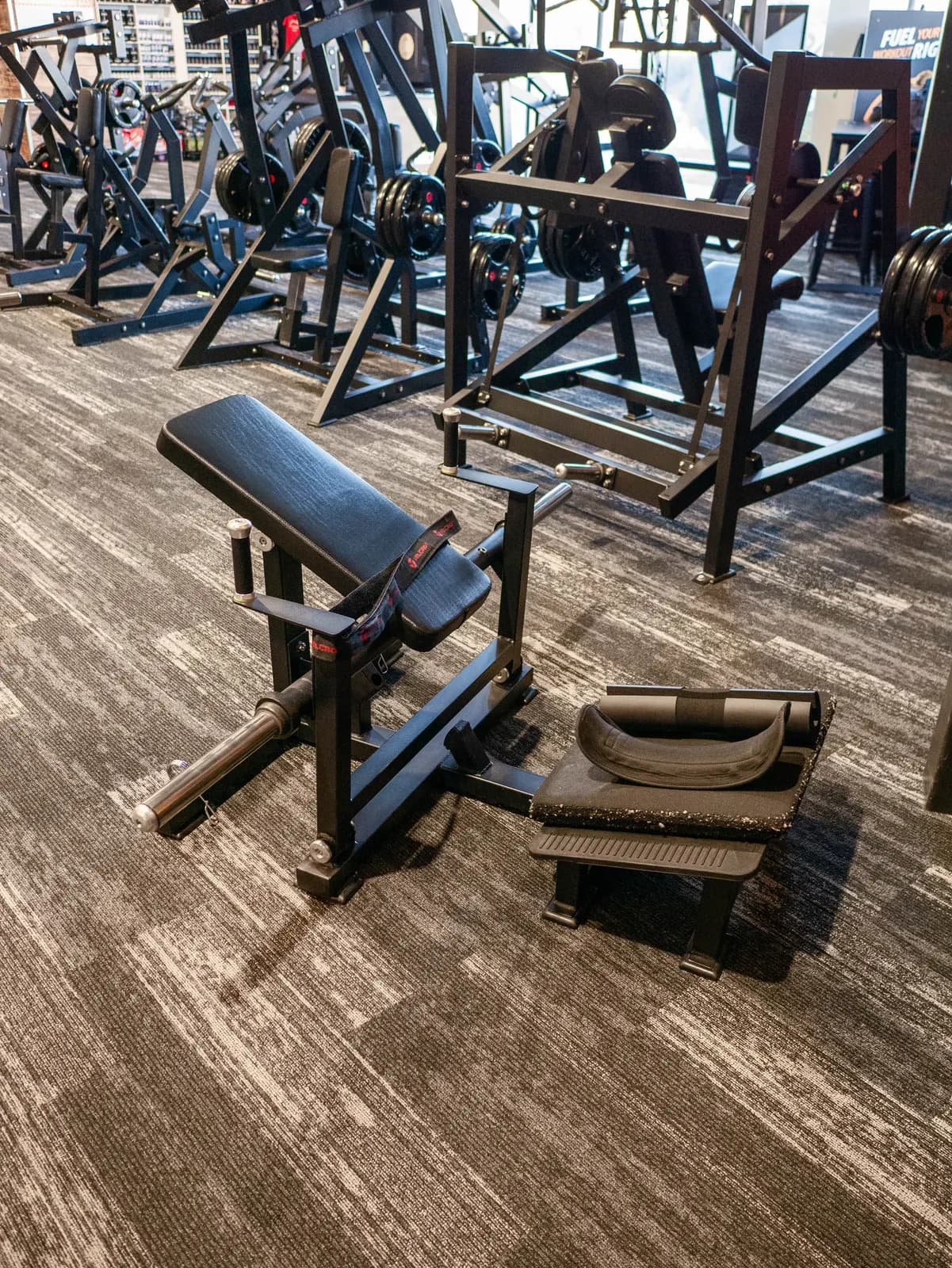
A dedicated hip thrust station with a back pad and a barbell pad on a guided arc. Faster setup and better load tolerance than free-weight hip thrusts, with a clean glute lockout each rep.
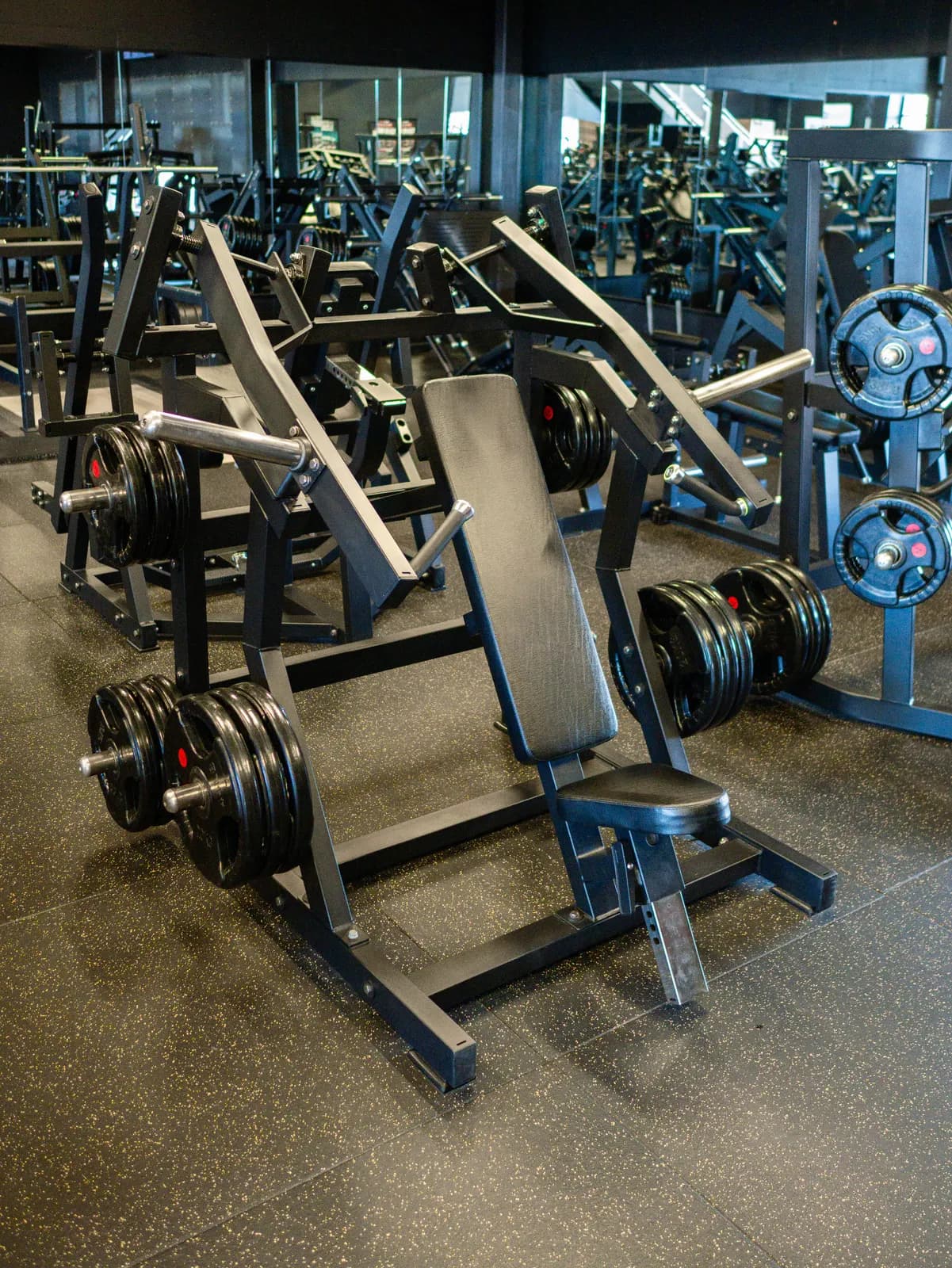
Incline plate-loaded chest press for the upper chest. Cleaner shoulder position than a free-weight incline and easier to train solo to failure.
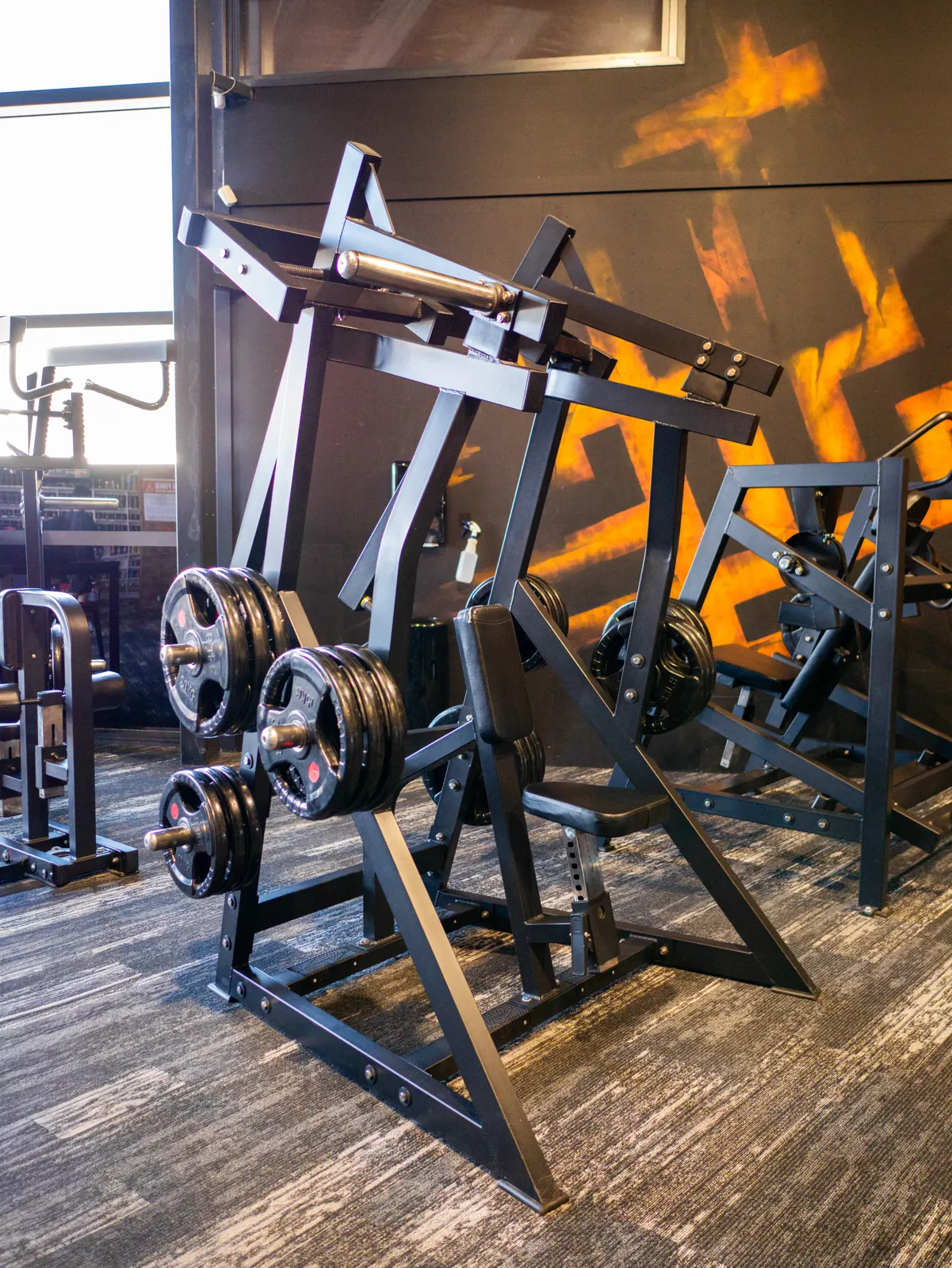
An iso-lateral D.Y. (deltoid + Y-row) station that lets you train each side independently and target the side and rear delts on one machine.
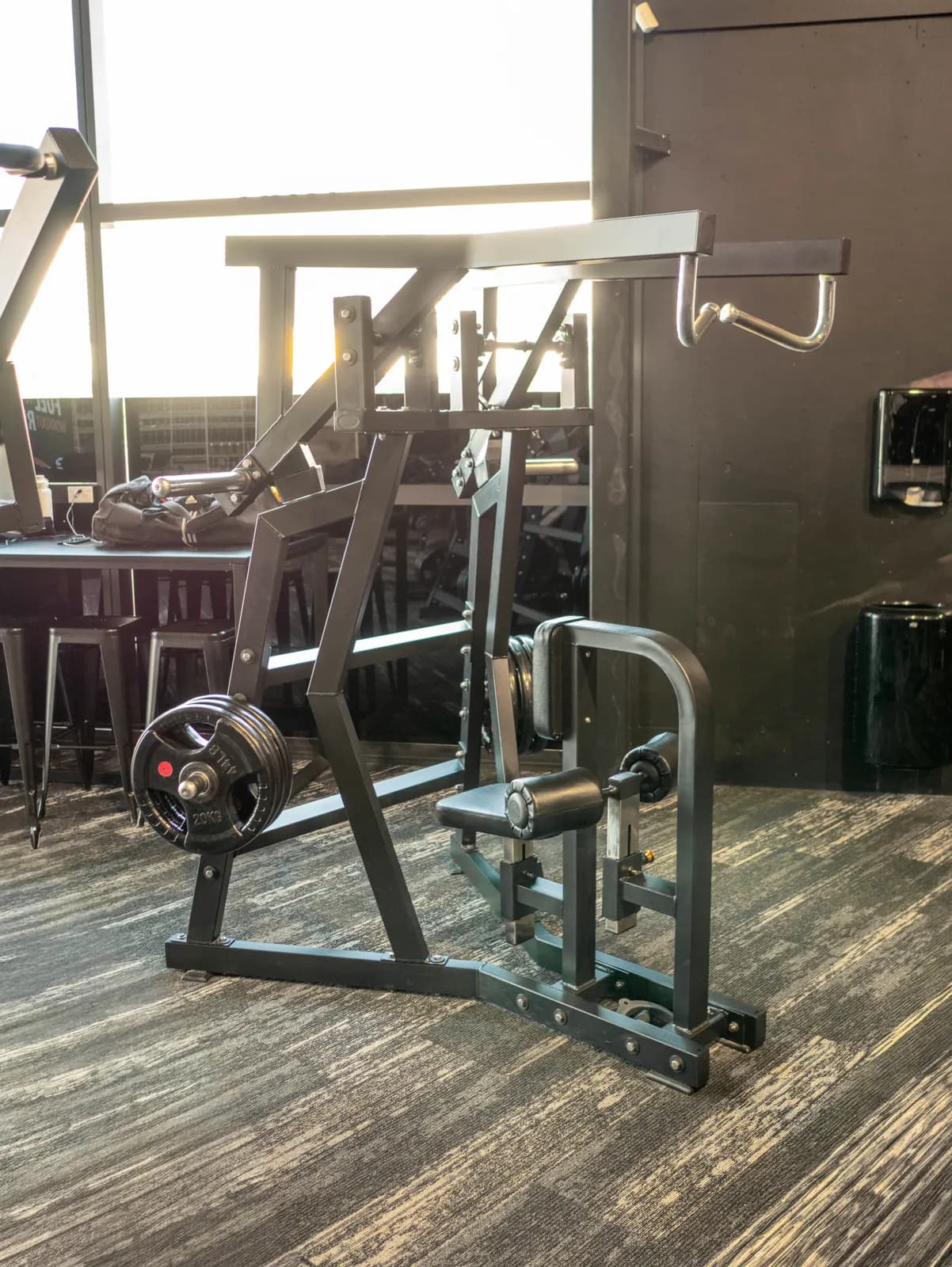
An iso-lateral high row that pulls you down and back. Targets the upper lats and mid-back through a long range of motion, with each arm loaded independently.
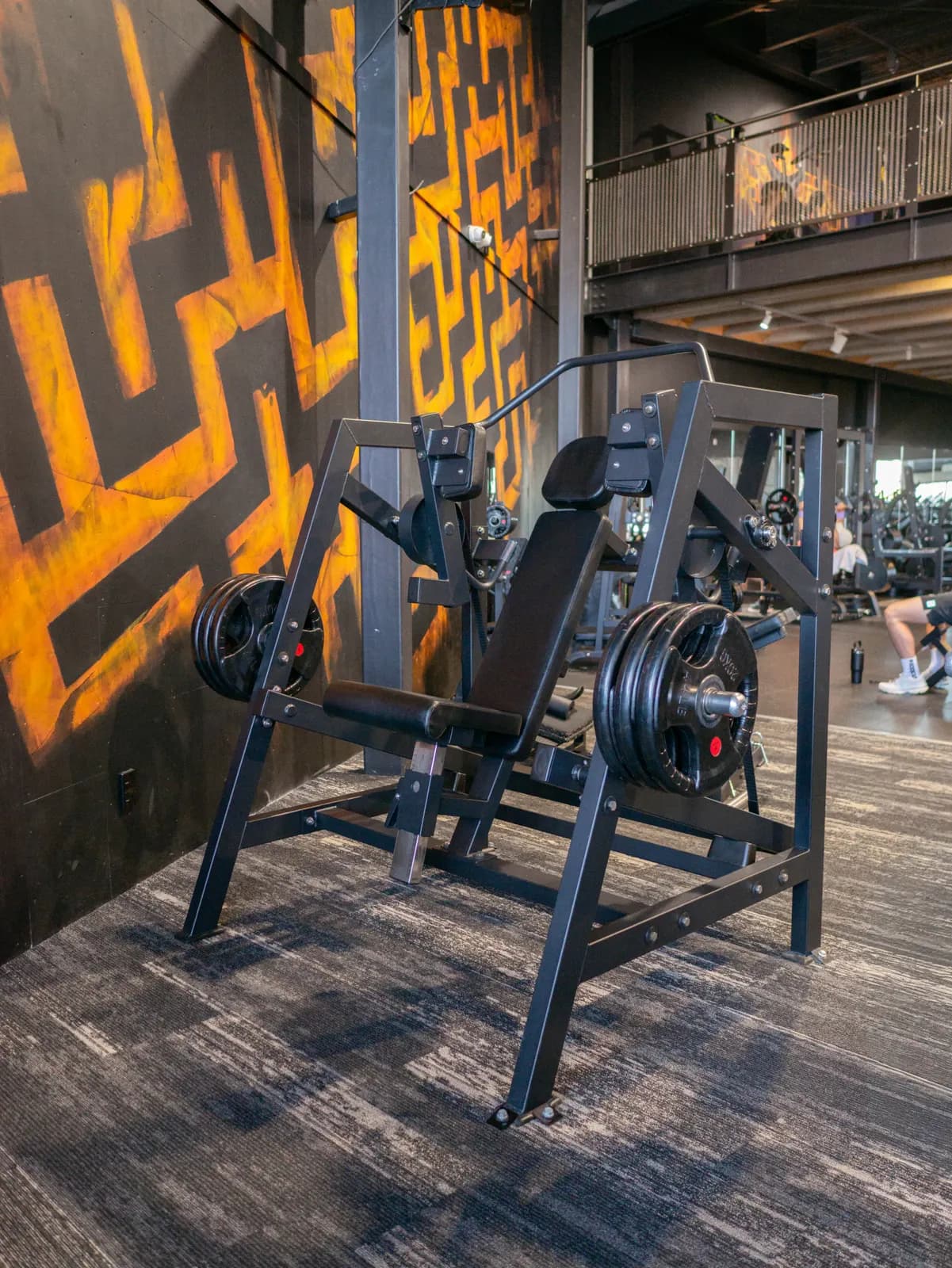
A lat pullover machine that takes the biceps almost entirely out of the lift and isolates the lats through a long stretch. Rare in commercial gyms.
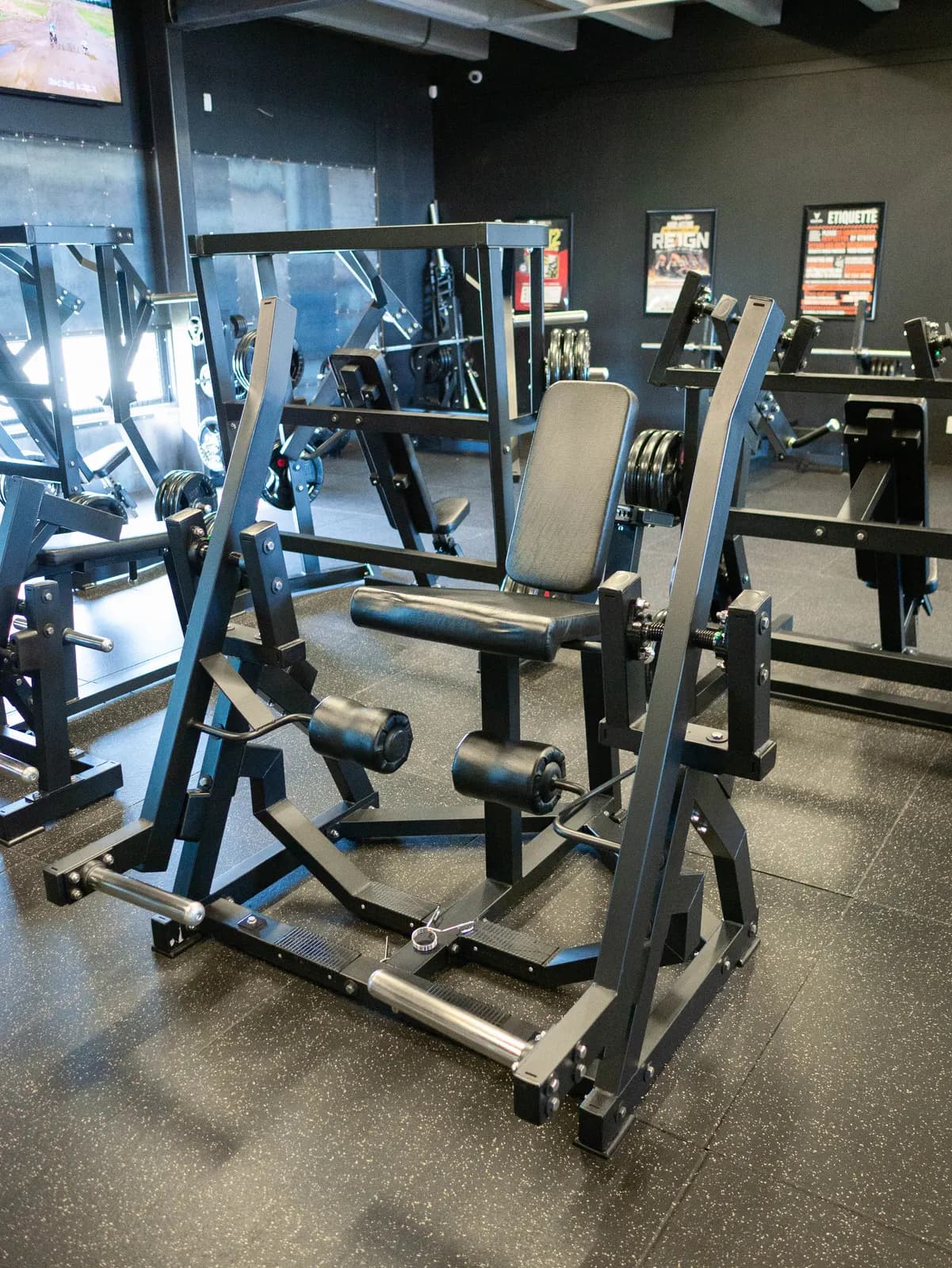
Isolated quad work. The plate-loaded version gives smoother resistance through the full range and lets you load heavy without burning a stack. Use it to finish leg day or pre-fatigue before squats.
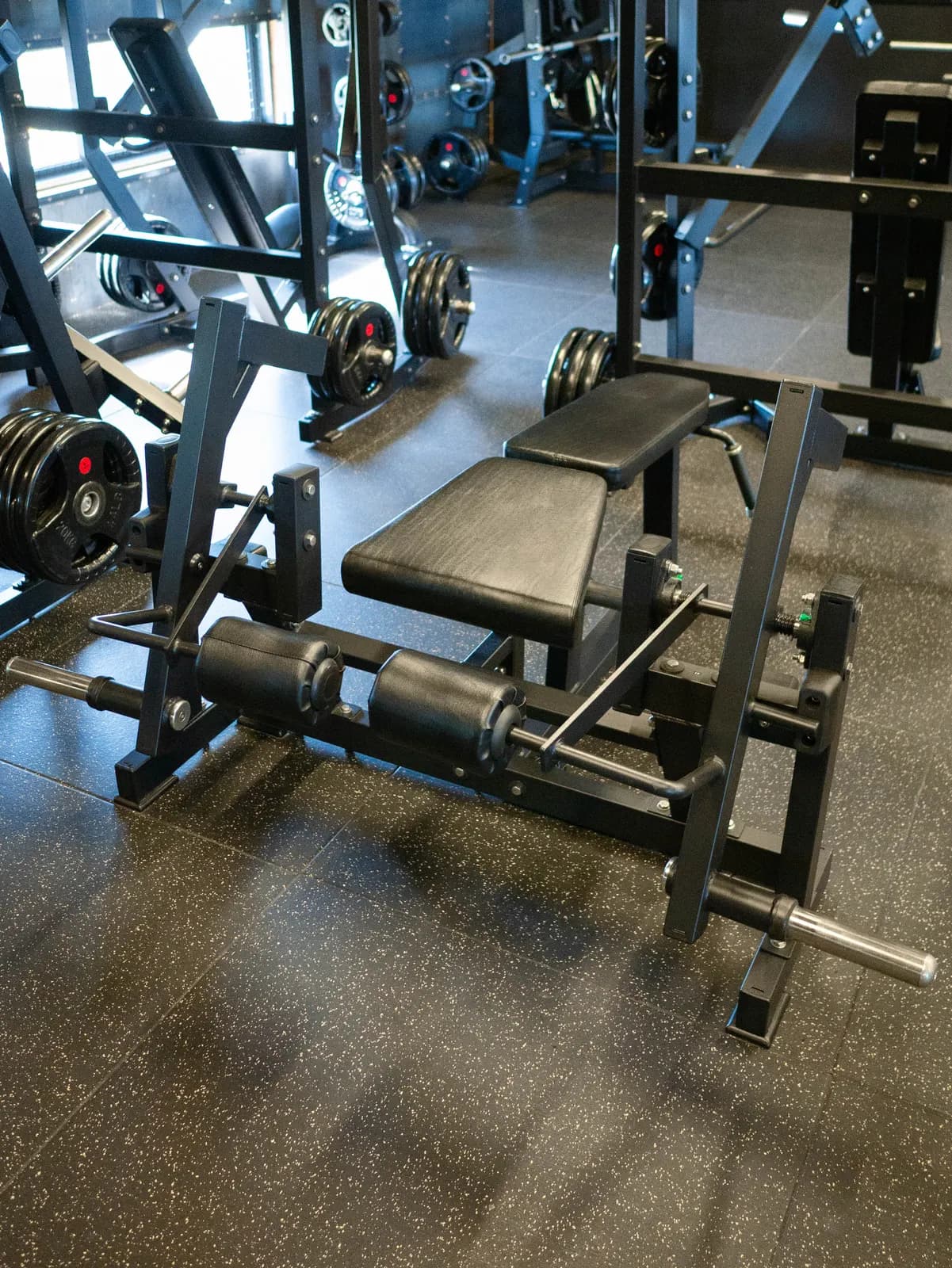
Prone hamstring curl loaded by plates rather than a stack, so progressive overload doesn't cap out at the top of the stack. Targets the hamstrings through a long stretch under tension.
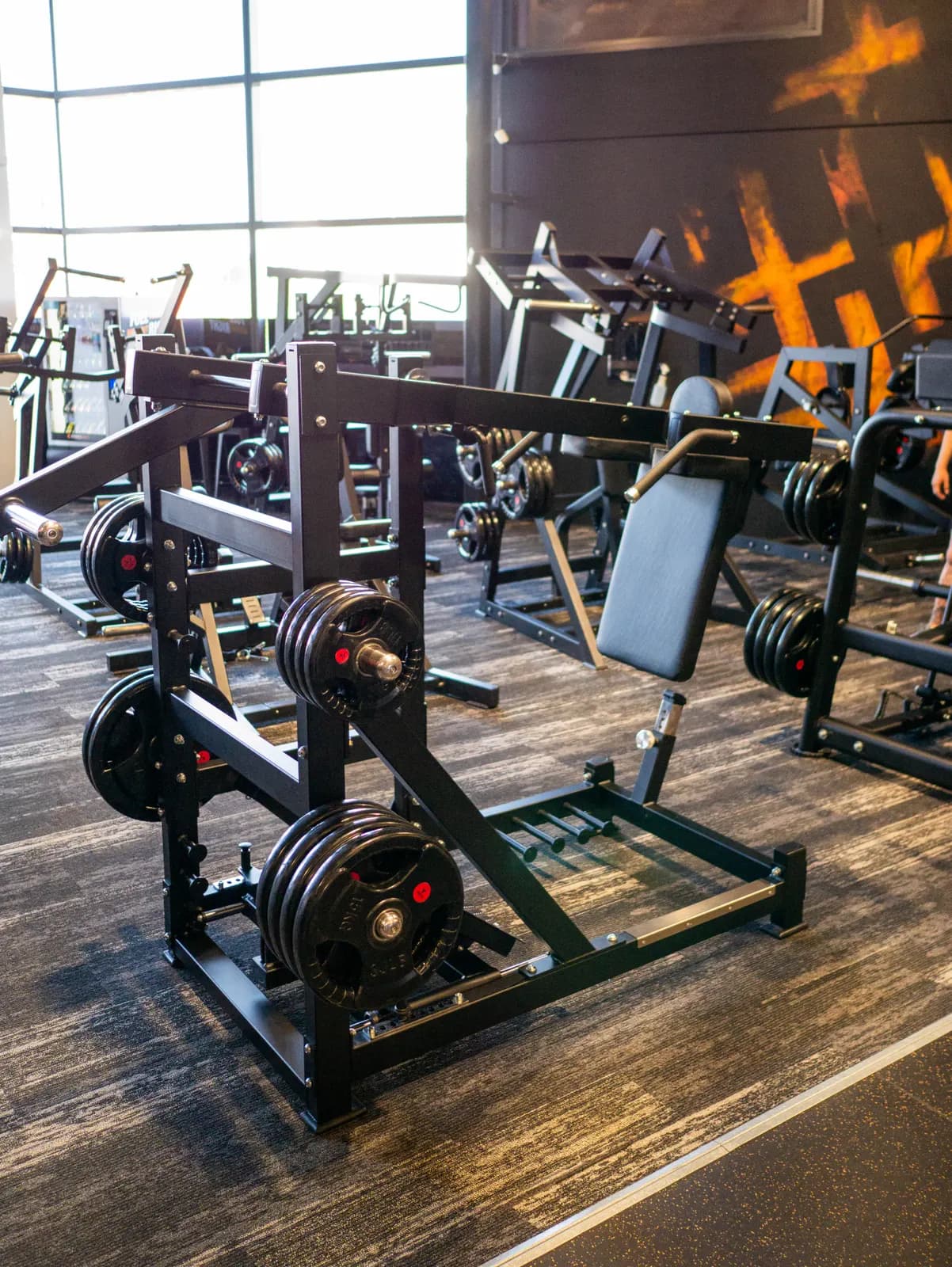
A fixed-arc squat machine that drives the load on a curved path, so depth stays consistent and balance is taken out of the lift. Lets you push close to failure on quads and glutes safely. Rare to find in Christchurch.
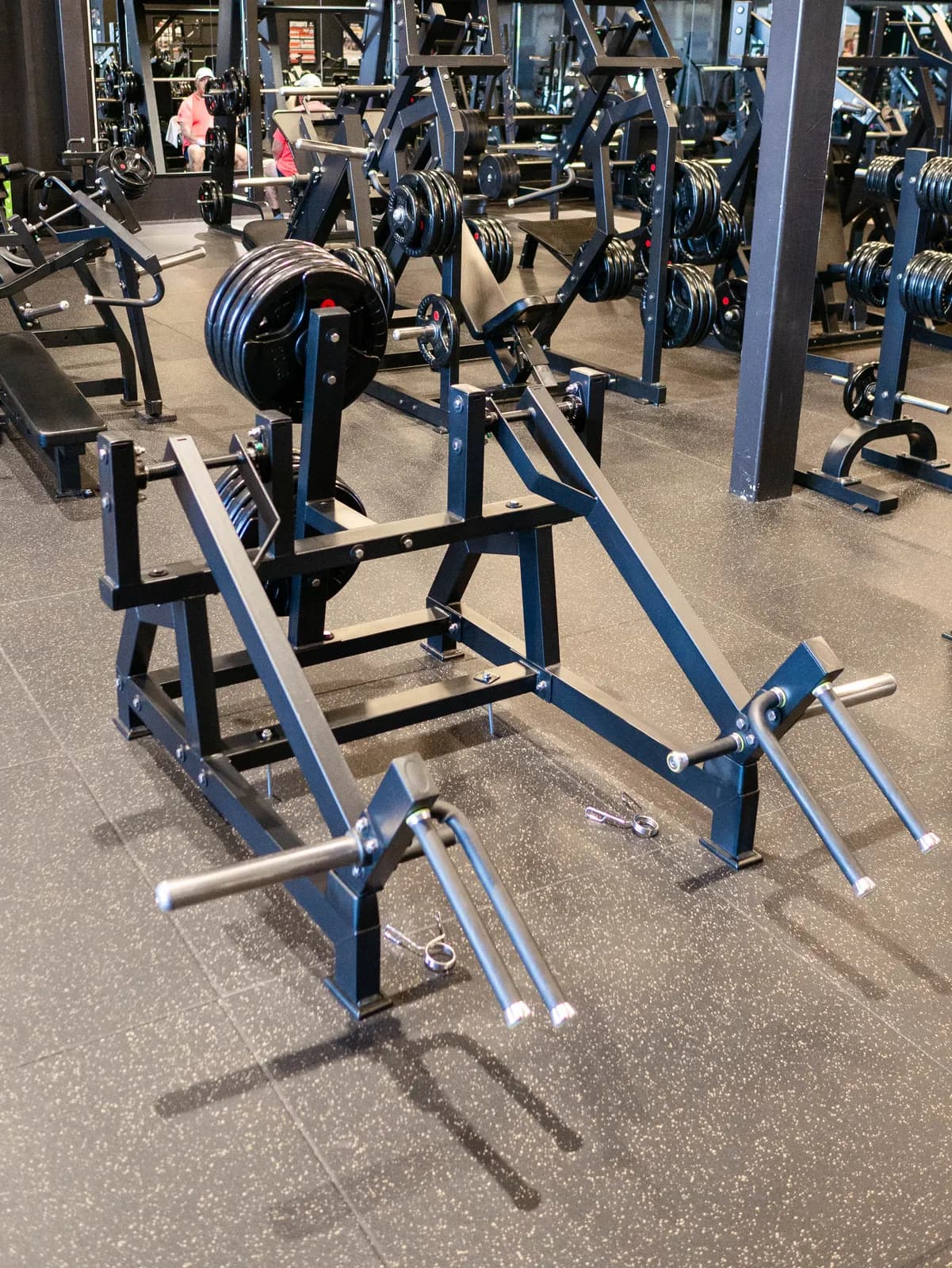
A guided Romanian deadlift platform that fixes the bar path and keeps the load directly over the hips. Good for hamstring and glute hypertrophy without the technique demands of a free-weight RDL.
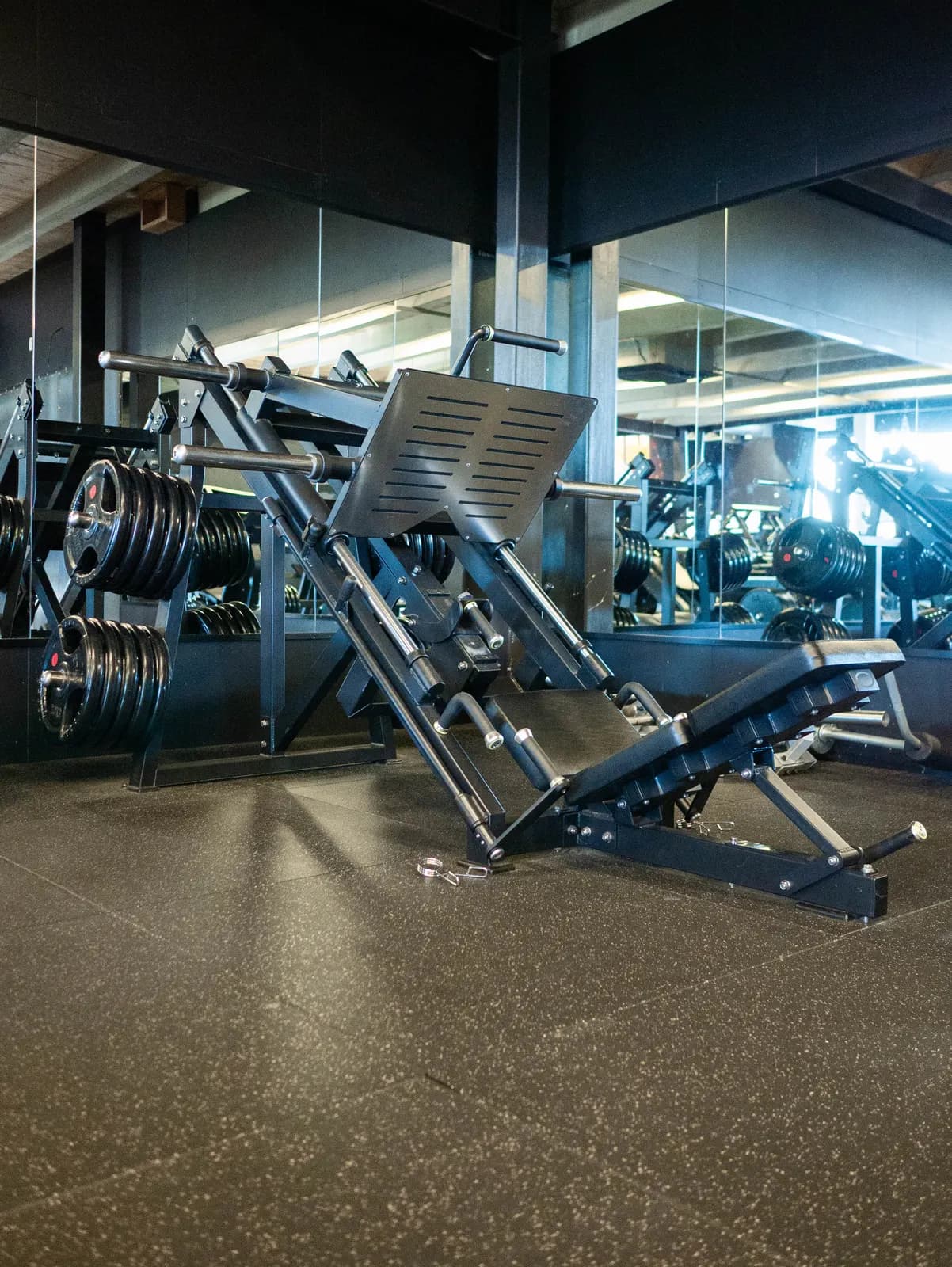
A vertical-back seated leg press for high-volume quad and glute work without spinal load. Fixed back support suits hypertrophy work and lifters learning to press through the heels.
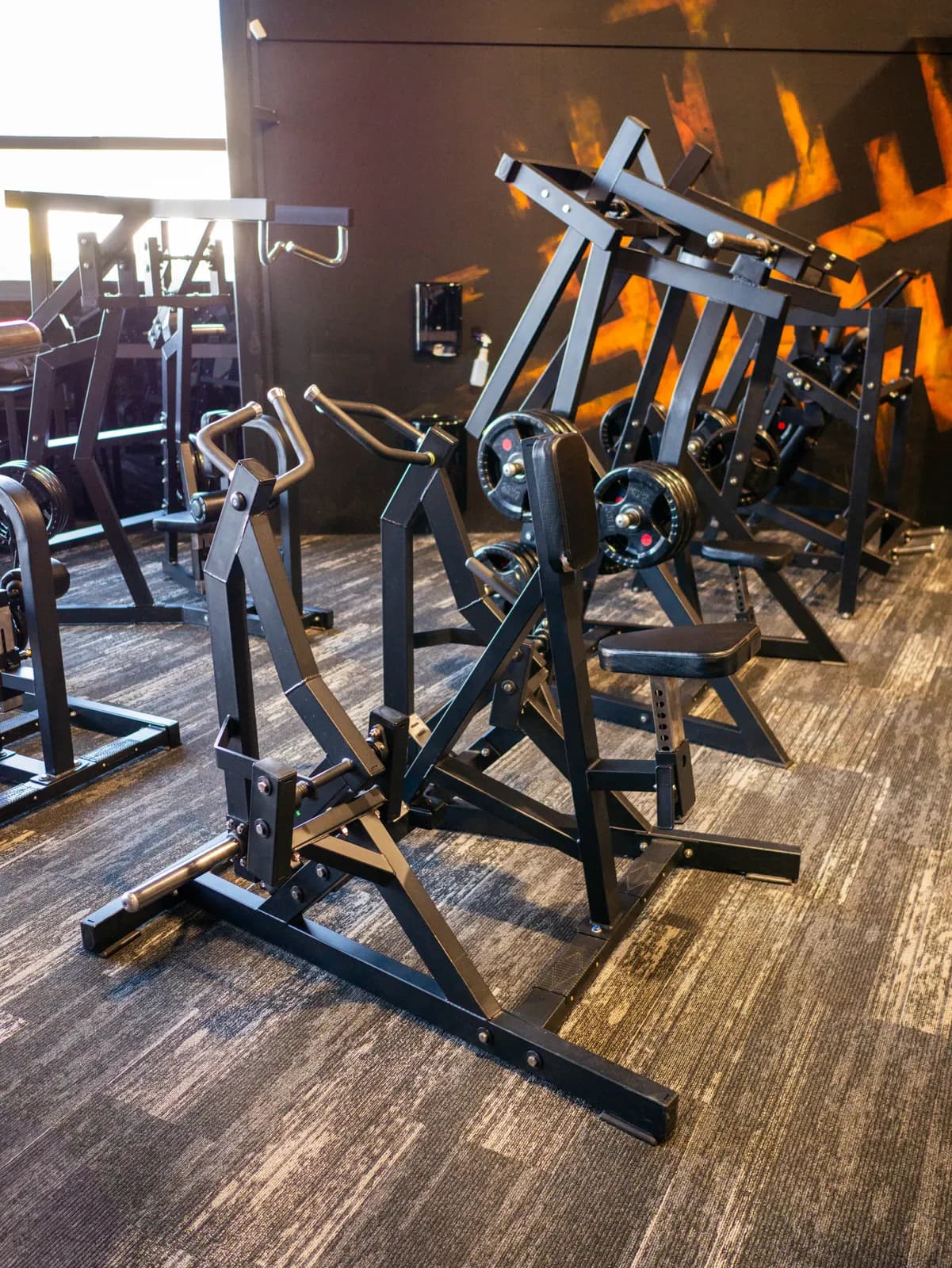
A chest-supported seated row that takes the lower back out of the lift and puts the load on the mid-back, lats, and rear delts.
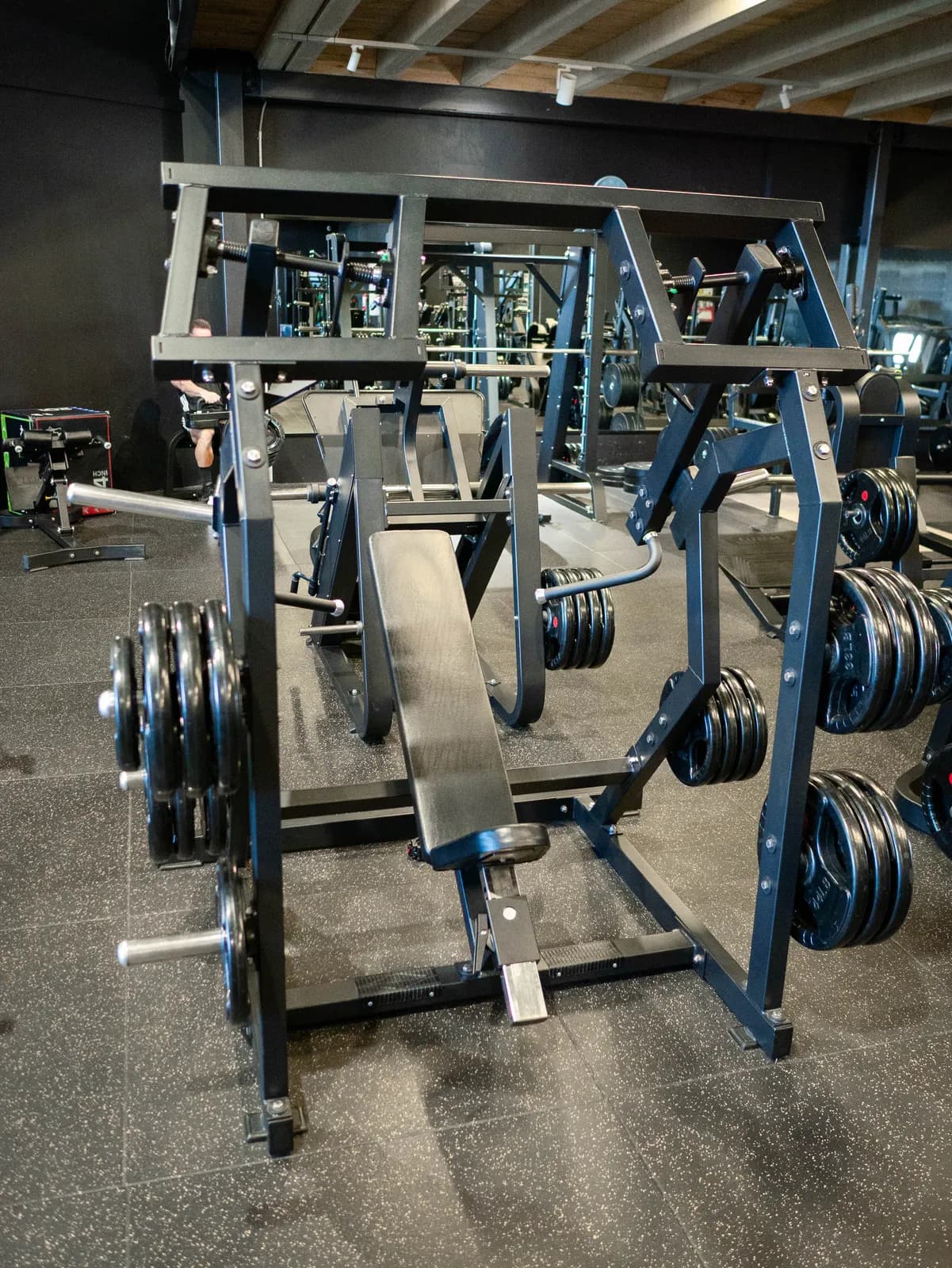
A seated plate-loaded overhead press for the deltoids, with a back pad that supports the lumbar. Easier to load heavy and push to failure than a standing free-weight press.
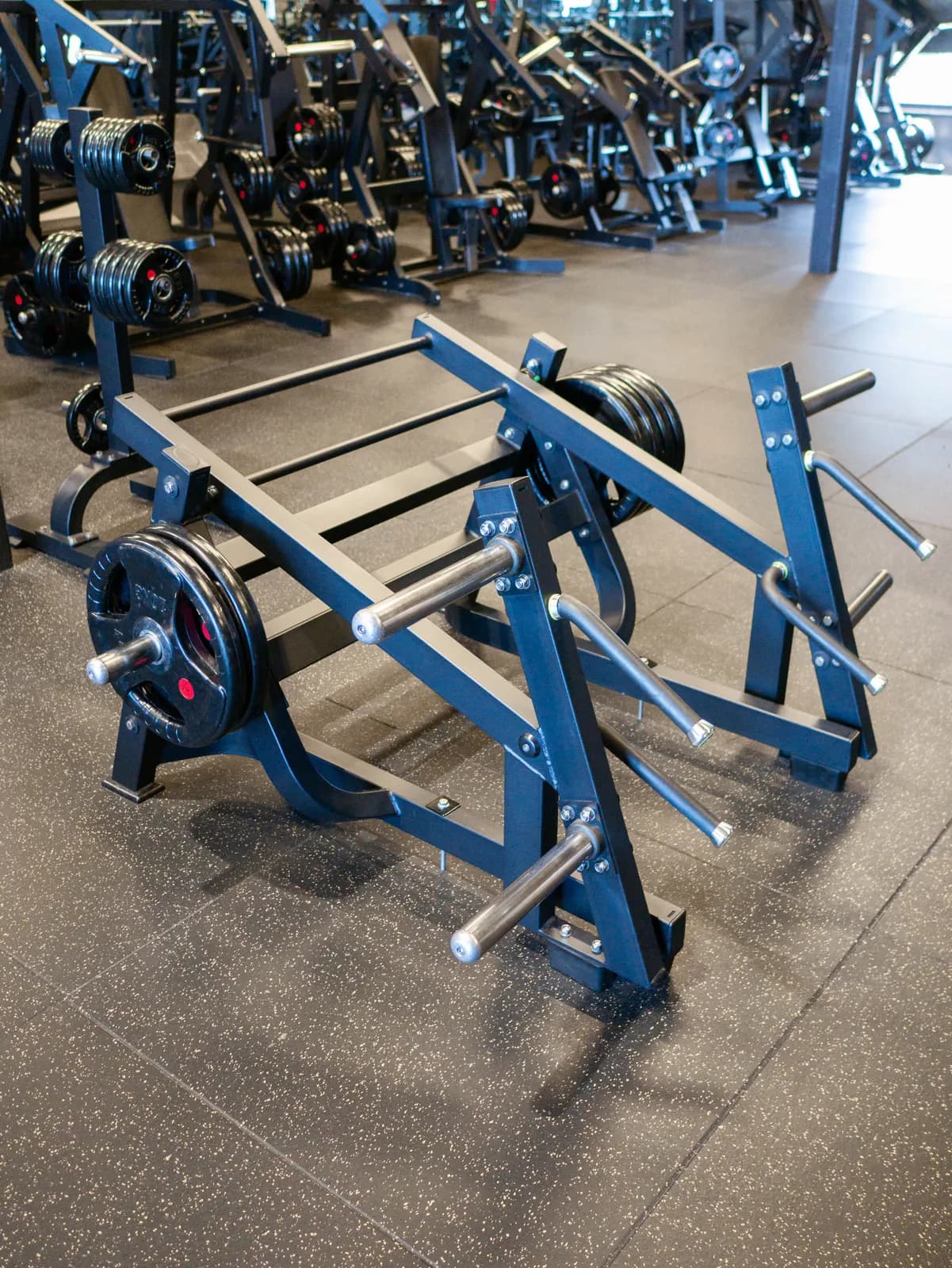
A unilateral squat-and-lunge platform. Trains each leg independently to even out imbalances and loads the glutes deeper than a free-weight lunge.
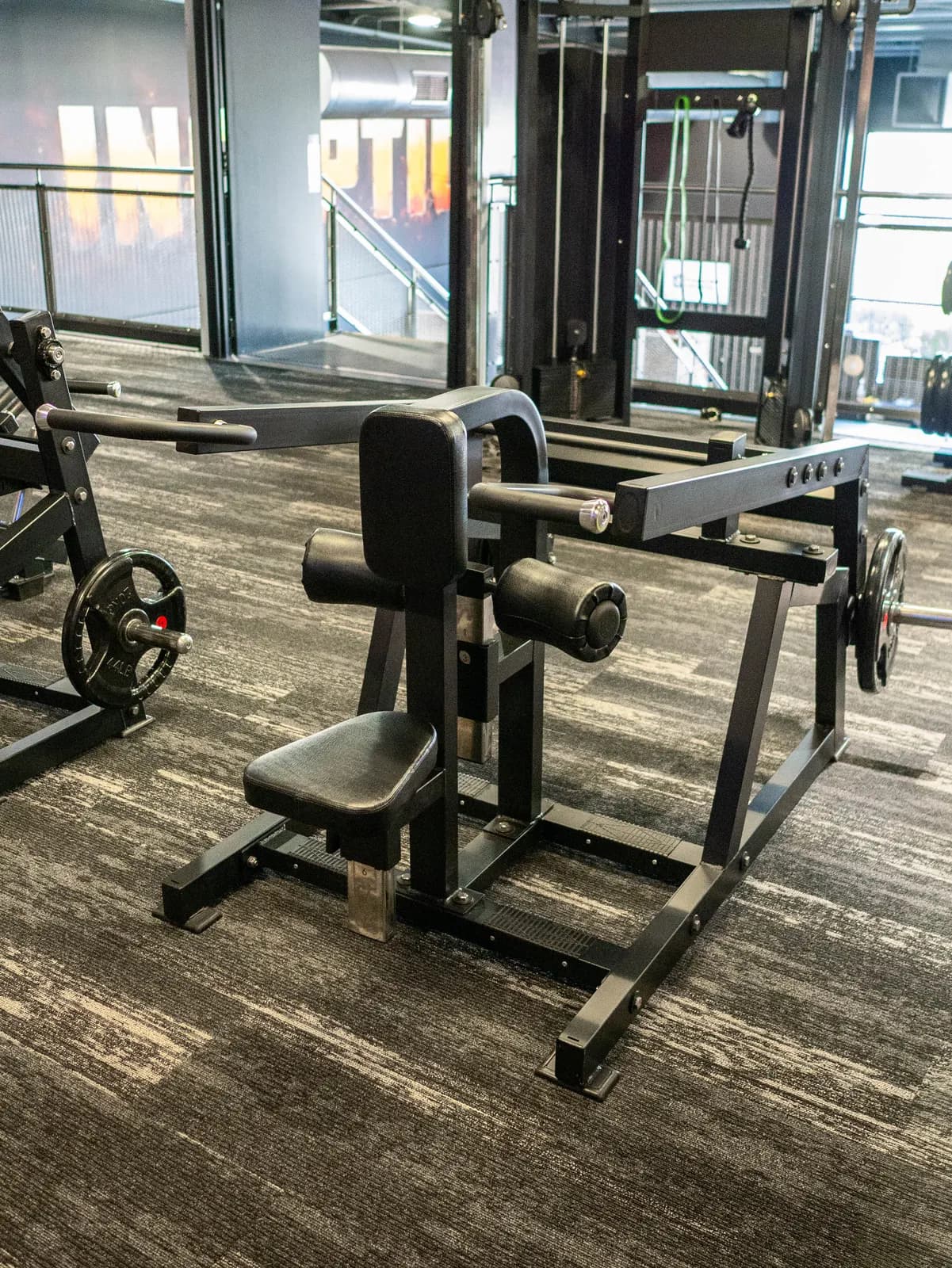
A plate-loaded tricep press-down station. The fixed angle keeps the elbows tight to the sides and stops the rep from drifting into the shoulders.
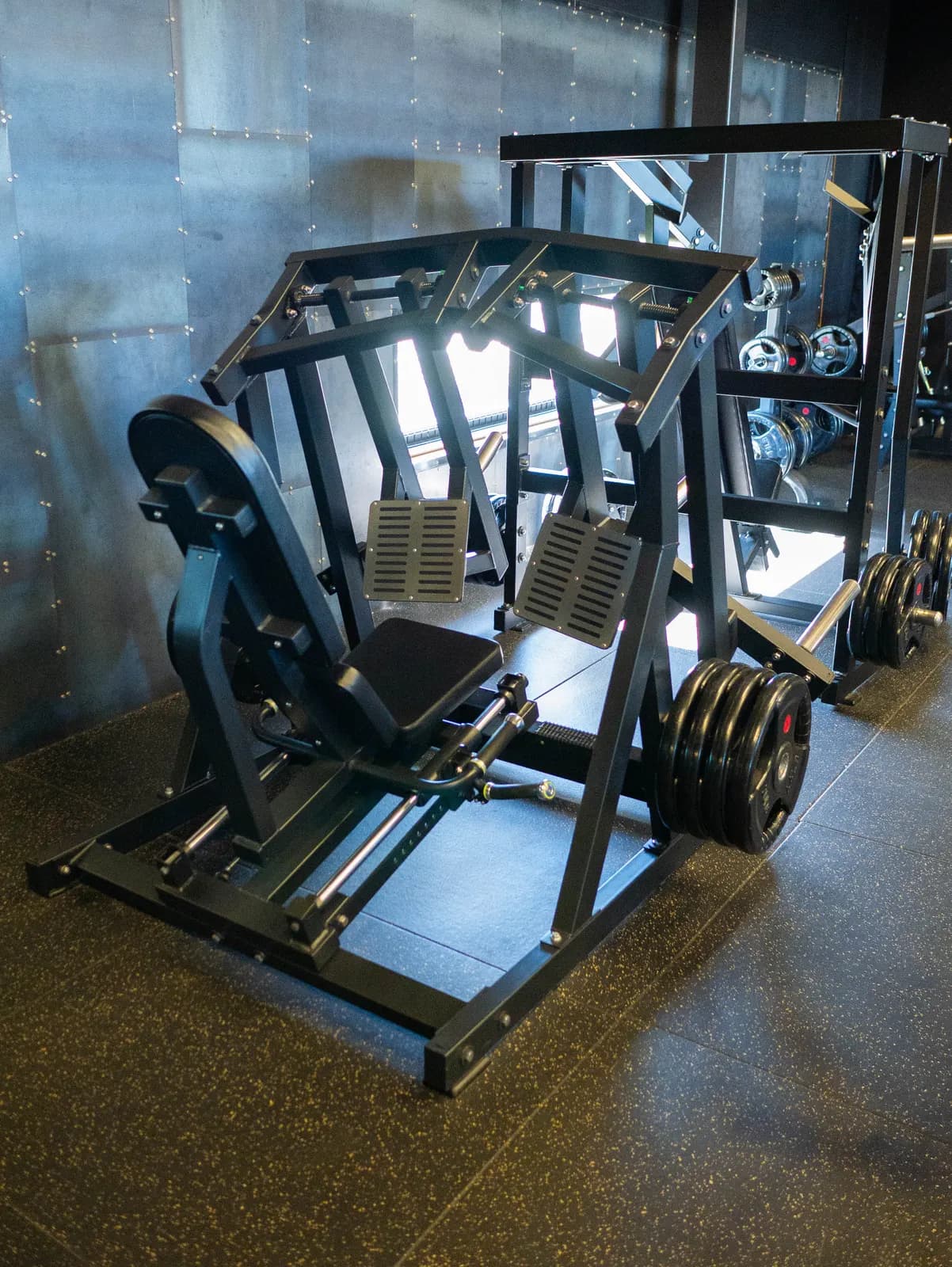
A single-leg loadable press for fixing strength imbalances side to side. Useful for returning from injury or chasing symmetrical leg development.
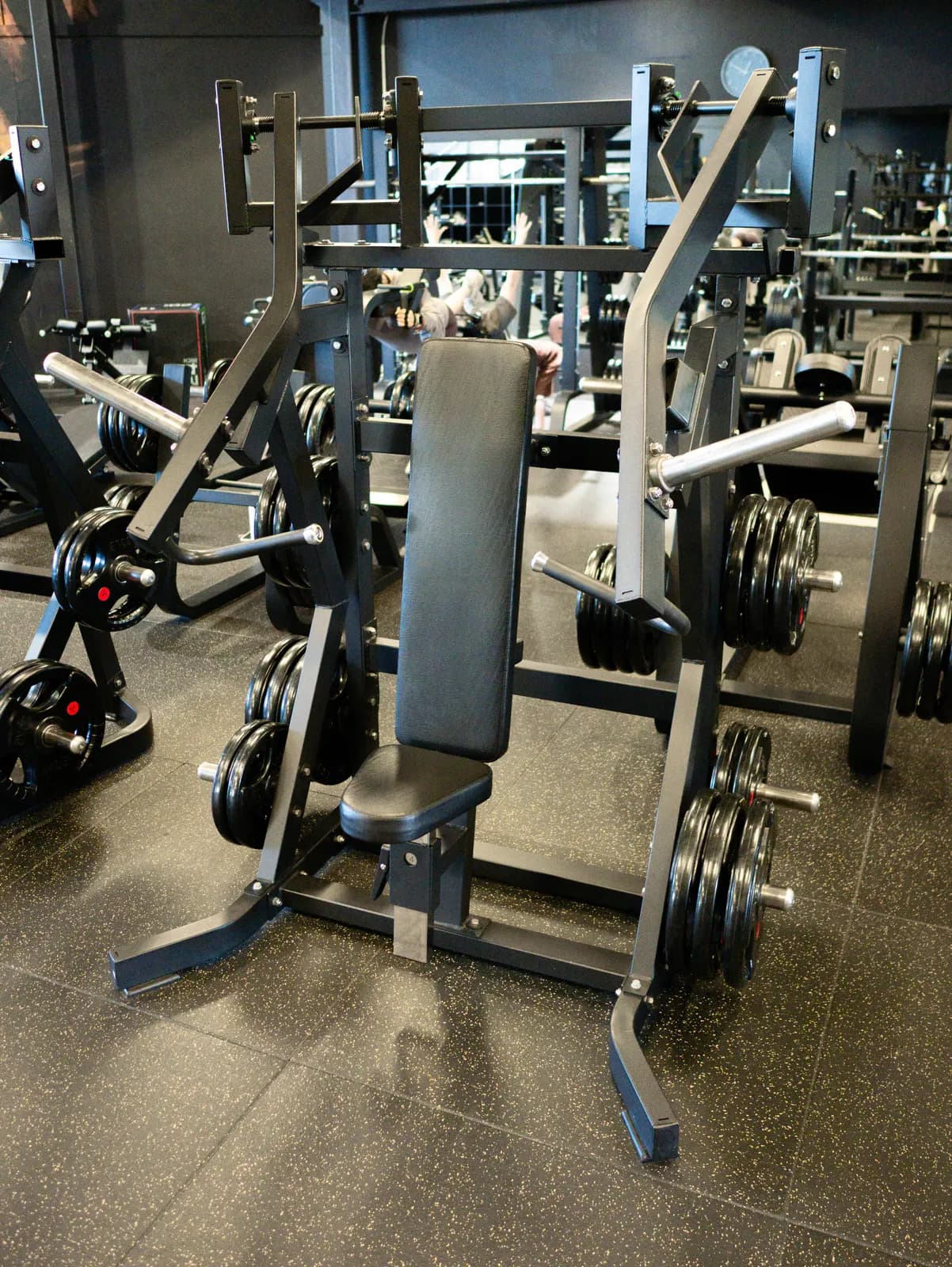
An upright chest press station that places the chest in a strong pressing position and supports the back through the rep. A go-to for hypertrophy chest work.
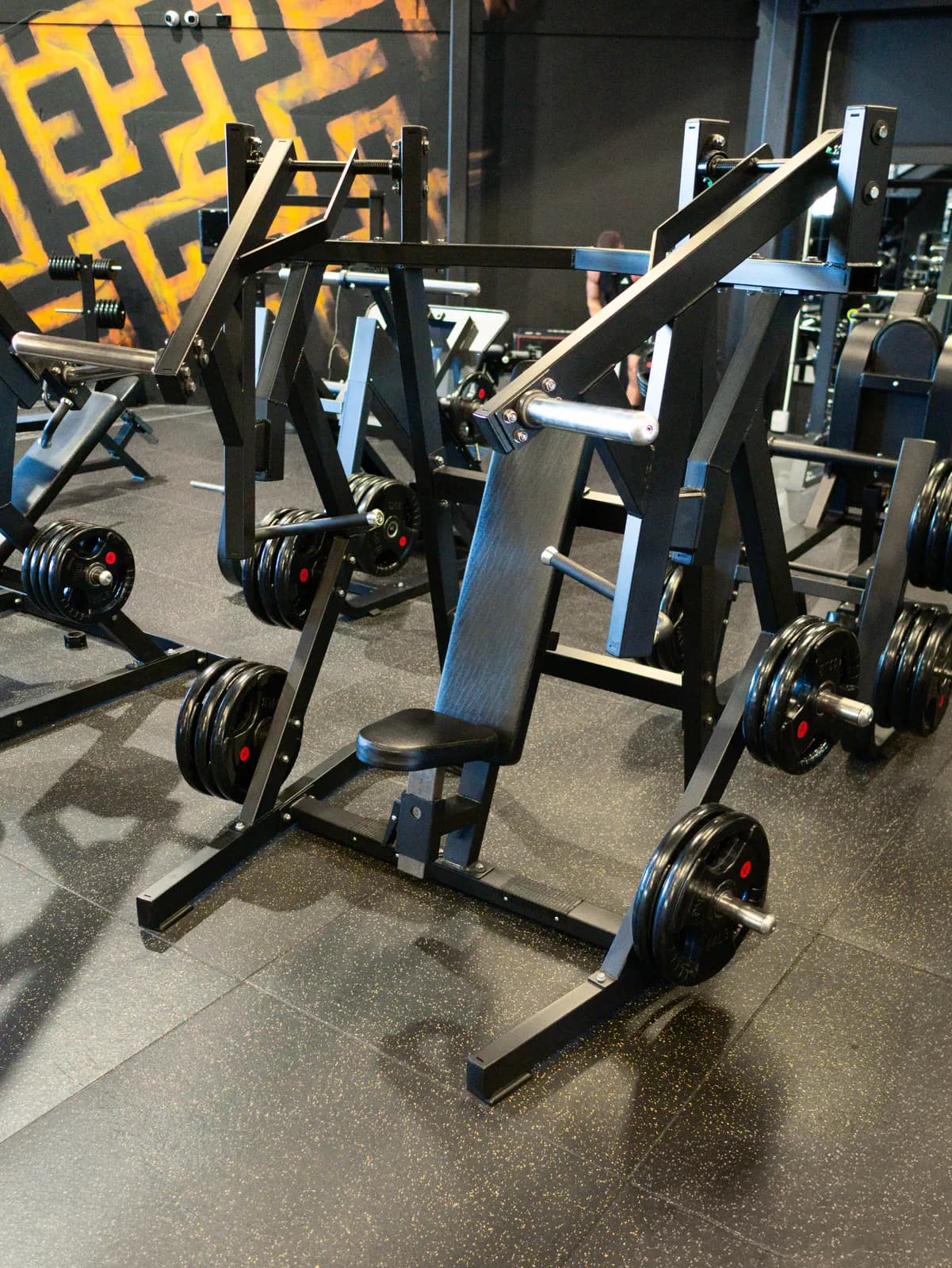
A vertical-handle chest press that emphasises upper chest and shoulder integration. Fixed path keeps form clean late in a set.
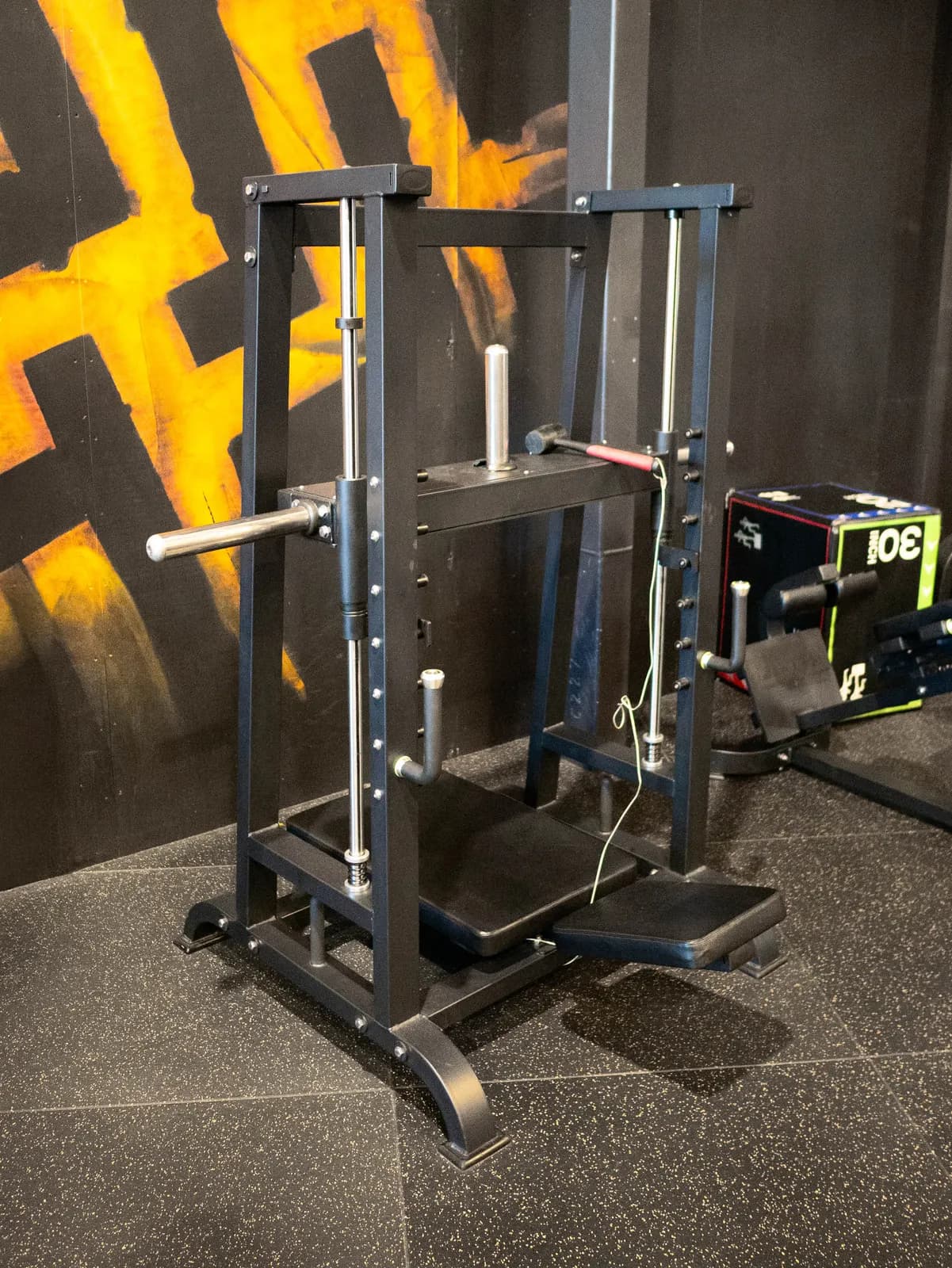
Lying-down vertical leg press where the load presses straight up. Forces strict form, removes momentum, and hits the quads and glutes hard under load.
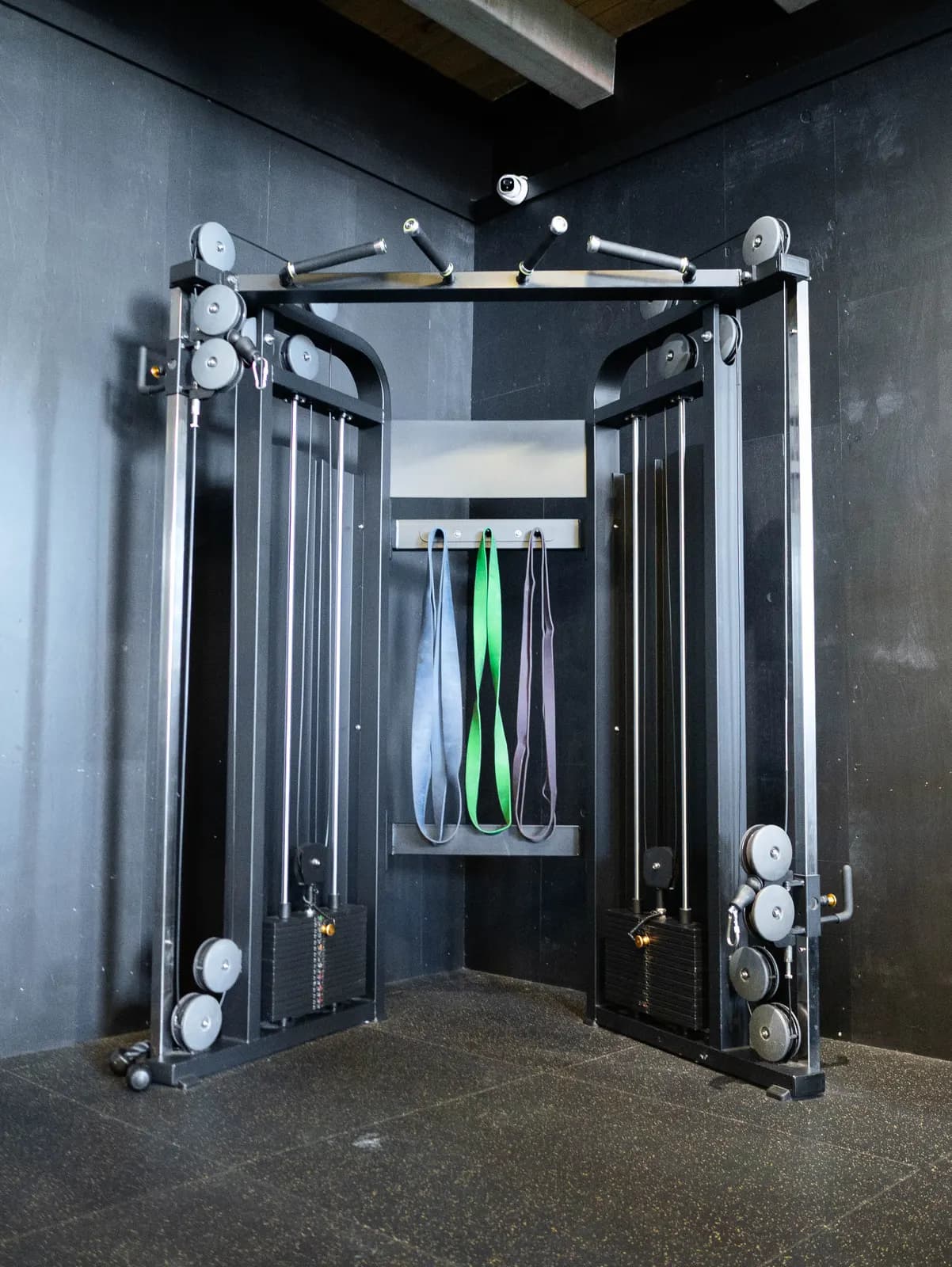
A pin-loaded machine for targeted training. Ask the team for setup tips on your first session.
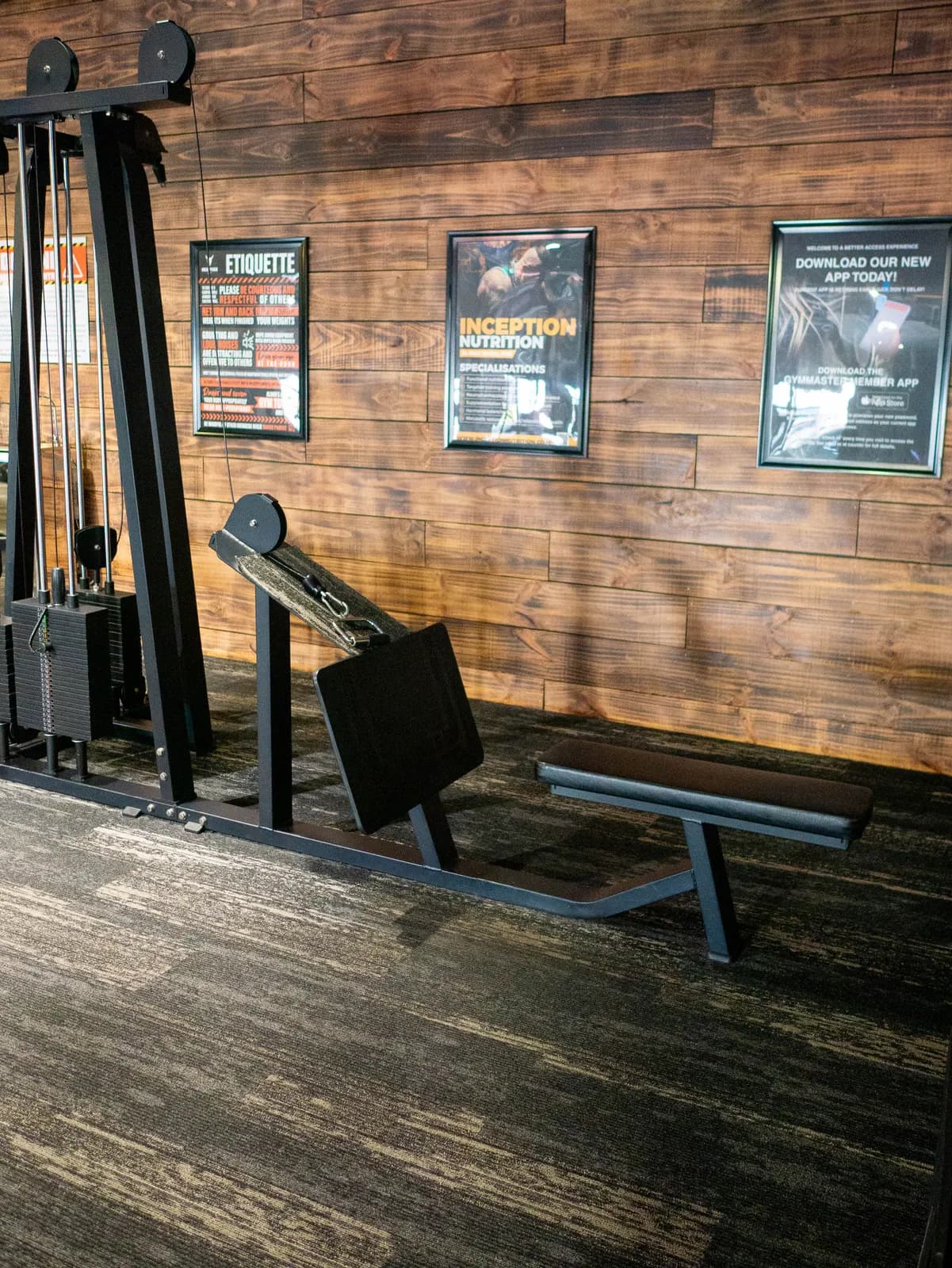
An 8-stack multi-gym that puts 8 pin-loaded stations on a single rig: lat pull-down, seated row, tricep, bicep, chest fly, leg extension, ab crunch, and more. Built for fast, low-friction supersets and circuits.
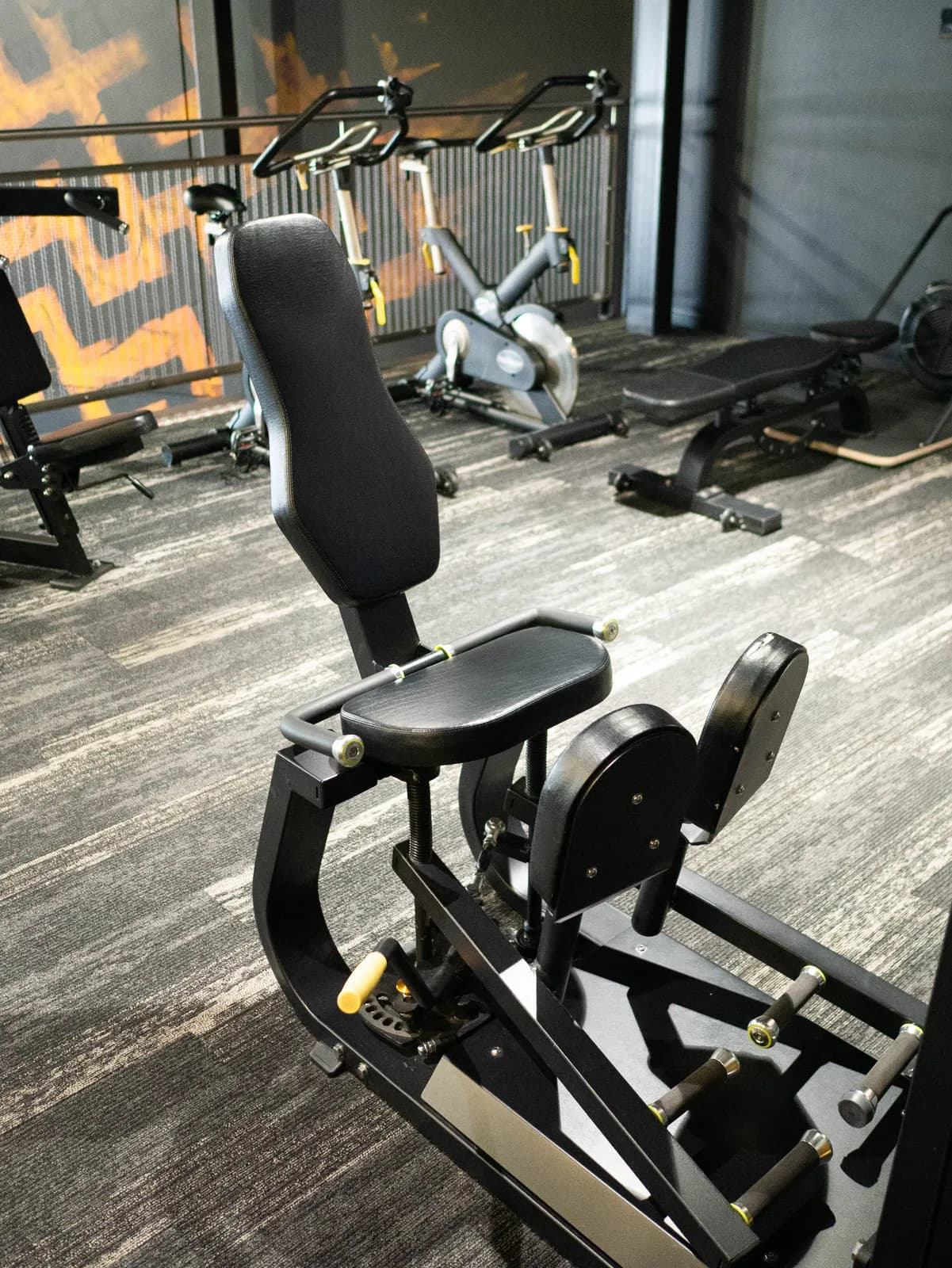
A seated hip abductor for the glute medius and outer hips. Important for hip stability, knee tracking, and glute shape, especially for lifters who only train the back of the hip.
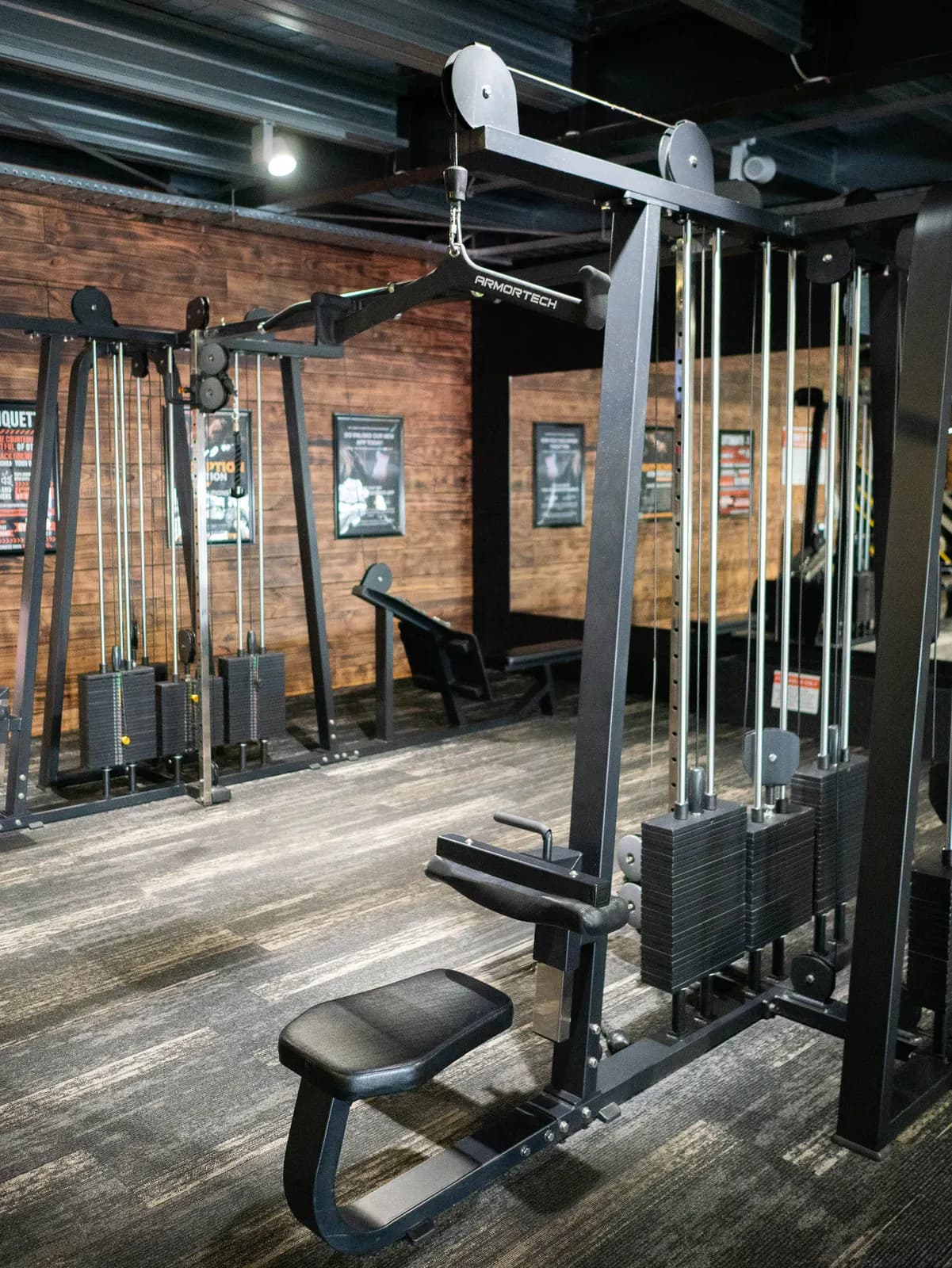
A floor-to-ceiling dual-cable crossover for chest flies, face pulls, lateral raises, woodchops, single-arm rows, and most other cable variations. Versatile and well-used.
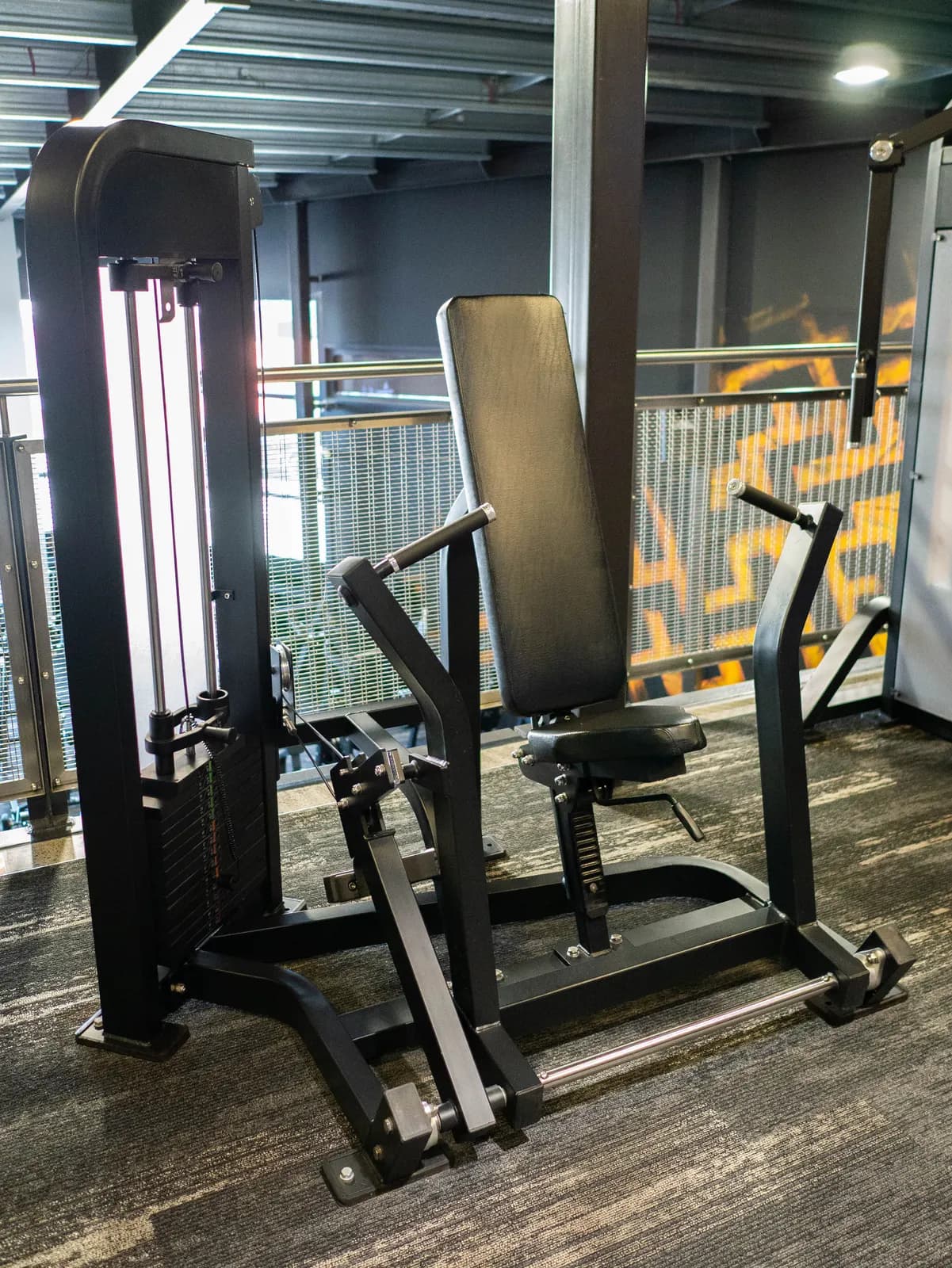
A pin-loaded chest press for high-rep chest work. Stack-loaded, so weight changes in seconds. Useful for drop sets and circuits.
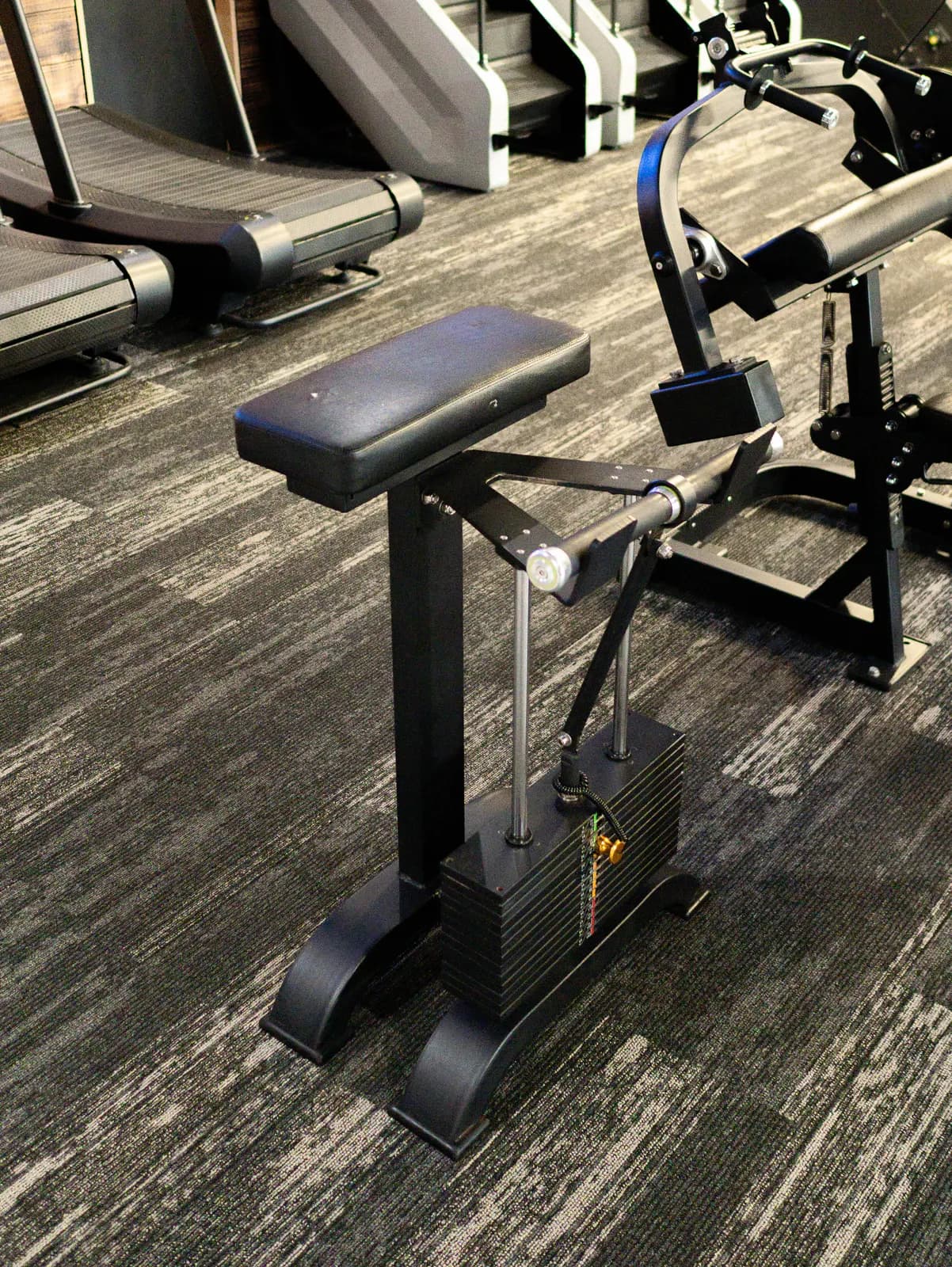
A wrist and forearm machine for grip, forearm size, and elbow tendon health. Often missing in other gyms. Useful for climbers, lifters whose deadlifts get capped by grip, and anyone training arm size seriously.
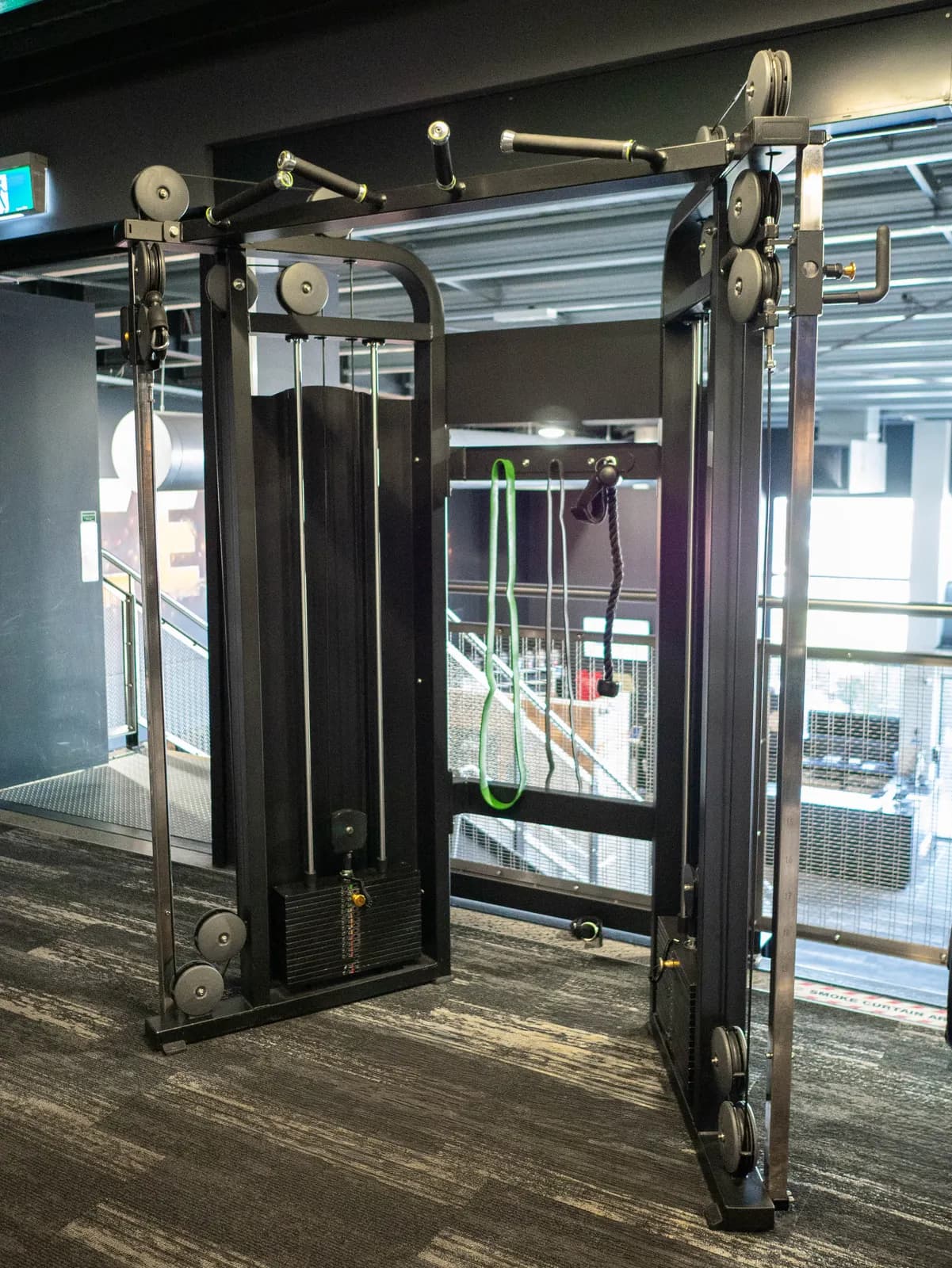
A dual-pulley functional trainer for any cable movement at any angle. Useful for sport-specific work, prehab, and accessory training.
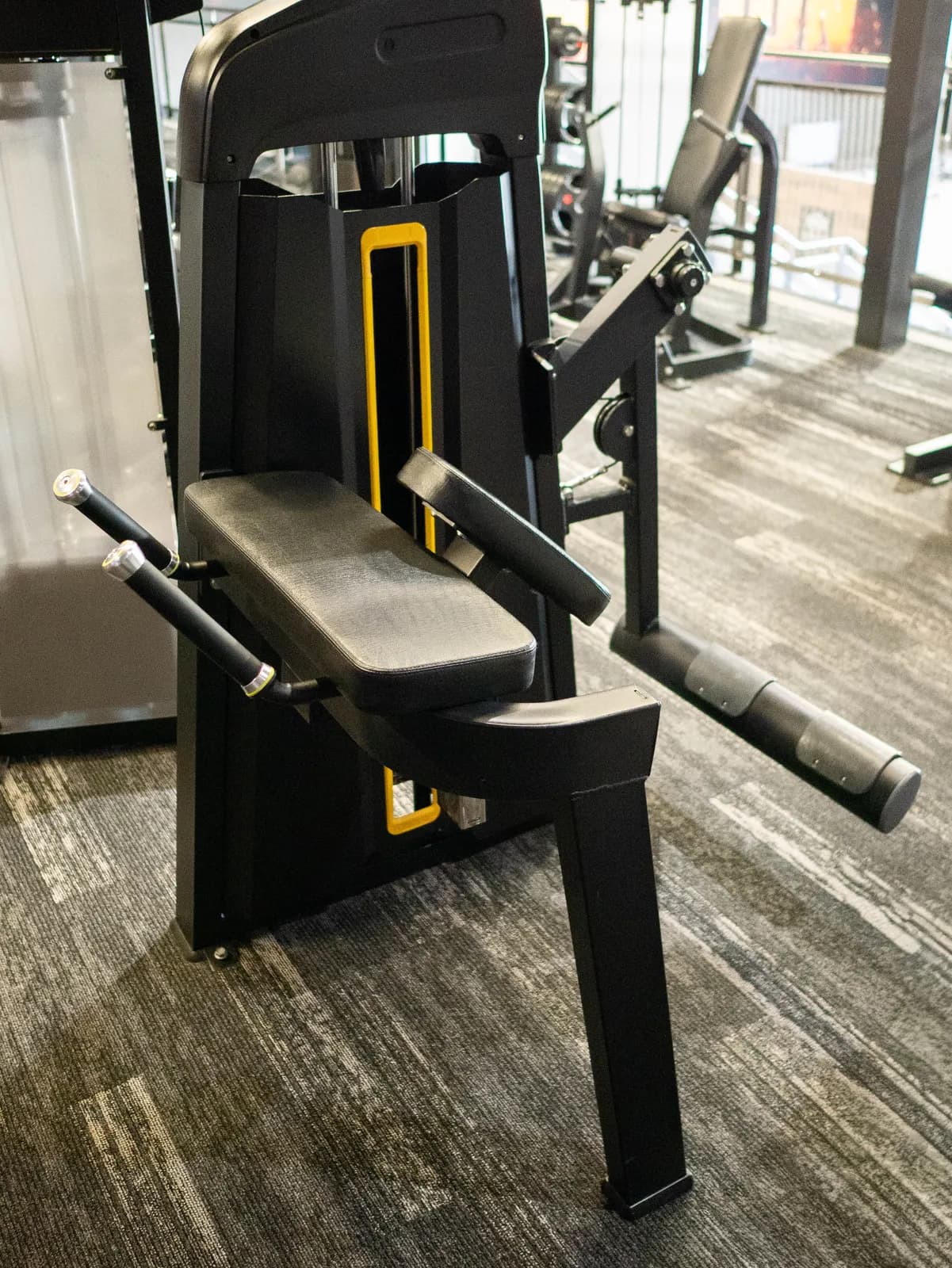
A standing tricep kickback station that takes the awkwardness out of free-weight kickbacks and lets you actually load the movement.
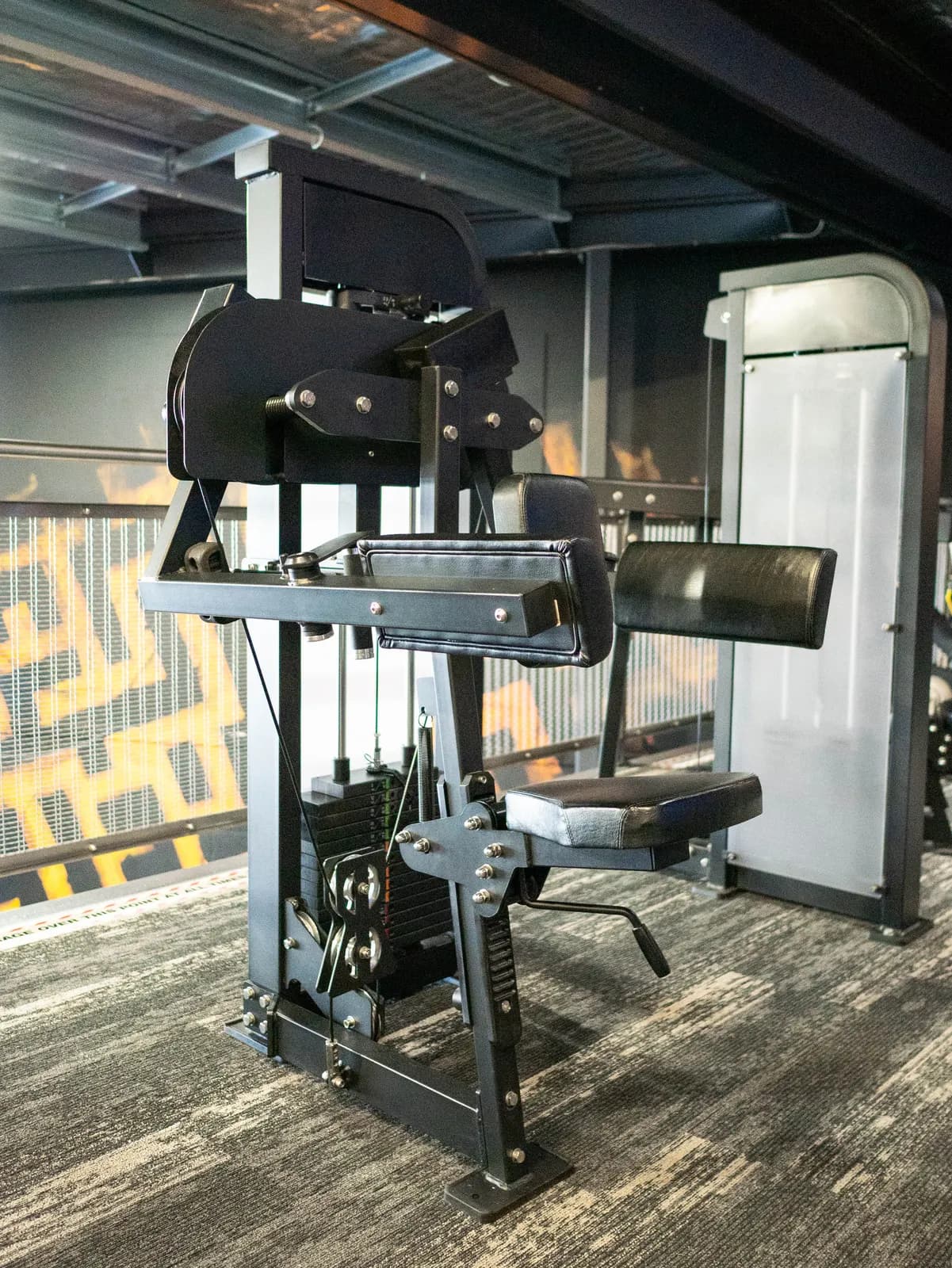
A seated lateral raise machine that isolates the side delts through a long, clean range of motion. Builds shoulder width with far less elbow stress than dumbbell laterals.
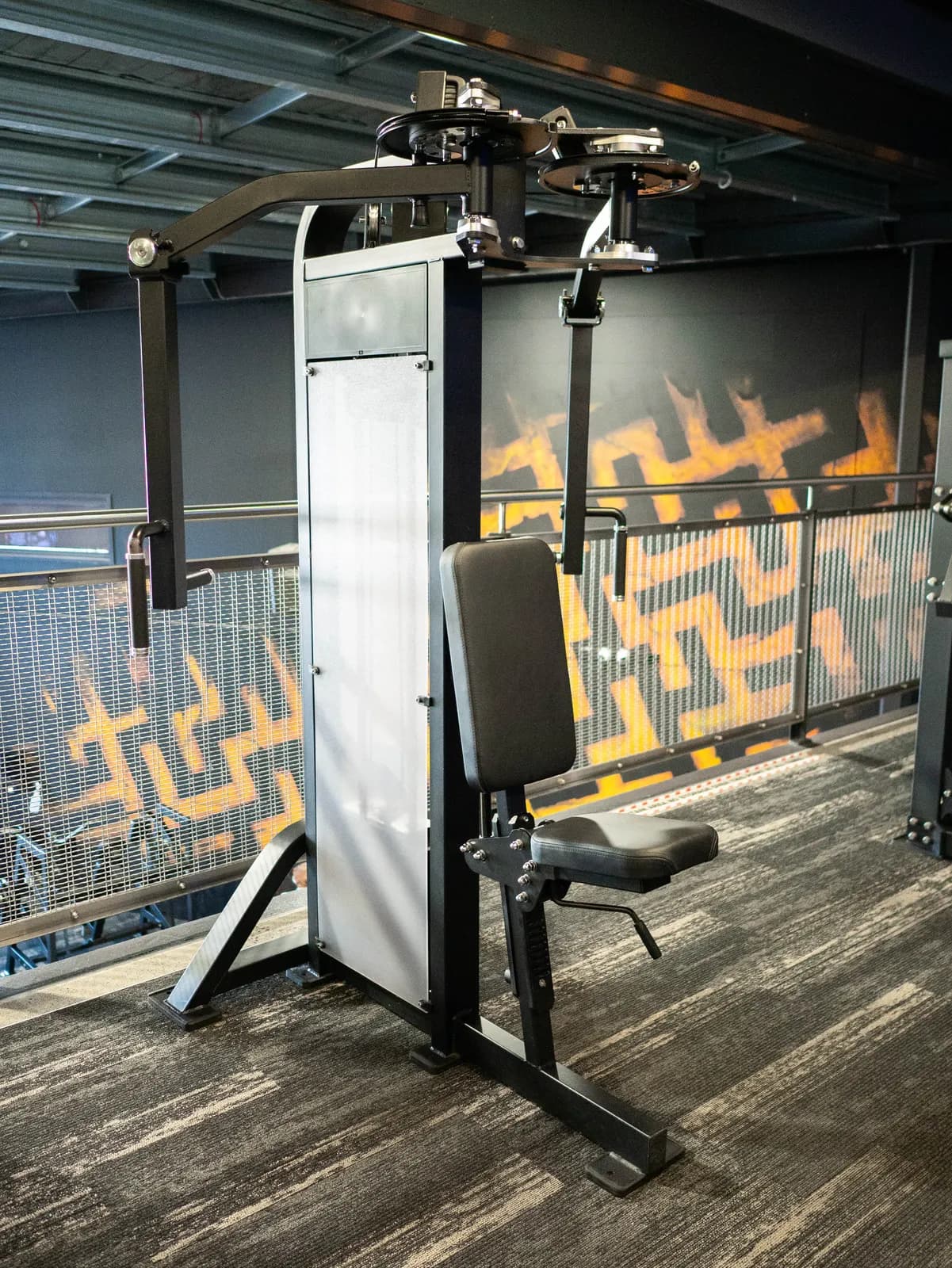
A combo machine that does both pec fly and rear-delt reverse fly without swapping stations. A staple for chest and shoulder hypertrophy work.
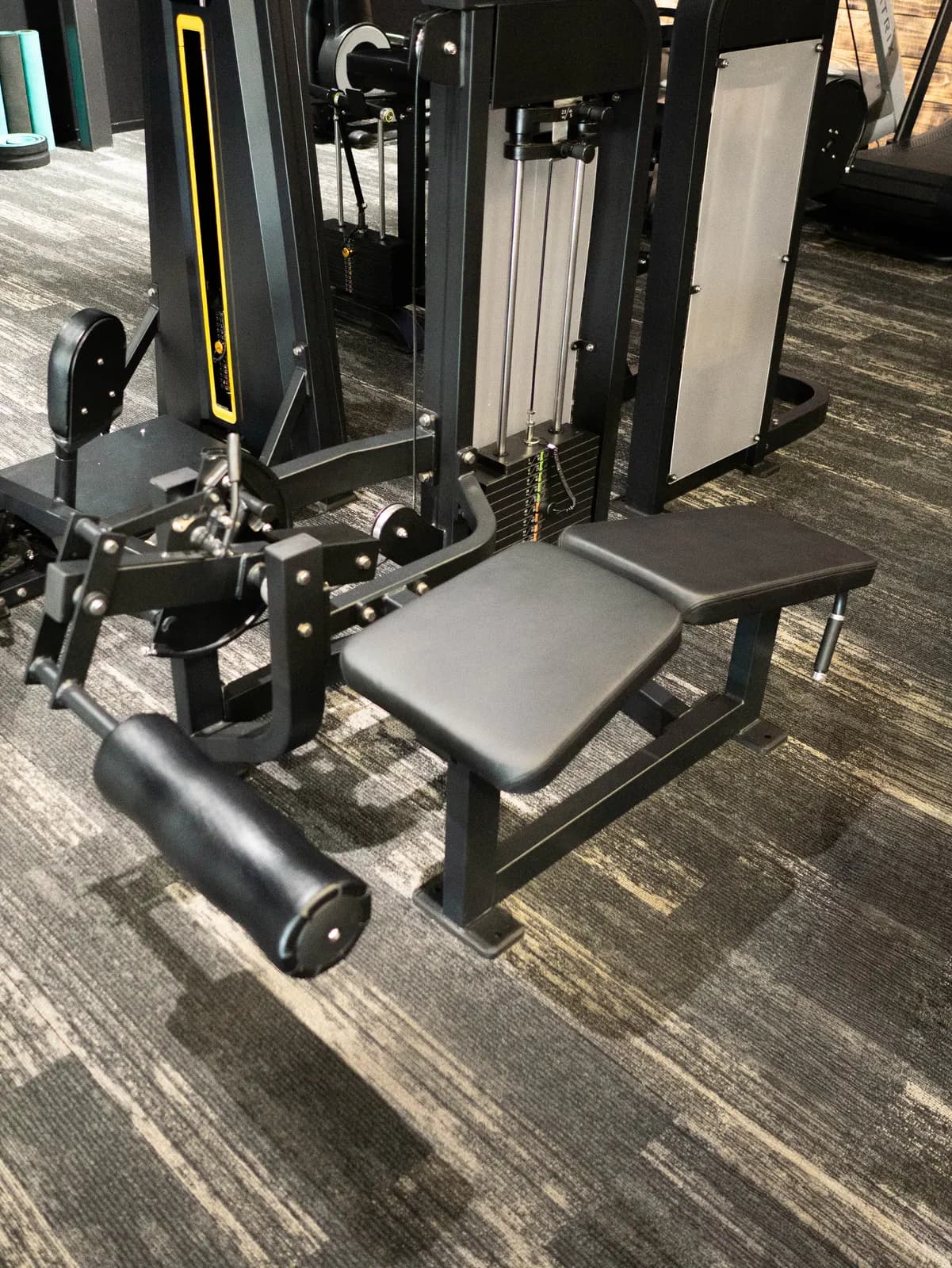
A prone (lying face-down) hamstring curl for hamstring isolation. The prone position takes the hip flexors out and forces the hamstrings to do the work.
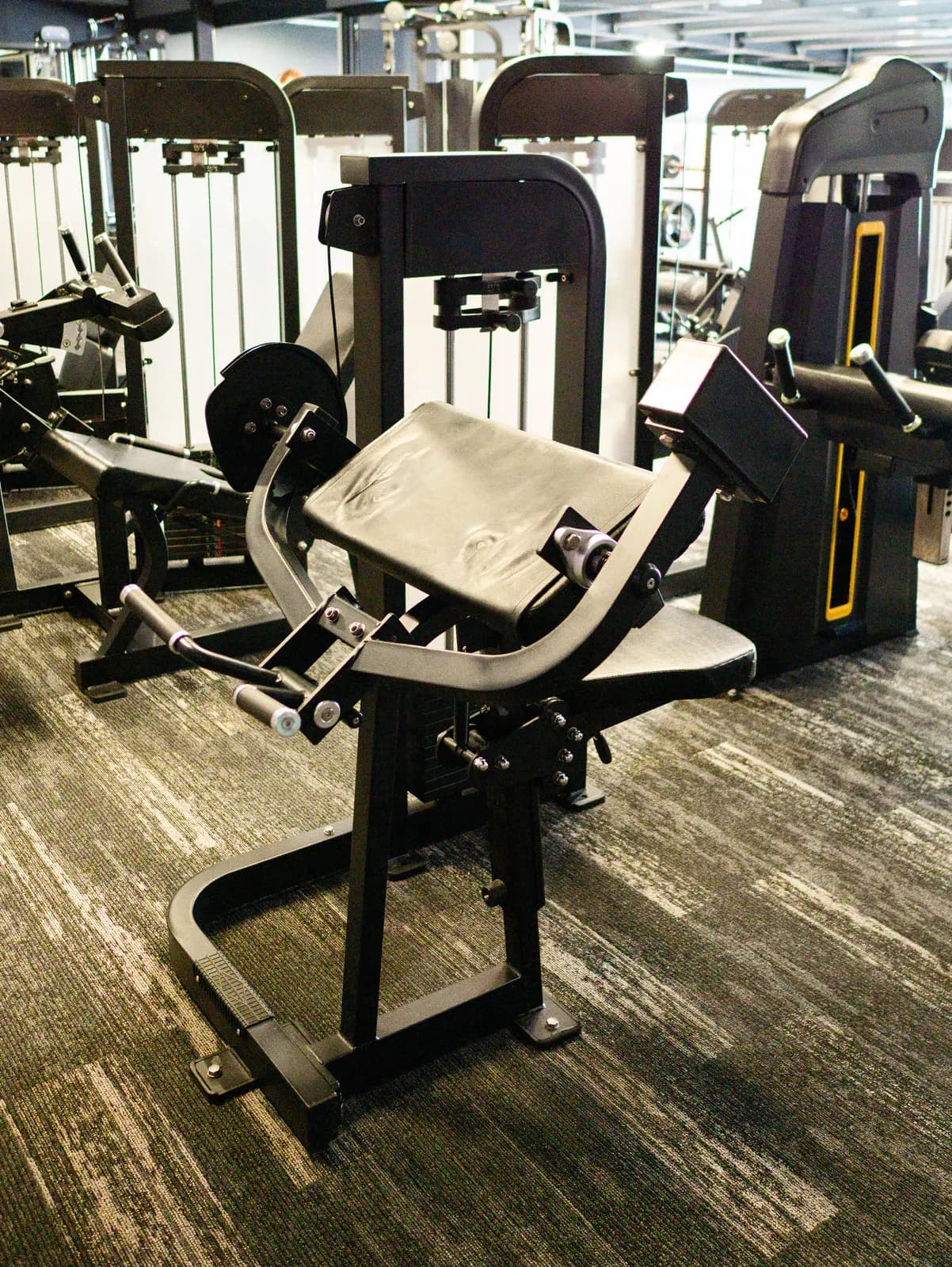
A seated bicep curl machine with arm pads that lock the elbows in place. Strict, isolated, easy to load heavy for arm-day finishers.
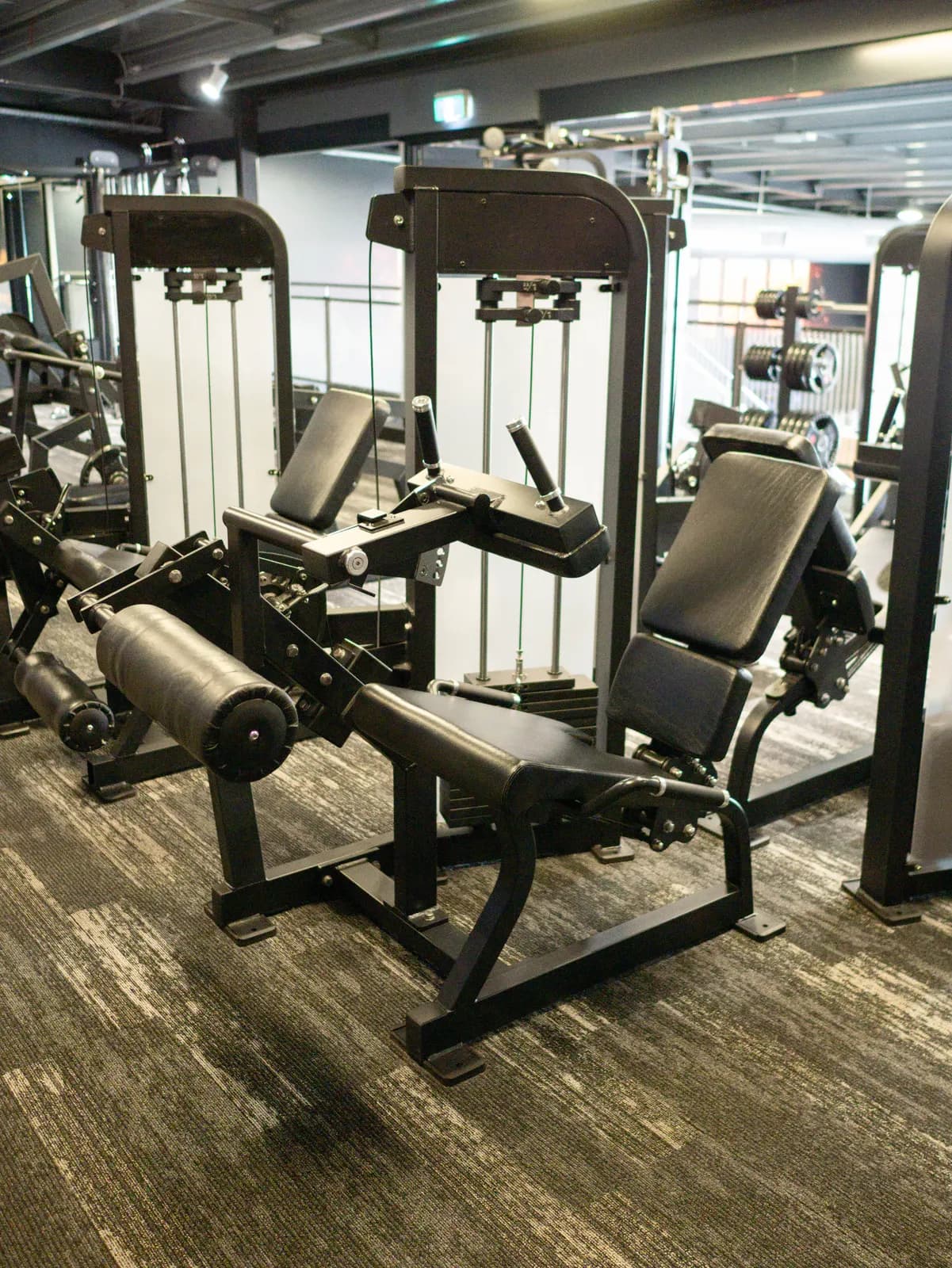
A seated hamstring curl that hits the hamstrings at a different fibre angle than the prone version. Many lifters respond better to one or the other, so use both.
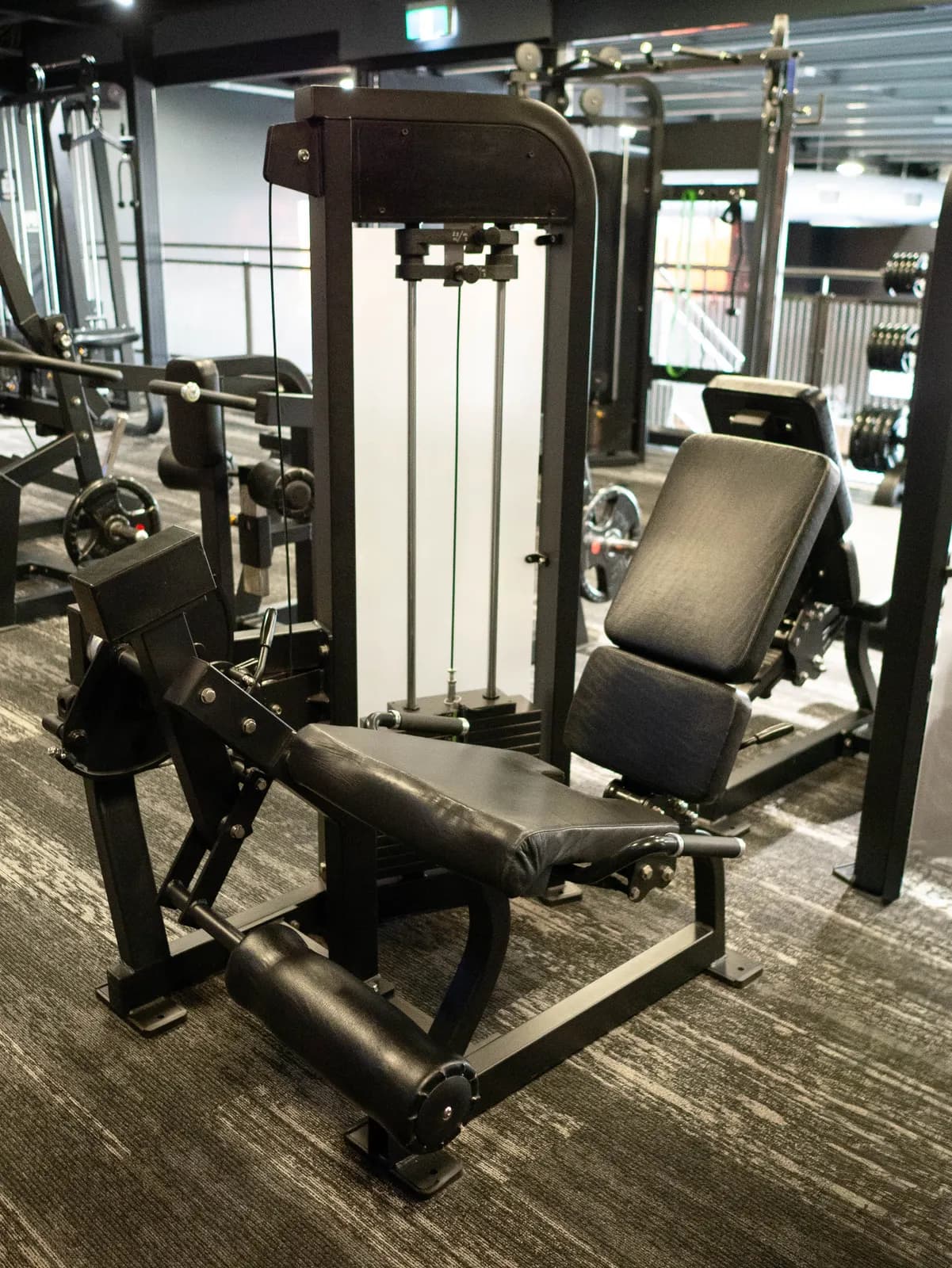
A pin-loaded seated leg extension for quads. Smooth resistance and quick weight changes suit high-rep finishers and pre-exhaust work before squats.
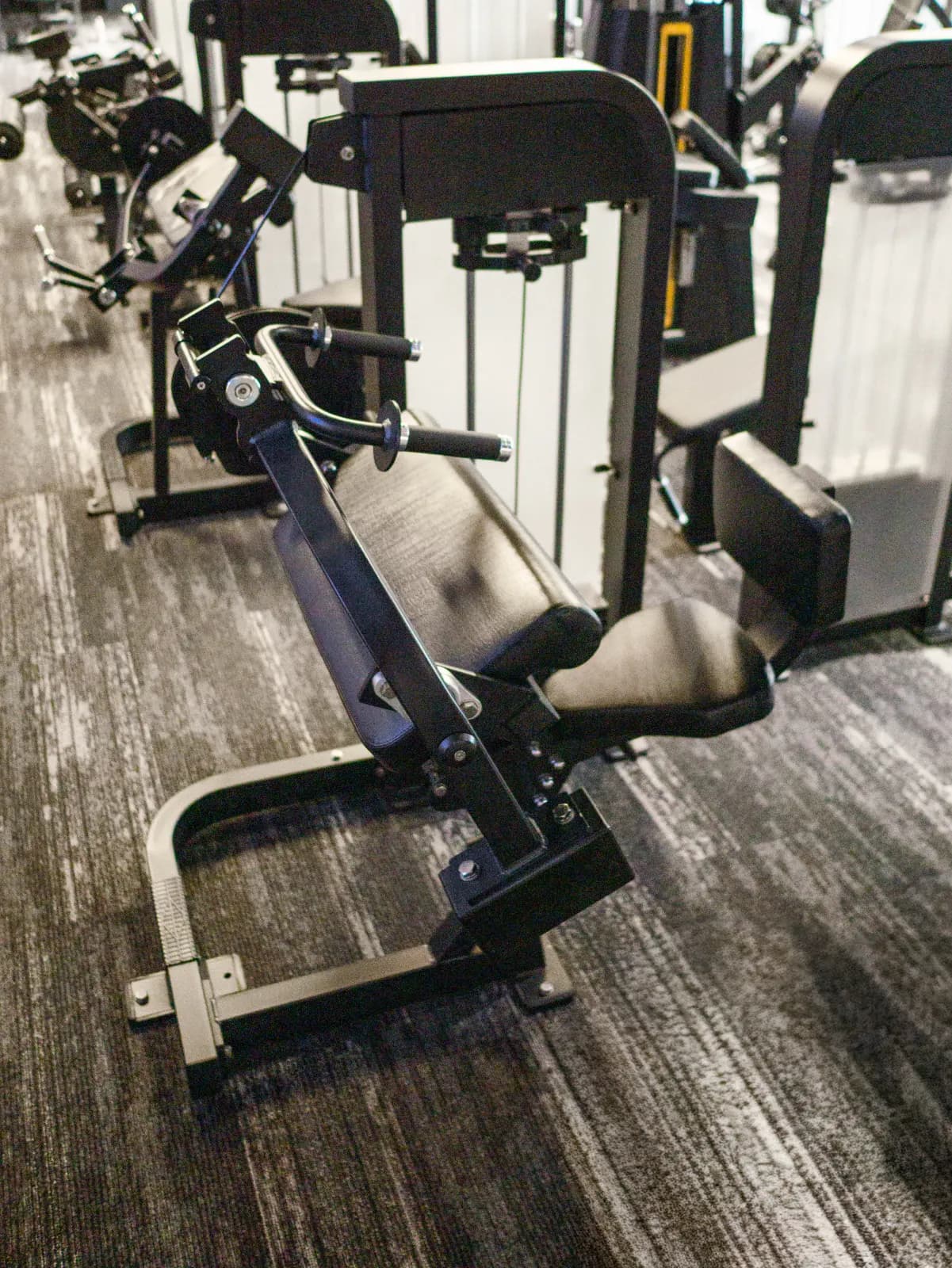
A seated overhead triceps extension that puts the long head of the triceps on a deep stretch. Strong machine for triceps mass.
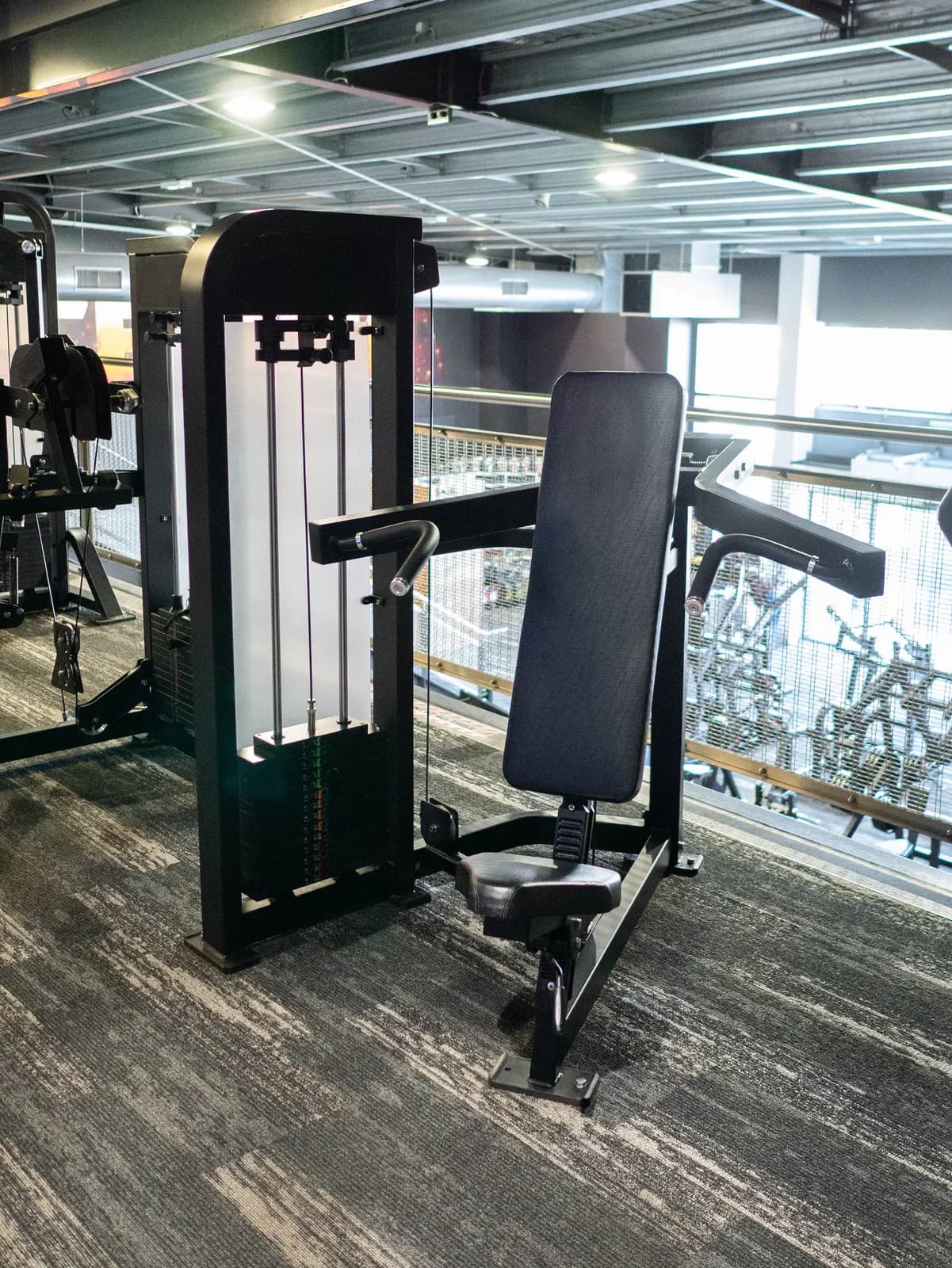
A pin-loaded overhead press for the deltoids. Quick weight changes suit finishers, supersets, and high-volume shoulder days.
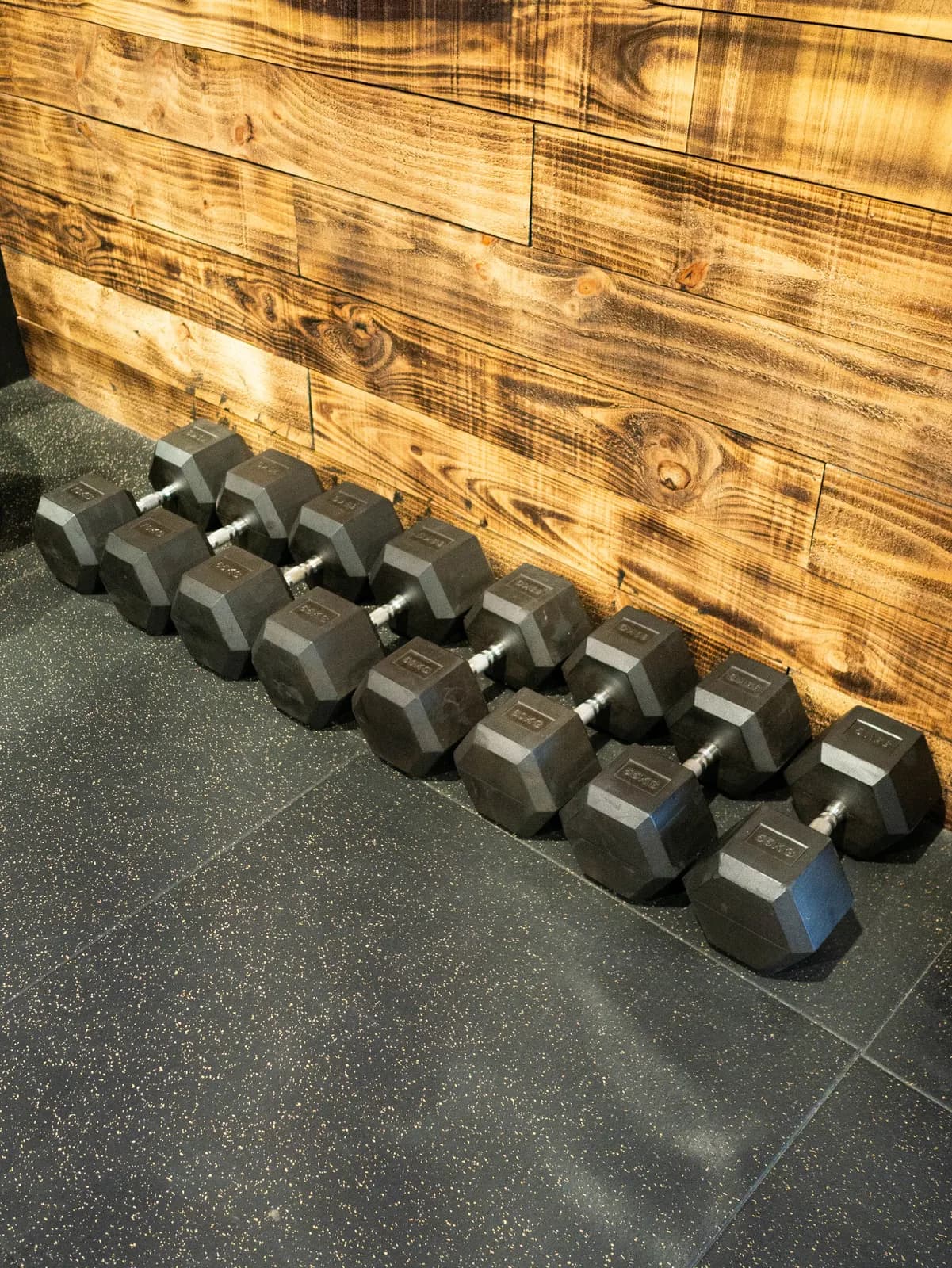
A full dumbbell rack from light to 70kg. Pairs are matched and racked in ascending order, so you can progress through weights without searching the floor for the next jump.
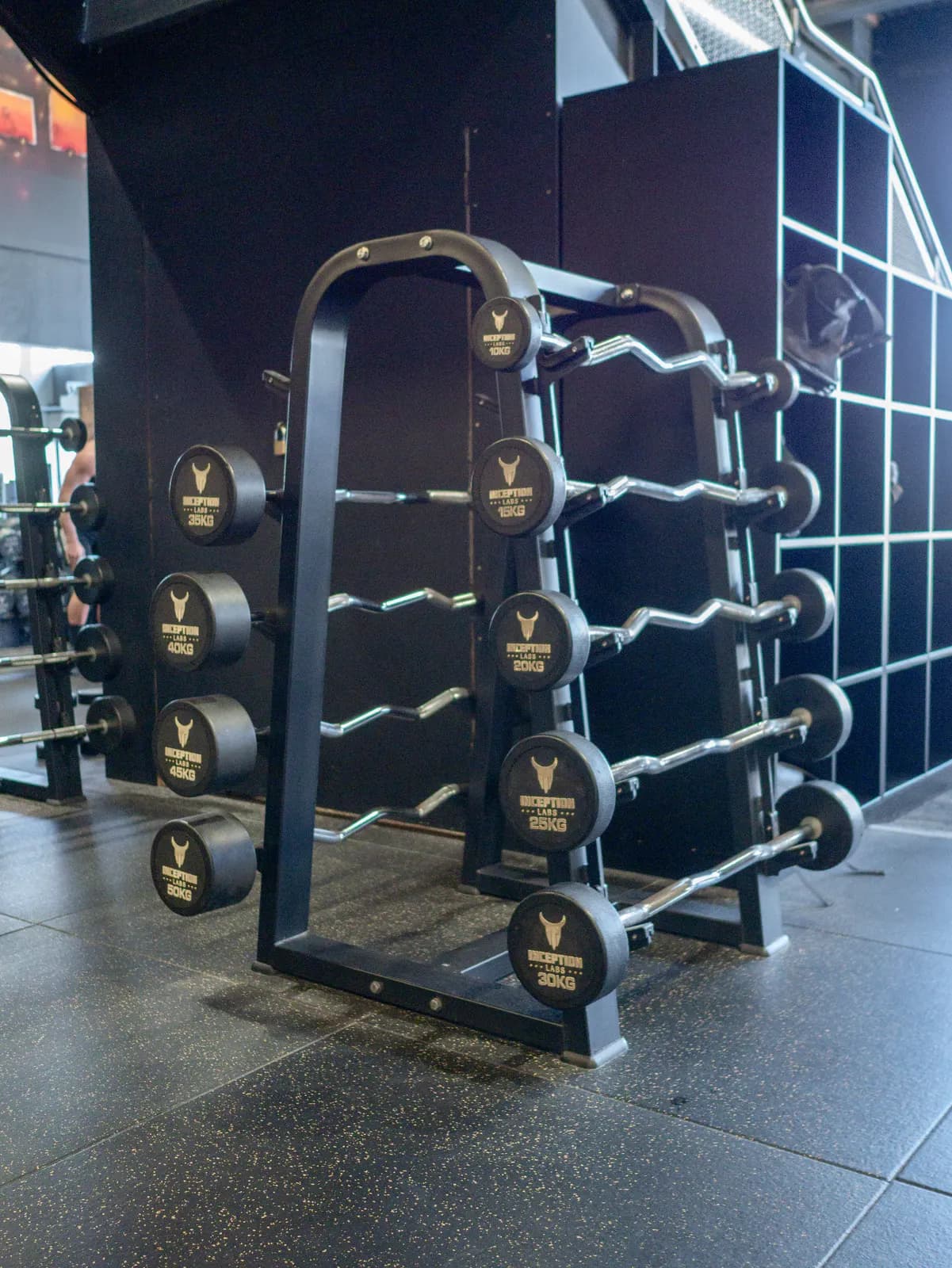
EZ-curl barbells with an angled grip that takes pressure off the wrists during bicep curls and skullcrushers. Standard for arm and accessory work.
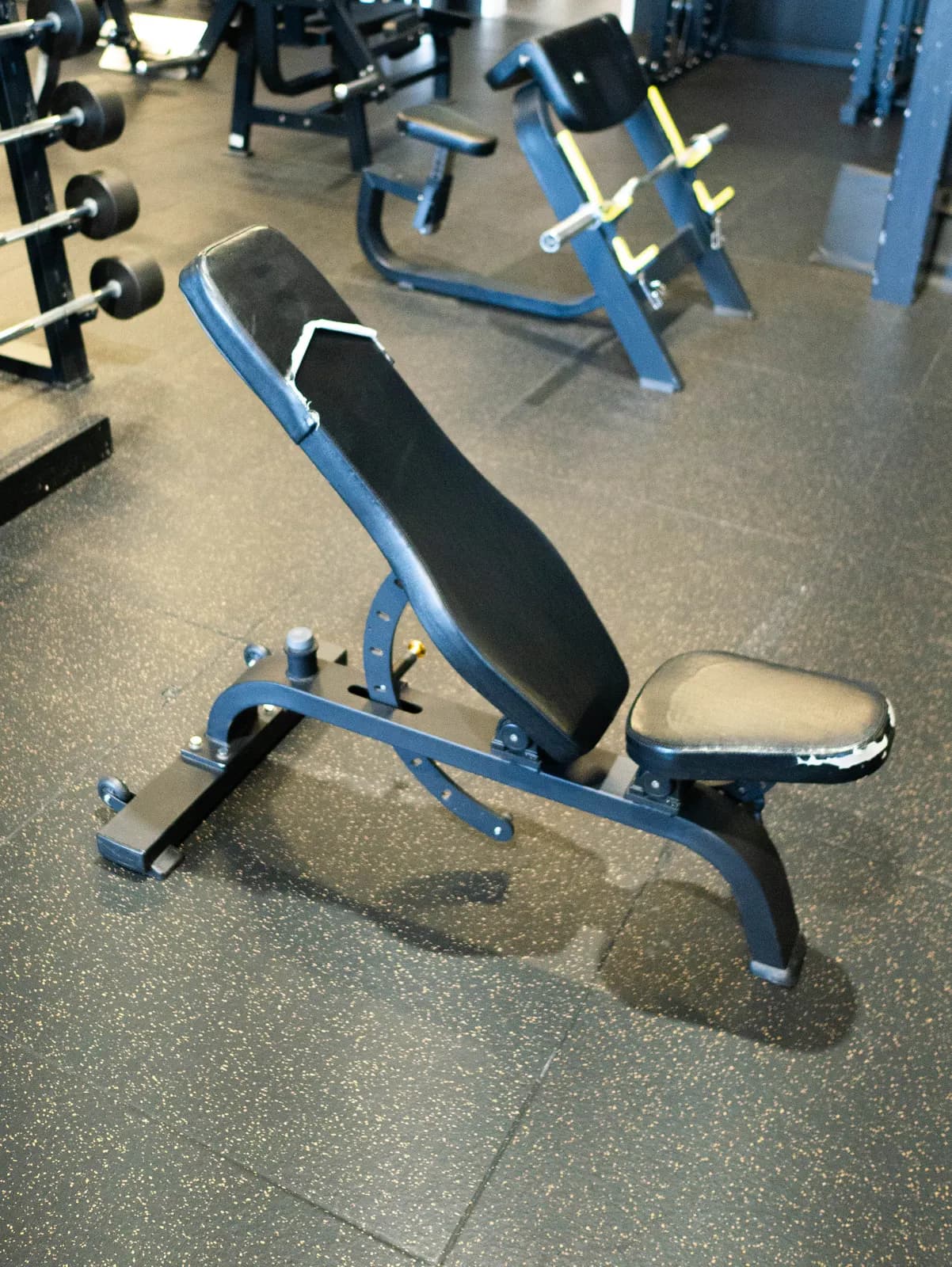
Adjustable free-weight benches that flatten, incline, and decline. Built for free-weight pressing, dumbbell work, and accessory movements where you need a stable base.
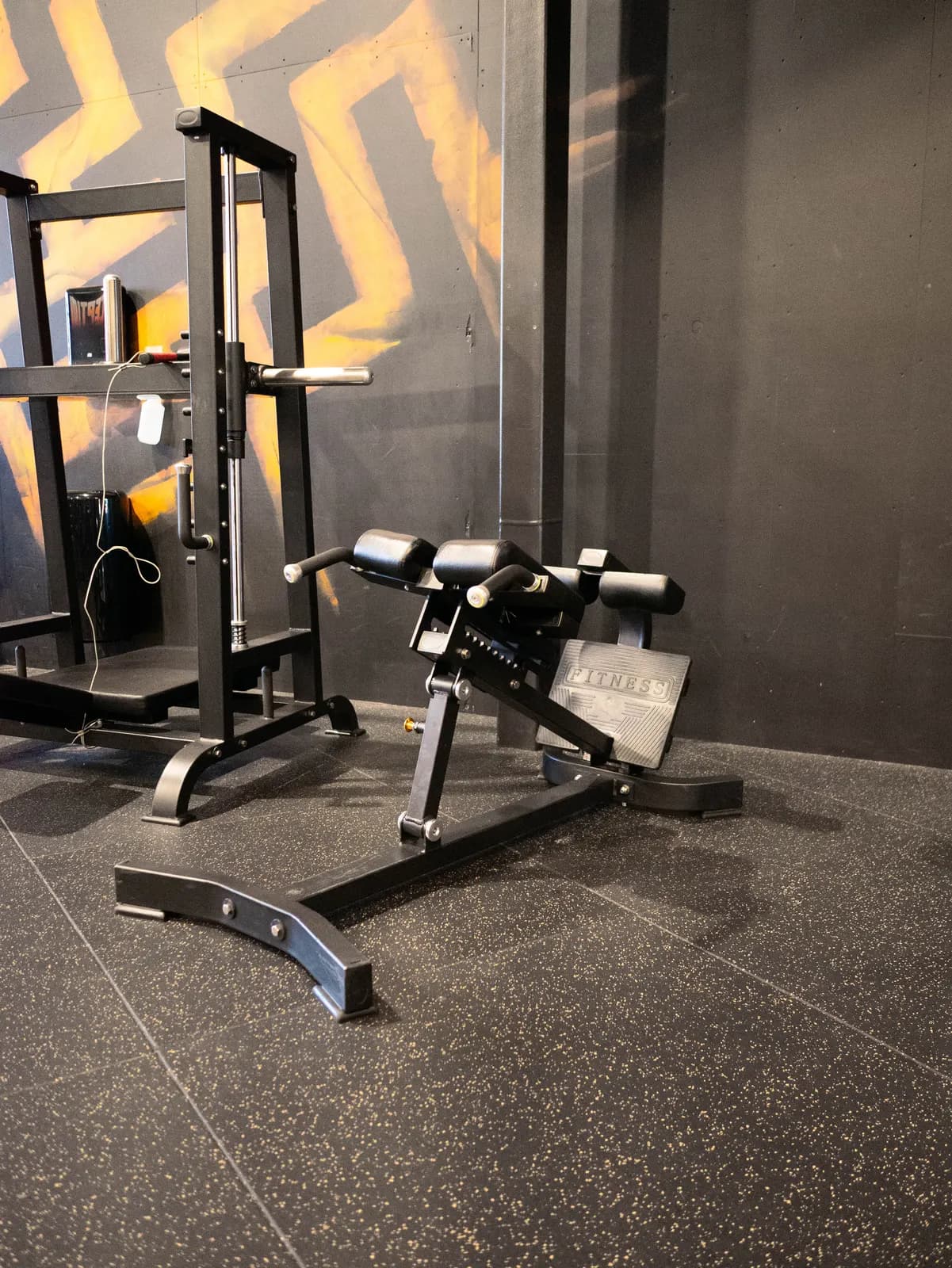
A 45-degree hyperextension bench for lower back, glute, and hamstring strength. A foundation movement for posterior-chain health and a useful warm-up for the hips before deadlifts.
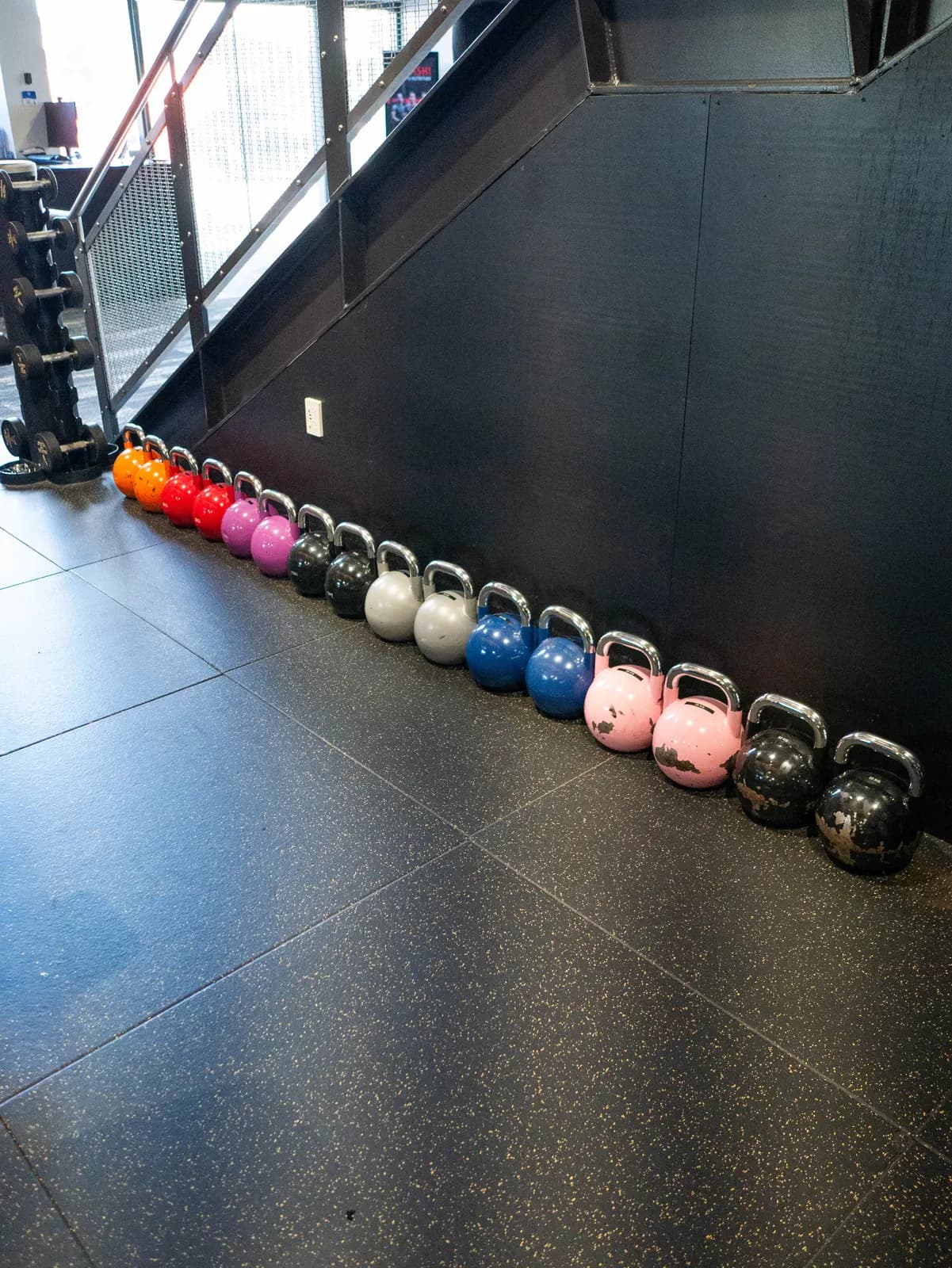
Kettlebells for swings, goblet squats, single-arm presses, Turkish get-ups, and conditioning circuits. Useful for athletic carryover alongside strength training.
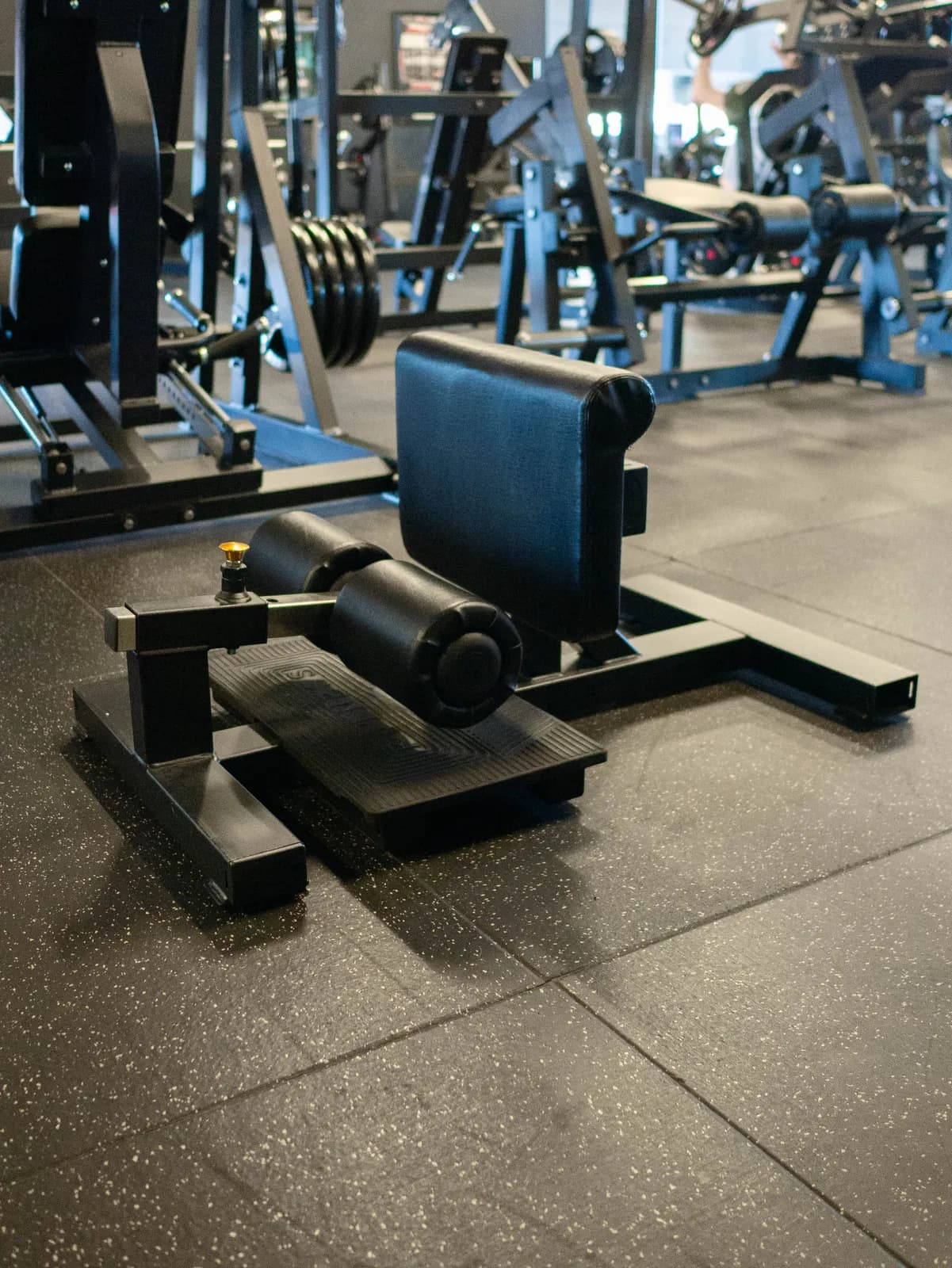
A roman chair for ab work, oblique twists, and lower-back endurance. Use it to load the core under real resistance, not just bodyweight crunches.
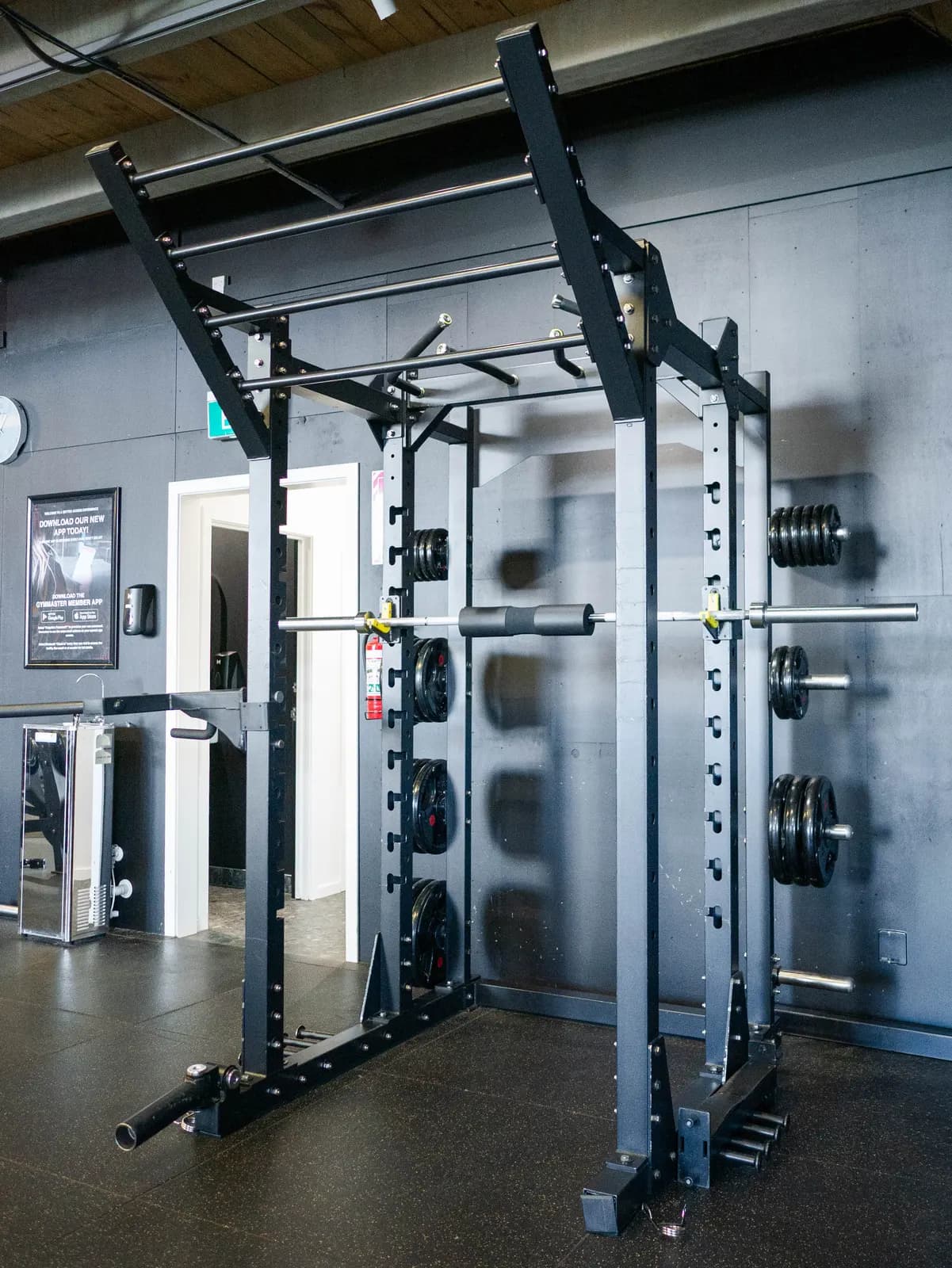
A heavy-duty power rack for squats, overhead press, rack pulls, and pin presses. Built for heavy free-weight work with full safety arms.
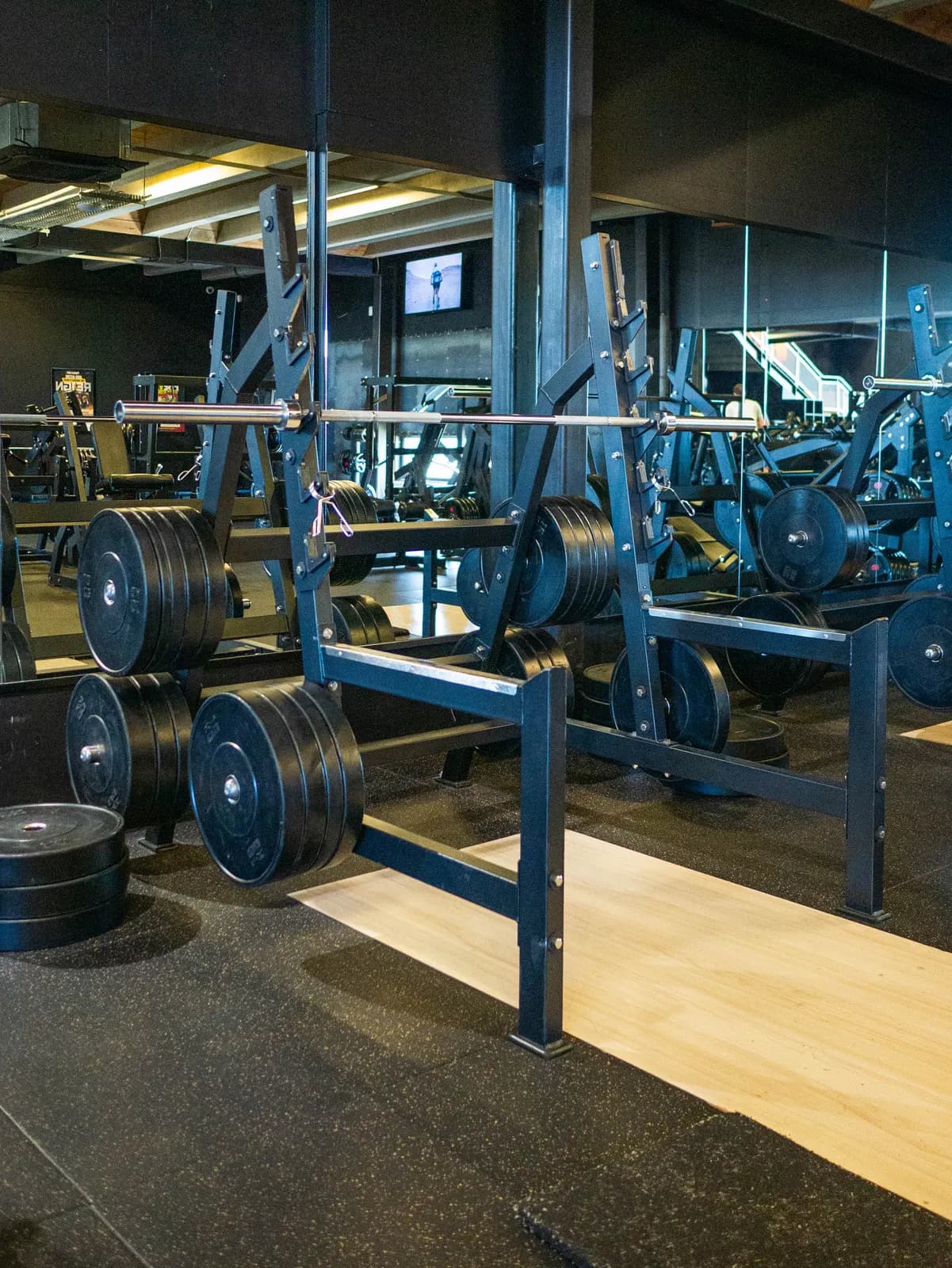
Standard 20kg Olympic barbells for bench press, deadlift, squat, and row variations. Straight bars rated for heavy loads, paired with full plate sets.
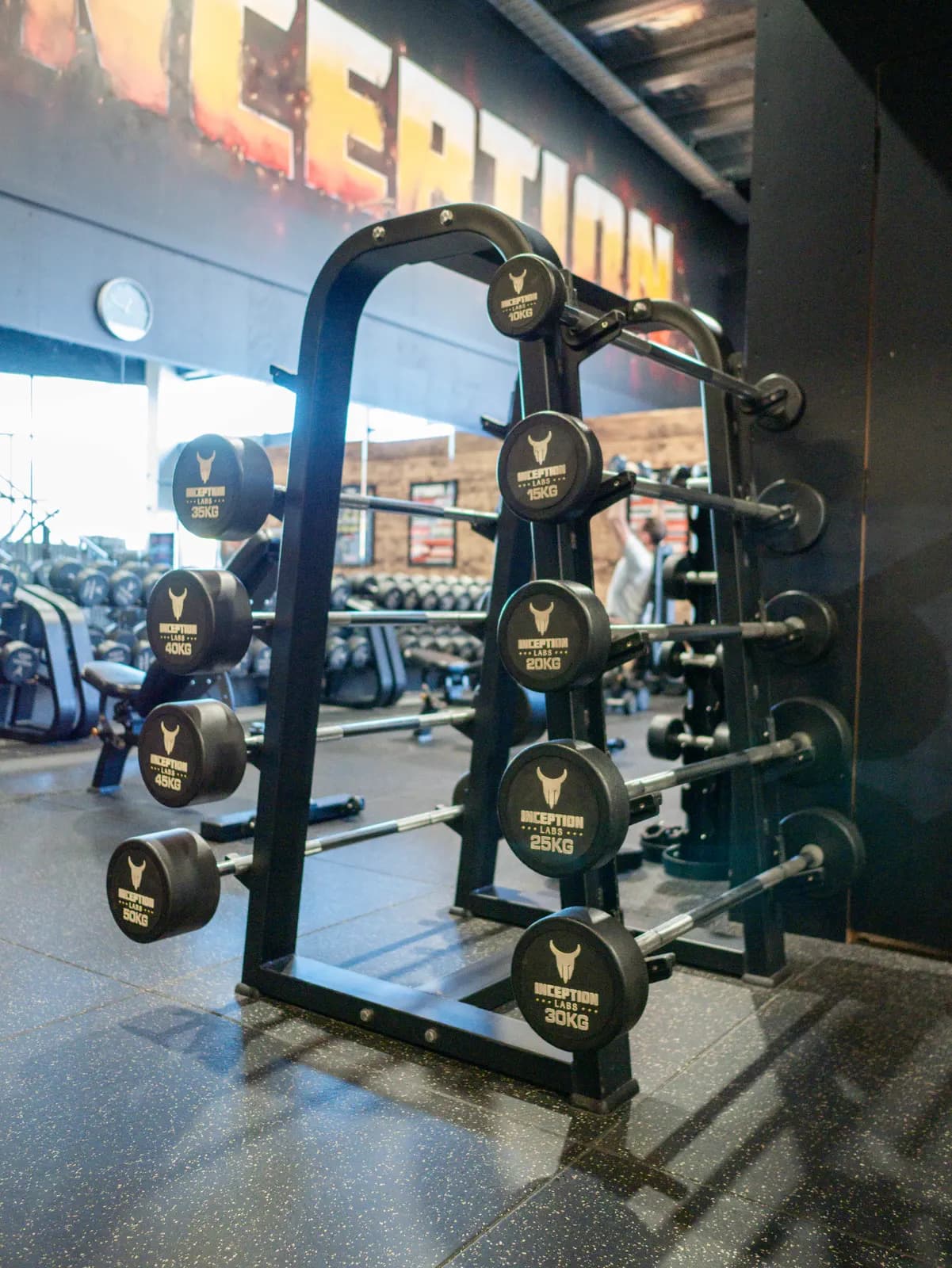
A tricep dip attachment for bodyweight or weighted dips. Targets triceps, lower chest, and front delts. A reliable mass-builder for the upper arm.
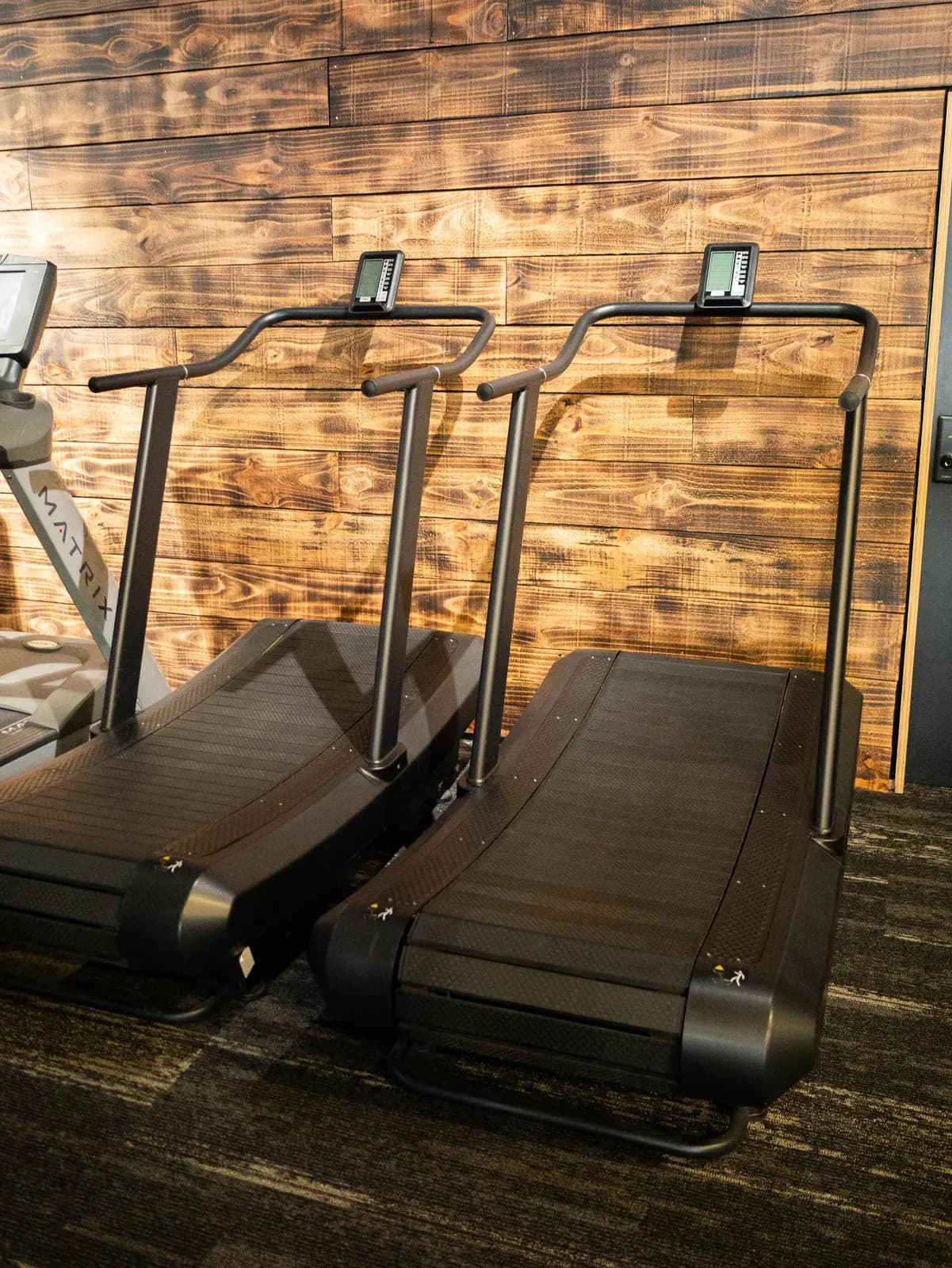
A self-powered curved treadmill that runs as fast as you do. Hard work for conditioning, sled-style sprint intervals, and sport-specific work. Far harder than a motorised treadmill at the same pace.
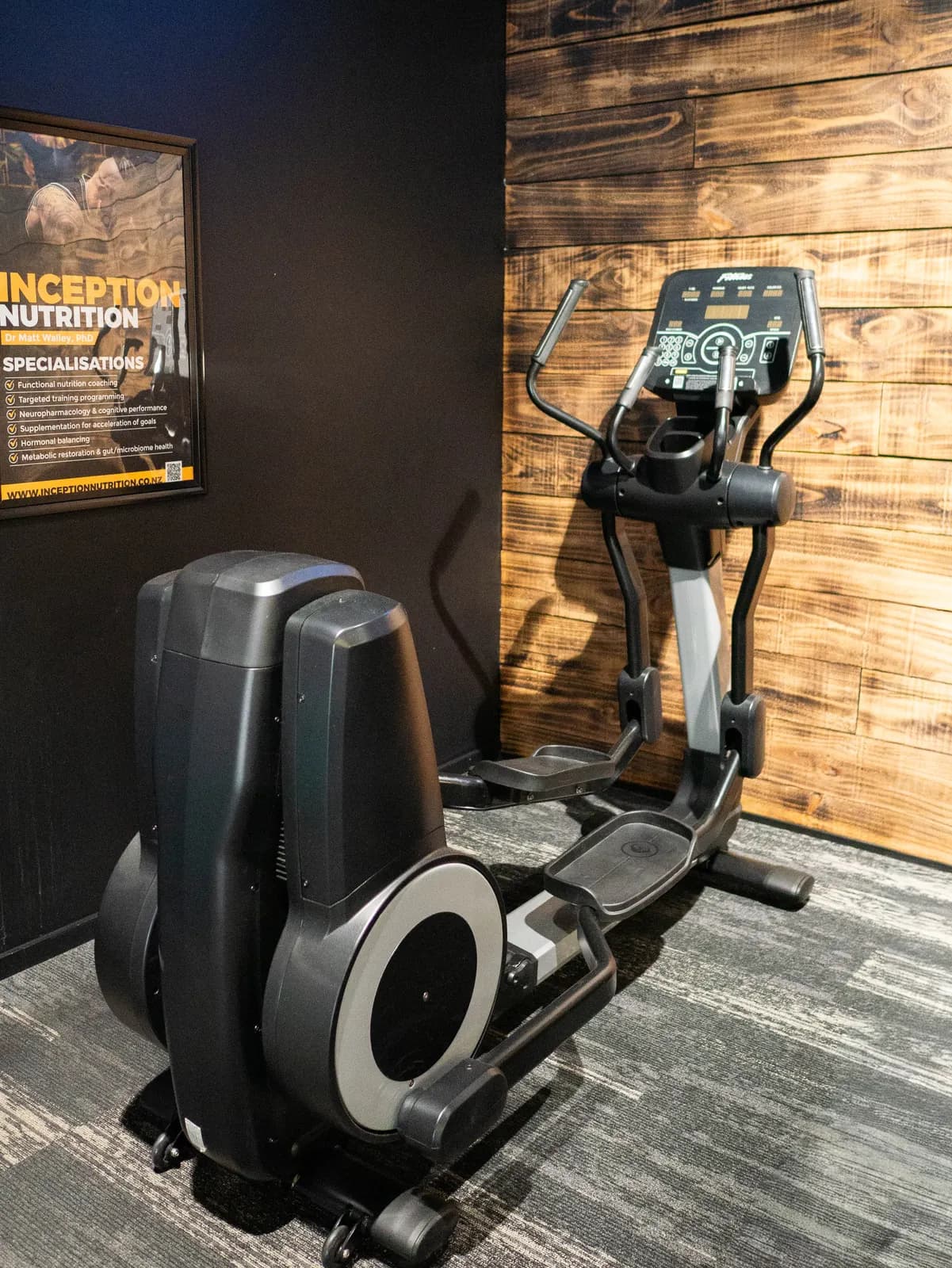
Low-impact elliptical trainers for cardio that's easy on the knees and hips. Suits steady-state work, recovery cardio, and rehab.
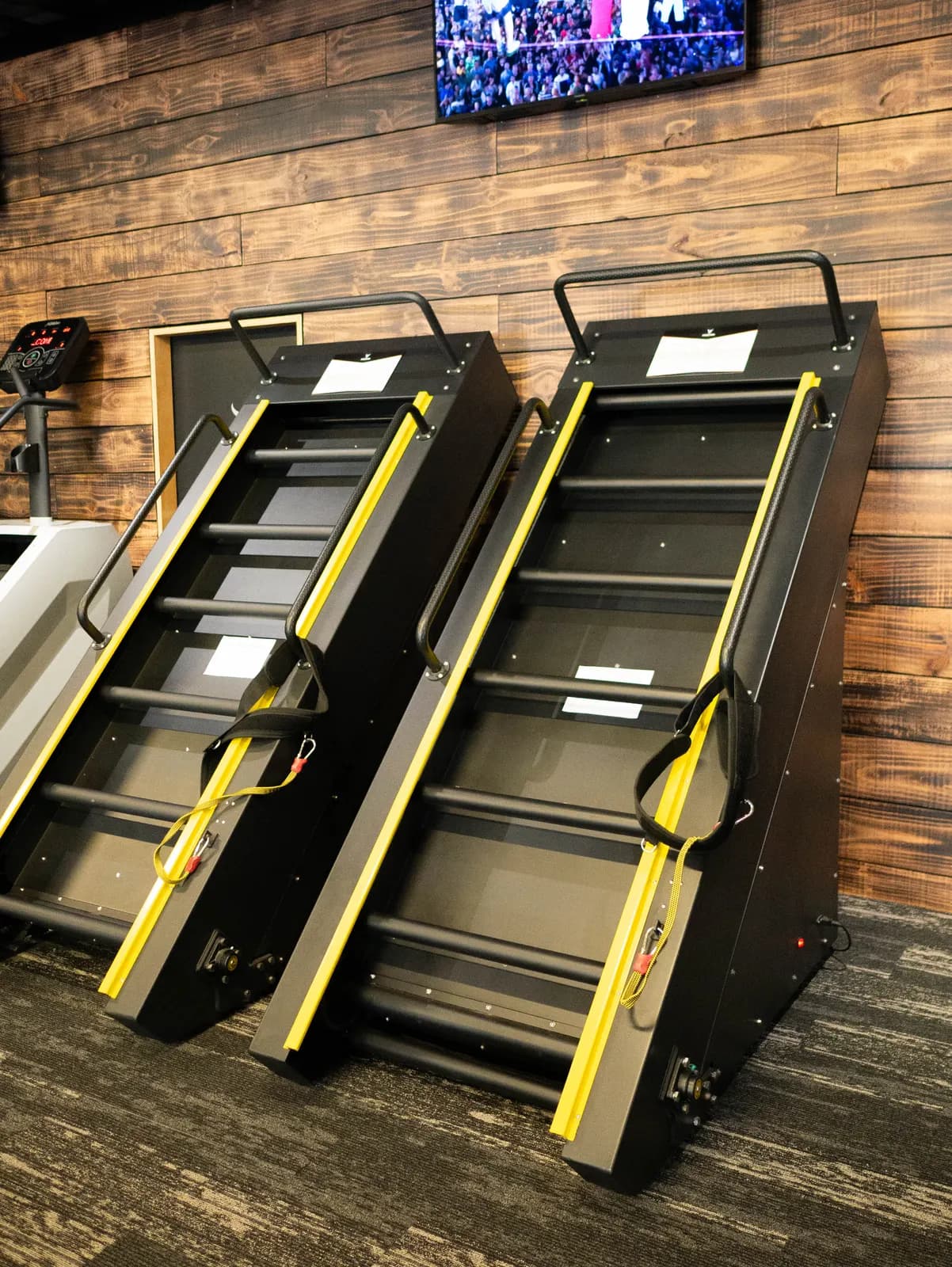
Jacobs ladder rigs that combine climbing motion with self-paced intensity. Hits the lats, core, and legs at once. One of the harder cardio pieces on the floor.
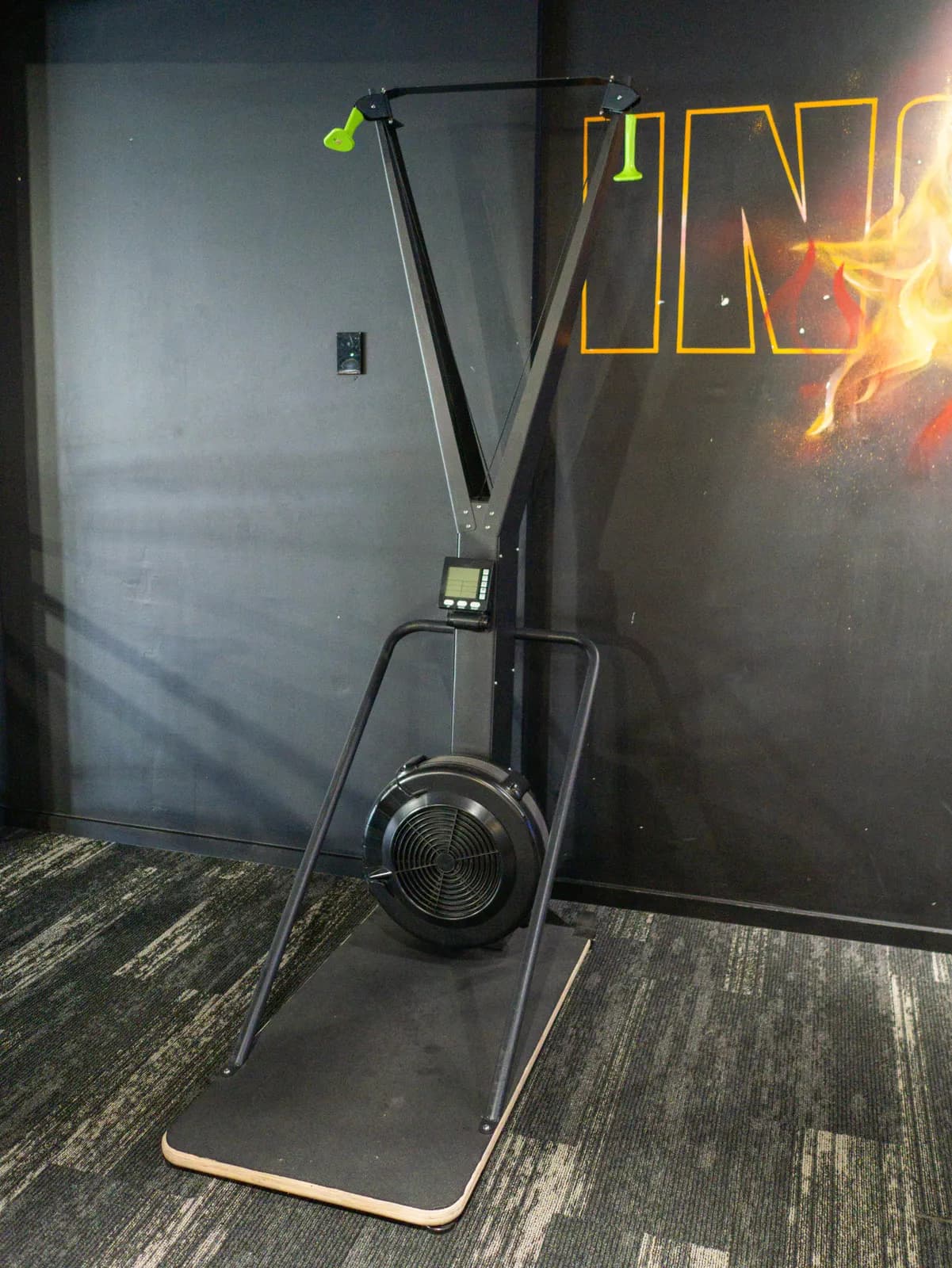
A ski erg for full-body conditioning. Hits the lats, triceps, abs, and posterior chain in one movement, with no impact on the joints.
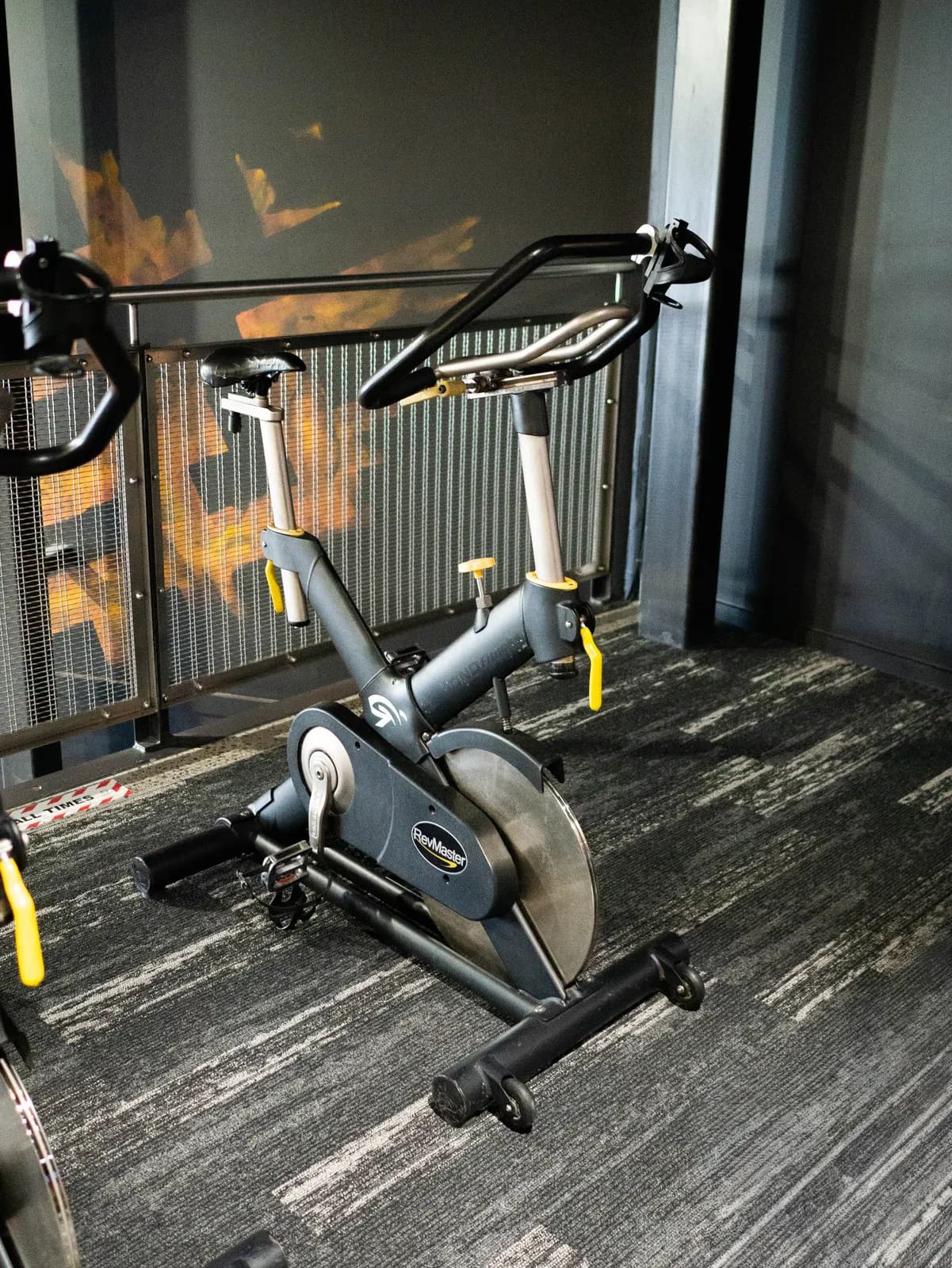
Commercial spin bikes for high-intensity intervals and steady-state cycling. Quick to set up between strength sets for conditioning circuits.
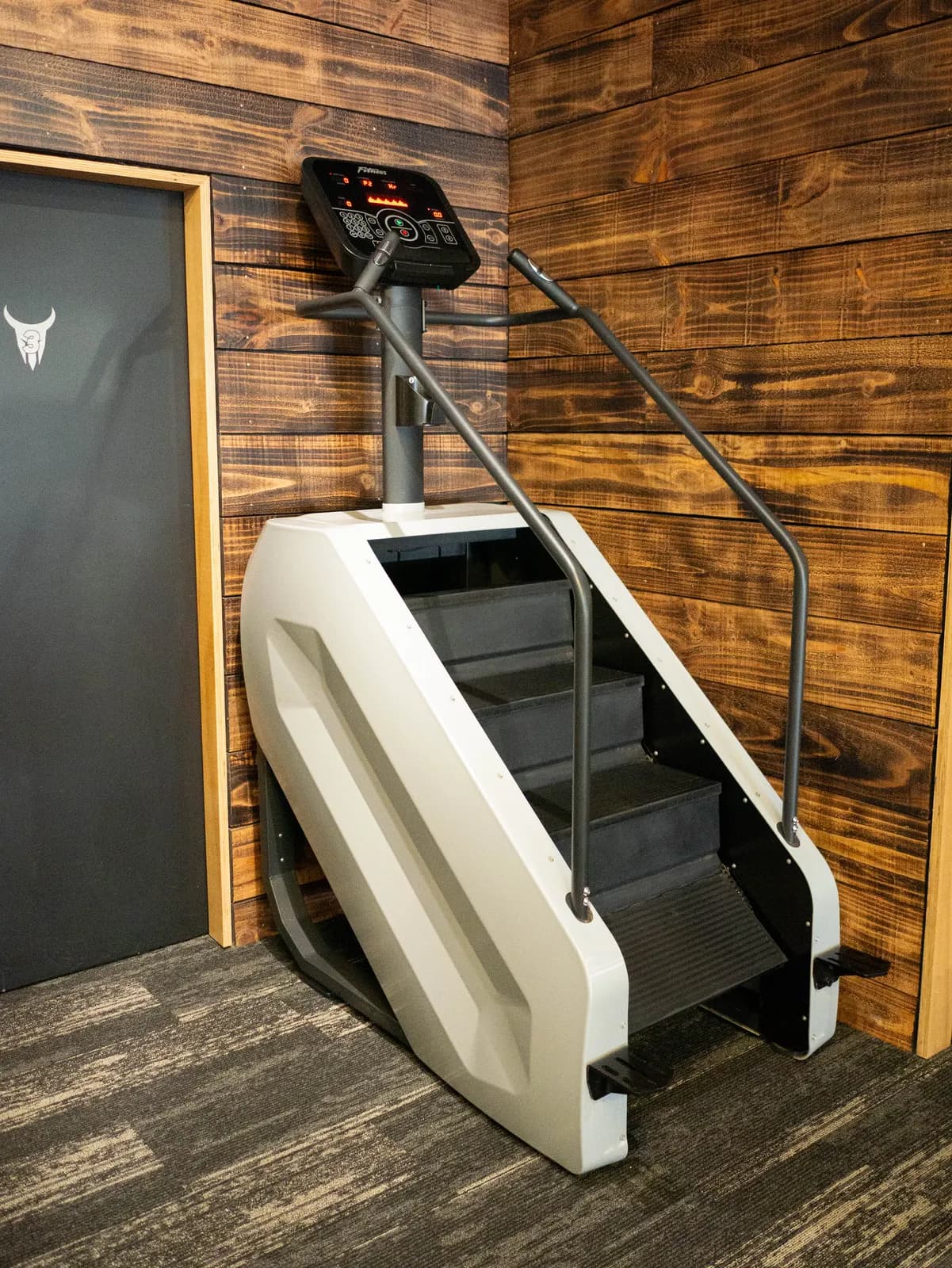
A revolving stair-climber for endurance, glute work, and conditioning. A low-impact option for fat loss and lower-body endurance.
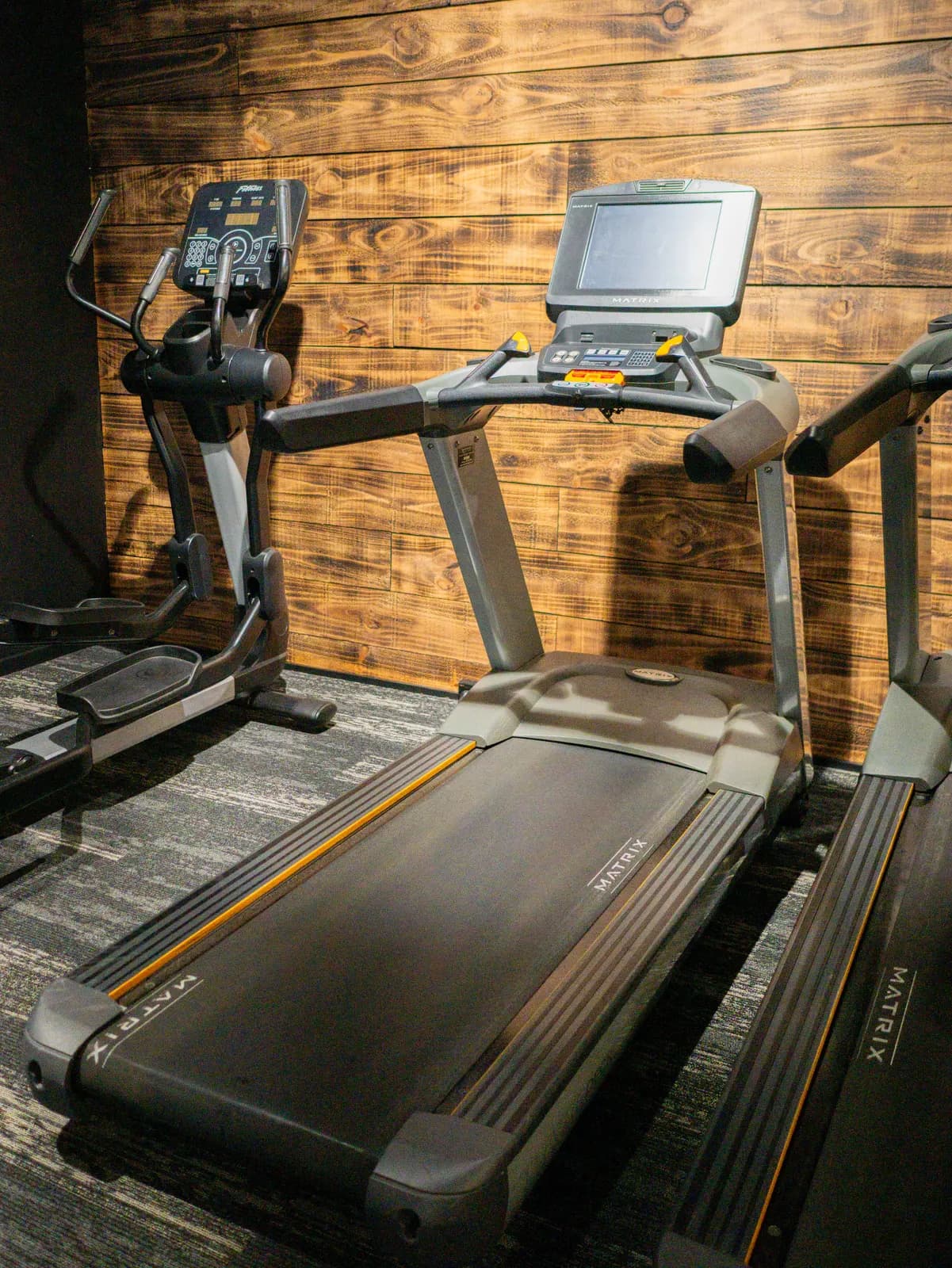
Commercial treadmills with high-incline settings for walking and steady-state running. Useful for warm-up, fat-loss cardio, and incline walking sessions for runners and lifters alike.
Come in on a free 24-hour trial and walk the floor yourself. No card on file, no pressure.