Lifestyle · Longevity
Training after 40: how to build strength and protect your health
Resistance training becomes more important after 40, not less. A practical guide to training smarter for strength, longevity, and long-term health in Christchurch.
By Inception Gym · 14 February 2026
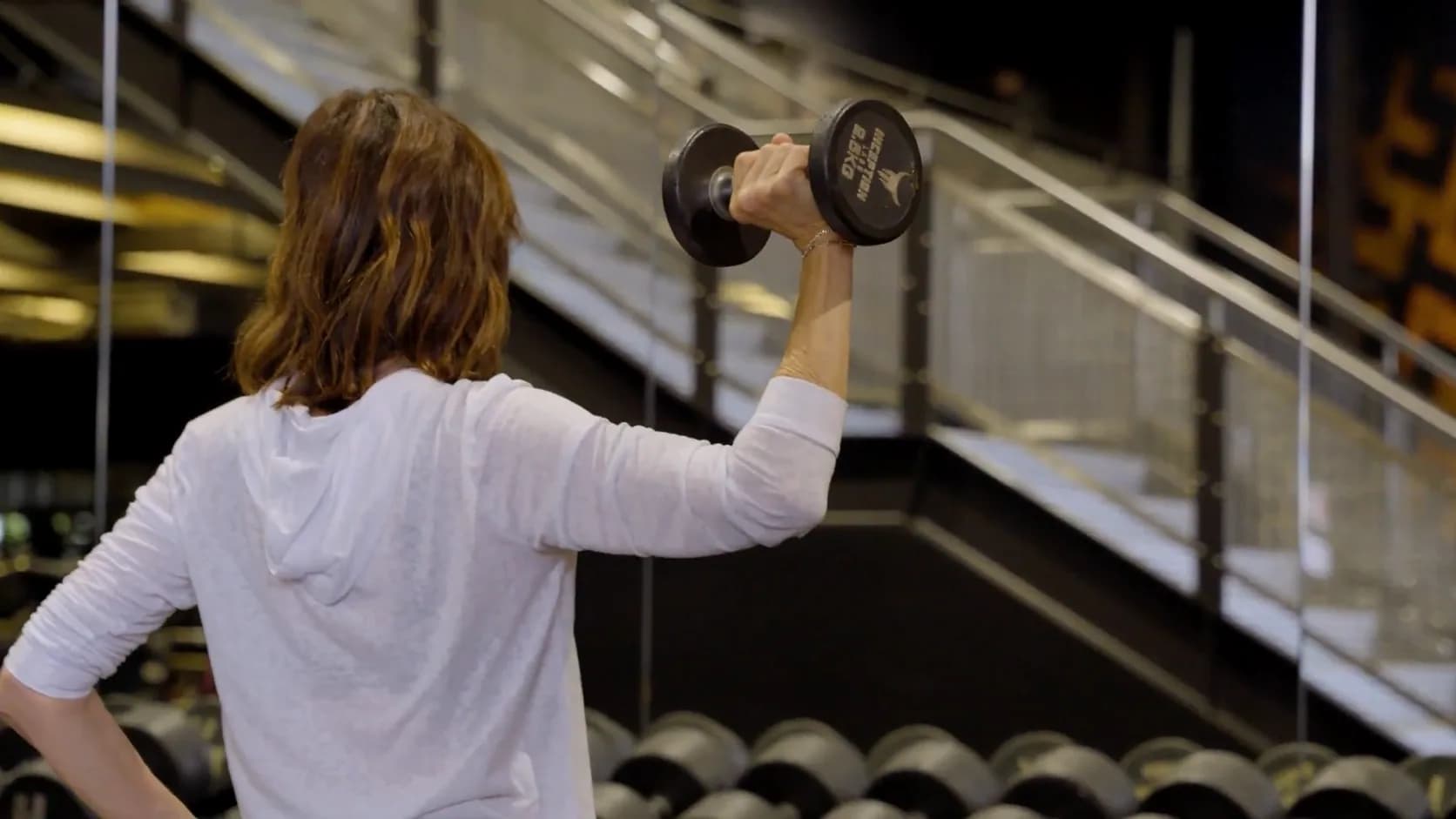
There's a persistent and damaging myth that serious training is a young person's pursuit. That after 40, the sensible approach is to ease back, switch to yoga, and accept that your best physical years are behind you. Some people believe that because they've been told it. Others believe it because their training started hurting in ways it didn't before, and they concluded that training itself was the problem rather than the approach.
The evidence points clearly in the opposite direction. Resistance training becomes more important with age, not less. The people who train intelligently through their 40s, 50s, and 60s don't just maintain their health, they protect capabilities others lose through inactivity and can't easily recover.
This is a guide for people over 40 who want to train seriously, understand what changes with age, and approach the gym in a way that builds strength and protects health for the long term.
What actually changes after 40
Understanding the physiological shifts with age helps you train around them rather than ignoring them or surrendering to them.
Sarcopenia: the muscle loss problem
Sarcopenia is the age-related loss of skeletal muscle mass and strength. It begins gradually in the 30s and accelerates through the 40s and 50s. Untreated, the average person loses 3 to 8 percent of muscle mass per decade after 30, with rates increasing after 60.
The consequences are significant: reduced strength, impaired mobility, slower metabolism, higher fall risk, and reduced capacity to perform everyday physical tasks. Sarcopenia is also linked to poor outcomes from illness and surgery, because muscle mass is a significant factor in metabolic resilience.
Progressive resistance training is the most effective intervention known for preventing and reversing sarcopenia. Not walking. Not swimming, though both are valuable. Resistance training, which means loading muscles against progressive resistance over time. The irreplaceable component.
Hormonal changes
Testosterone and growth hormone decline gradually from the late 20s onward in men. For women, perimenopause and menopause bring significant hormonal changes that affect body composition, bone density, and recovery. These shifts affect the rate at which muscle can be built, the ease of fat loss, and recovery between sessions.
The response is not to stop training but to train consistently and pay more attention to the factors that support recovery: sleep, nutrition, stress management, and sensible programming.
Recovery takes longer
Younger trainees can often train intensely, sleep moderately, eat adequately, and recover in 48 hours. After 40, recovery becomes more dependent on getting the supporting factors right. Sleep quality matters more. Protein intake matters more. Managing session frequency to allow genuine recovery between hard sessions matters more.
That doesn't mean training less hard. It means the work you put into the 22 hours outside the gym becomes more directly connected to the quality of what happens in the gym.
Joint health needs more attention
Tendons and ligaments become less elastic with age, and connective tissue accumulates wear from decades of use. That doesn't mean joints are fragile. It means extreme ranges of motion under heavy load, sudden changes in training volume, and poor warm-up practices are more likely to cause problems than they would have at 25.
Intelligent programming respects this by using appropriate loading, prioritising joint-friendly movement patterns, including warm-up work, and managing training volume sensibly.
What shouldn't change after 40
The fundamentals of effective training don't change with age.
Progressive overload still works. Muscles still adapt to progressive increases in load and volume. The rate of adaptation may be slower and recovery between sessions may need more management, but the basic mechanism of training adaptation is the same at 50 as at 25.
Compound movements are still central. Squats, deadlifts, presses, rows, and pulls remain the foundation of effective resistance training at any age. The specific implementation may change (machine variations, modified loading, adjusted ranges of motion), but the movement patterns that produce strength and muscle mass don't fundamentally change.
Intensity matters. Training with insufficient challenge produces insufficient adaptation at any age. Many older trainees reduce intensity so substantially that their training no longer provides a meaningful stimulus. Being conservative about volume (total number of sets) is sensible. Being conservative about intensity (relative effort per set) is not.
Practical adjustments
Warm up more thoroughly
What worked as a perfunctory warm-up at 25 is insufficient at 40+. Connective tissue needs more blood flow and gradual loading before heavy work. A thorough warm-up also provides better neuromuscular activation, which improves strength output in working sets.
A practical warm-up for a strength session:
- Five to ten minutes of light cardio to raise body temperature
- Mobility work targeting the joints involved (hips and ankles for lower body, shoulders and thoracic spine for upper body)
- Two to three progressive warm-up sets on the first working movement, starting light and building toward working weight
That adds ten to fifteen minutes to a session but significantly reduces injury risk and often improves performance.
Prioritise joint-friendly variations
Many exercises have multiple valid implementations that create different amounts of joint stress. Choosing the version that provides the stimulus with the least joint stress is a sound principle for lifters over 40.
Examples:
- Belt squats and pendulum squats instead of or alongside barbell squats (reduced spinal load)
- Plate-loaded chest press machines with rotating handles instead of a fixed-bar barbell press (reduced wrist and shoulder stress)
- Trap bar deadlift instead of conventional deadlift for lifters with lower back sensitivity (more upright torso, reduced lumbar stress)
- Machine rows instead of or alongside barbell rows for mid-back work with less lower back involvement
At Inception Gym, the 92-piece equipment selection was deliberately built to cover every major movement pattern with options that minimise unnecessary joint stress. Not about making training easier. About making it sustainable.
Manage volume before intensity
If you're returning to training after a break or significantly increasing your training load, volume increases should come before intensity increases. Tendons and connective tissue adapt more slowly than muscle. You may have the muscular strength to lift a particular weight before your tendons are conditioned to handle the stress of doing so repeatedly across a full training block.
A sensible approach when increasing training load after 40: increase sets before weight, allow at least three to four weeks at a new volume before adding significant load, and pay attention to joint signals (aching or discomfort that persists between sessions warrants a load reduction or movement adjustment).
Prioritise sleep and recovery
Sleep is the primary recovery window for resistance training adaptations. Chronic sleep restriction reduces testosterone, impairs muscle protein synthesis, increases cortisol, and degrades cognitive function. For lifters over 40 already managing naturally declining hormone levels, poor sleep amplifies the disadvantage.
Seven to nine hours per night is the evidence-based recommendation. If training performance is declining, energy is low, and recovery feels inadequate, sleep quality is the first place to look before adjusting training variables.
Protein intake matters more, not less
As discussed in the protein intake guide, muscle protein synthesis response to a given protein dose decreases with age due to anabolic resistance. Older adults need a higher per-meal protein dose to get the same MPS response as younger adults.
Targeting 0.4 to 0.5 grams of protein per kilogram of bodyweight per meal (rather than 0.3 to 0.4g/kg) is a reasonable adjustment for adults over 50. For a 90kg person, that's 36 to 45 grams of protein per meal across three to four meals.
The equipment advantage
The diversity and quality of equipment at Inception Gym is particularly relevant for older lifters because it provides programming options that aren't available at most commercial gyms.
A plate-loaded belt squat allows high-quality leg training without axial spinal loading. A pendulum squat provides deep-range quad training with minimal spinal stress. With 43 plate-loaded machines and 71 machine variants across every major movement pattern, you can always find a joint-friendly version of the movement you need, regardless of what's limiting your options on a given day.
That matters because intelligent long-term training needs flexibility. Some days, a previous shoulder injury means barbell pressing isn't the right choice. Having a quality machine alternative means the session still happens productively rather than being skipped or compromised.
Owner-operated, evidence-led
One of the things that distinguishes Inception Gym from the big franchise gyms is that it is owner-operated. Matt Walley, who co-founded the gym with Elise in 2022 and holds a PhD, has spent years working through the evidence on training, nutrition, and longevity protocols, and that thinking shapes how the gym is equipped and run.
For members over 40 navigating training around an old injury, or adjusting their approach with age, that shows up in practical ways: an equipment selection chosen for joint-friendly options rather than familiarity, free body composition scans for every member, and a free initial PT and nutrition consult for contract members. The answers you get are grounded in evidence, not a sales script.
That kind of ownership is rare among commercial gyms. At Inception, it's the operating model.
Nutrition and body scans
Training over 40 benefits significantly from objective data. Body composition scans, free for all Inception Gym members, give you specific information about muscle mass, fat mass, and body fat percentage. More informative than weight alone, and they let you track whether training is producing the desired compositional changes.
Combining training data with body scan results and a tailored nutrition protocol produces measurably better outcomes than training without those inputs. Inception Nutrition runs PhD-led nutrition coaching built around your scan data and training demands. For older athletes, where the interaction between nutrition, hormones, and training adaptations is more complex than at younger ages, a structured approach to nutrition is particularly valuable.
Long-term vision: what are you training for
The most effective frame for training after 40 is one that extends beyond aesthetics or short-term performance goals. The question isn't "how do I look this summer." It's "what do I want to be capable of at 70."
The answer almost certainly involves maintaining enough muscle mass to move independently and comfortably, enough bone density to avoid fracture risk, enough cardiovascular capacity for everyday physical demands, and enough cognitive health to remain sharp and engaged.
All of those outcomes are significantly influenced by resistance training maintained consistently across decades. The gym isn't a place you go to get ready for something. It's a habit that determines what kind of person you're physically capable of being throughout your life.
Starting, or restarting, at 40 is not too late. It is, in many ways, exactly the right time.
Explore membership options at Inception Gym or try a free 24-hour pass with no commitment.
---
Inception Gym is at Tower Junction, 65 Blenheim Road, Addington, Christchurch. 24/7 access, 92 pieces of equipment designed for effective training at any age, and free body composition scans for all members.