Nutrition · Diet
How Much Protein Do You Actually Need? A Guide for Gym Members
Cut through the noise on protein intake. Science-backed guidance on how much protein you need to build muscle and recover, for gym members in Christchurch.
By Inception Gym · 12 July 2025
The short answer: if you train with weights and want to build or keep muscle, aim for 1.6 to 2.2 grams of protein per kilogram of bodyweight per day, spread across three to four meals. For a 70kg person that is roughly 112 to 154 grams a day.
The longer answer matters, because the noise around protein is loud. Some sources tell you to eat 1 gram per pound of bodyweight. Others say 0.8 grams per kilogram is plenty. Supplement companies suggest multiple shakes per day. Contrarian voices claim whole foods are sufficient and supplements are wasted money.
Cutting through the noise means going back to what the research actually shows.
What protein does in the body
Muscle tissue is built from proteins, and muscle protein is in a constant state of synthesis and breakdown. Muscle protein synthesis (MPS) builds new muscle protein. Muscle protein breakdown (MPB) is the opposing process. Muscle growth happens when synthesis exceeds breakdown over time.
Resistance training stimulates MPS, but it also stimulates MPB. The net result depends on amino acid availability, which can only come from dietary protein. Without adequate dietary protein the anabolic response to training is blunted. You provide the training stimulus but not the raw materials.
Protein also drives satiety (it is the most filling macronutrient), immune function, enzyme production and most other biological processes. For gym members, MPS is the primary reason to pay close attention to intake.
How much protein do you actually need?
The most-cited reference ranges come from systematic reviews and meta-analyses. Current consensus among sports nutrition researchers:
For muscle building and body composition improvement in trained individuals: 1.6 to 2.2 grams of protein per kilogram of bodyweight per day.
That range covers most people. Some research suggests a ceiling around 2.2g/kg, above which additional protein does not produce additional MPS benefits. Going above is not harmful, but it is not efficient.
For reference:
- A 70kg person needs about 112 to 154 grams of protein per day.
- A 90kg person needs about 144 to 198 grams of protein per day.
- A 55kg person needs about 88 to 121 grams of protein per day.
These numbers are substantially higher than what many people eat by default.
What about the RDA?
The Recommended Dietary Allowance for protein is 0.8g/kg per day. That figure represents the minimum needed to prevent deficiency in sedentary adults, not the optimal amount for people doing regular resistance training. Using the RDA as a target for an active person is like using the minimum fuel to keep a car running as your refuelling benchmark.
Protein timing
The research on protein timing has evolved over the past decade. The "anabolic window" concept, that you must consume protein within 30 minutes of training or lose the benefit, has been largely discredited as a rigid requirement.
What the evidence does support:
Distribution matters more than immediate post-workout timing. Spreading protein across three to four meals through the day produces better MPS outcomes than the same total in one or two large doses. MPS response to protein is dose-dependent but has a ceiling per meal, roughly 0.4g/kg. Eating 150 grams at dinner does not produce the same MPS stimulus as 50 grams across three meals.
Post-workout nutrition matters, but the window is longer than people think. Consuming protein within two to three hours of training is good for recovery and MPS. A protein-rich meal before training also extends this window. Eating protein reasonably close to your training session is worth doing; obsessing over exact timing is not.
Pre-sleep protein has genuine benefits. Research from Maastricht University and others has found that consuming 30 to 40 grams of slow-digesting protein before sleep (casein or a mixed protein source) enhances overnight MPS and recovery.
Whole foods vs supplements
The source of protein matters less than the total intake and amino acid profile, with one caveat: leucine.
Leucine is the amino acid most responsible for triggering MPS. Foods high in leucine, mainly animal proteins (meat, fish, dairy, eggs) and certain plant proteins, are more effective at stimulating MPS per gram of protein than lower-leucine plant proteins.
Whole food protein sources and approximate protein content:
- 100g chicken breast: about 31g protein
- 100g tuna (canned in water): about 25g protein
- 200g Greek yoghurt: about 20g protein
- 3 large eggs: about 18g protein
- 100g beef mince (lean): about 26g protein
- 200g cottage cheese: about 24g protein
- 100g tofu: about 17g protein
- 200g lentils (cooked): about 18g protein
Reaching 160 grams of protein per day from whole foods is achievable with consistent meal planning. If you are hitting your targets from whole foods, protein supplementation is optional.
Where supplements earn their place
Convenience and consistency. Whole food preparation takes time. On a busy day a protein shake can be the difference between hitting your target and missing it by 40 grams.
Post-training convenience. Cooking a meal within an hour of every training session is not always practical. A shake consumed at the gym or immediately after covers the post-workout period efficiently.
Appetite management. Some people struggle to eat enough whole food protein without feeling overfull, particularly in a caloric surplus. Protein shakes are less filling per gram than whole food sources.
Travel and disruption. When routine breaks down, a quality protein supplement keeps intake on track.
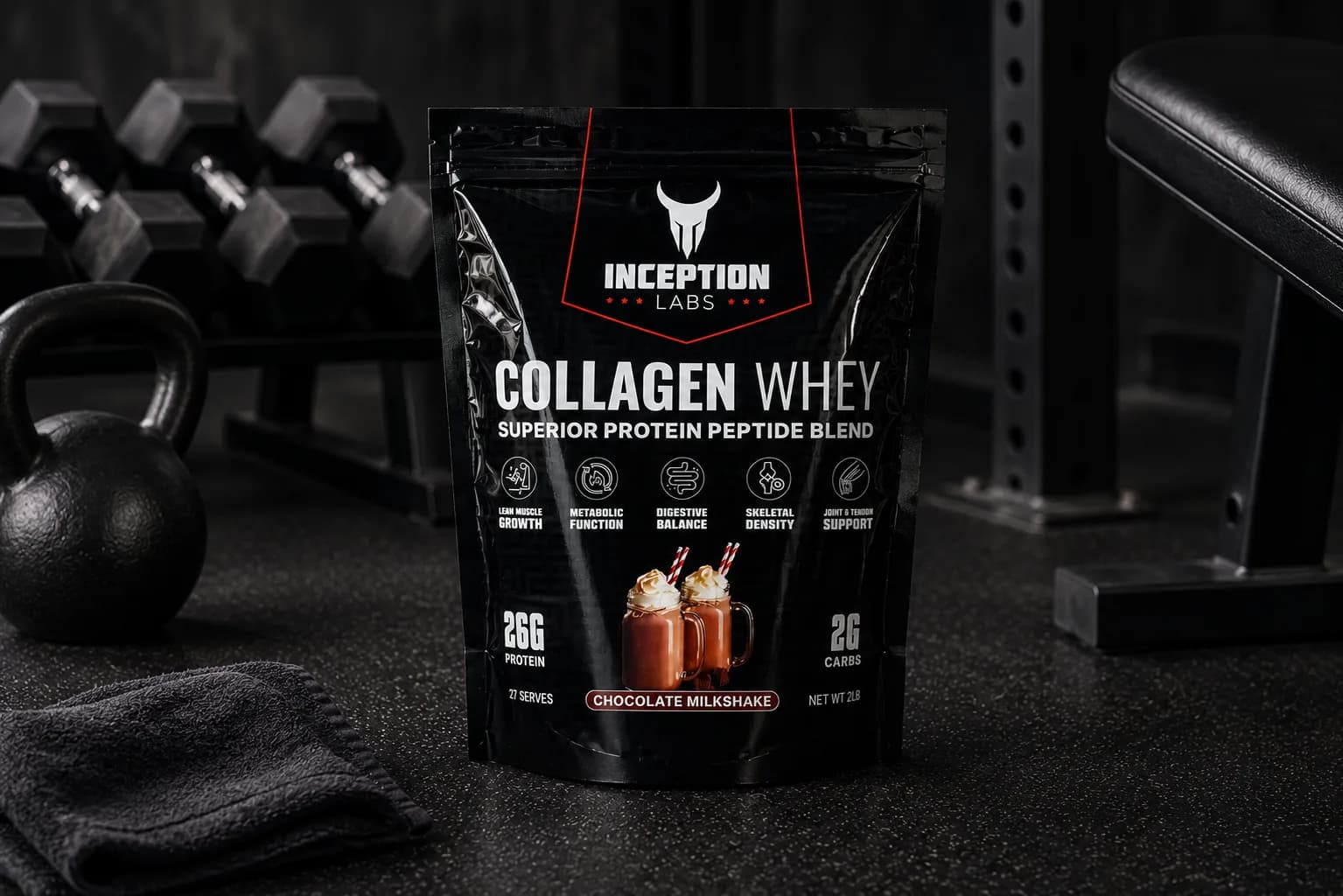
Inception Labs Collagen Whey Protein
The Inception Labs Collagen Whey Protein is a dual-action protein for active individuals who want more than muscle protein synthesis support.
The formula combines whey protein isolate with bovine collagen. Whey isolate provides high leucine content and fast absorption ideal for post-training MPS. Bovine collagen provides glycine, proline and hydroxyproline, the amino acids needed for connective tissue repair in tendons, ligaments and cartilage.
Most protein supplements target muscle exclusively. If you are training with significant mechanical load on your joints, particularly if you are over 35 or managing previous injuries, the connective tissue component is worth considering alongside the muscle angle.
Members get up to 40% off Inception Labs products at the on-site Supplement Solutions store. View all Inception Labs products and member pricing.
Special considerations
Protein during fat loss
During a caloric deficit, protein needs go up, not down. The body is more likely to break down muscle tissue for energy when total calories are restricted. Higher protein intake acts as a protective signal, preserving lean mass while fat loss occurs.
During a cutting phase, targeting the upper end of the 1.6 to 2.2g/kg range (or slightly above, up to 2.4-2.6g/kg) is a defensible strategy for minimising muscle loss.
Protein for older adults
MPS response to a given protein dose decreases with age, called anabolic resistance. Older adults (generally 50+) need more protein per meal to achieve the same MPS response as younger adults. Target 0.4 to 0.5g/kg per meal rather than 0.3 to 0.4g/kg.
This is one reason training after 40 needs more deliberate attention to protein intake.
Plant-based diets
It is possible to hit protein targets on a plant-based diet, but it needs more deliberate planning. The lower leucine content of most plant proteins means either total intake needs to be higher (closer to 2.4g/kg or above) or sources need to be selected for leucine content. Soy, pea protein and hemp are the most complete plant protein sources.
Combining complementary protein sources across meals covers essential amino acids. A plant-based athlete not tracking carefully is at higher risk of undershooting protein than an omnivore.
Practical steps to increase intake
If you are well below the recommended range, getting there does not require overhauling everything.
Anchor every meal around a protein source. Decide on the protein first, then build the rest of the meal around it.
Front-load protein earlier in the day. Breakfast is the meal where protein intake most often falls short. A high-protein breakfast (eggs, Greek yoghurt, cottage cheese, a morning shake) sets a better trajectory than a carb-only meal.
Add protein to existing habits. Greek yoghurt in your morning routine. A protein shake post-training. An extra chicken breast added to an existing meal. Incremental additions accumulate without requiring a complete diet redesign.
Track for two weeks. Logging your intake in an app like Cronometer for two weeks reveals where your protein actually lands. Most people doing this for the first time find the gap between assumed and actual intake surprising.
A personalised plan
Individual protein needs vary based on training volume, goals, body composition, age and other factors. A personalised protocol built around your body scan data will outperform a generic recommendation.
Inception Nutrition provides PhD-led nutrition coaching that works from your body composition scan data to build a plan, including protein targets, meal timing and supplement recommendations.
Hit your target, distribute it across the day, prioritise quality sources, and use supplements where they genuinely solve a convenience or volume problem.
---
Inception Labs supplements, including the Collagen Whey Protein range, are available on-site at the Inception Gym Supplement Solutions store at member pricing. Tower Junction, 65 Blenheim Road, Addington, Christchurch.