Equipment · Legs
The RDL Machine: Building Hamstrings and Posterior Chain Strength
The RDL machine trains hamstrings and glutes through a full hip hinge with stability advantages over barbells. Learn technique, programming, and why it belongs in your leg routine.
By Inception Gym · 4 April 2026
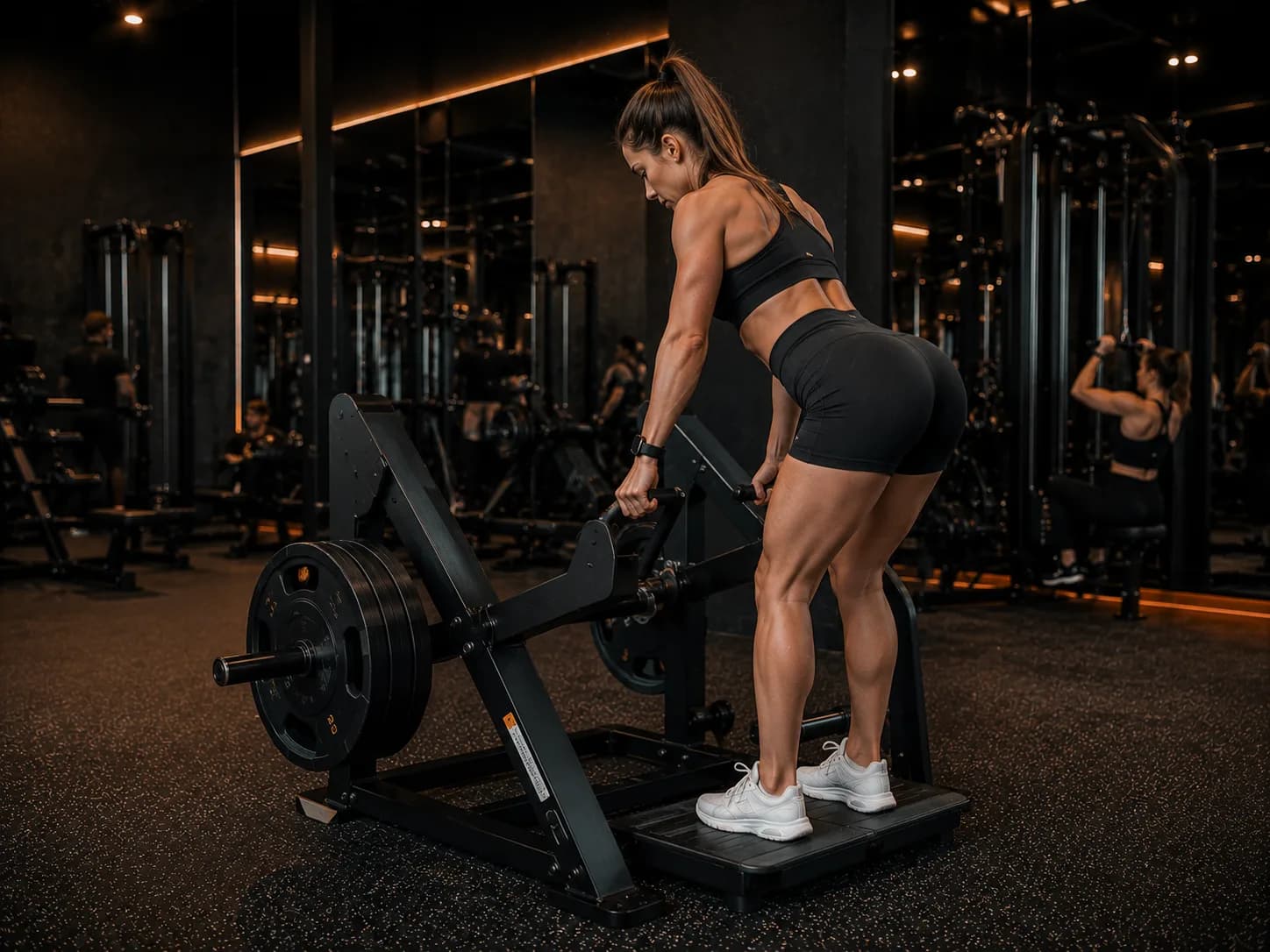
The Romanian deadlift is one of the most important exercises in any lower body programme. It develops the hamstrings through their full active range, strengthens the glutes, challenges the erector spinae under loaded hip flexion, and builds posterior chain strength that transfers to athletic performance and injury prevention.
The RDL machine brings these benefits into a format that removes the technical barriers of barbell work, allows precise loading for progressive overload, and makes the hip hinge accessible to a wider range of trainees. This guide covers what the RDL targets, how the machine differs from barbell work, technique cues, and how to programme posterior chain development.
What the Romanian deadlift trains
The RDL is a hip hinge movement. The hip flexes while the spine stays neutral, creating a stretch through the posterior chain. Unlike a conventional deadlift, which starts from the floor with the weight resting between reps, the RDL keeps continuous tension on the posterior chain throughout the set, with range of motion determined by hamstring flexibility rather than floor contact.
The primary muscles
Hamstrings (biceps femoris, semimembranosus, semitendinosus): the primary movers. They work eccentrically as the hips hinge and concentrically as the hips extend back to the standing position. The unique value of the RDL is that it loads the hamstrings in their lengthened state, with maximum stretch at the bottom of the movement. Loading in the stretched position produces a strong growth stimulus, which makes the RDL one of the most effective hamstring exercises available.
Gluteus maximus: the glutes assist with hip extension throughout the movement and are particularly active as the hips drive through to full extension at the top. The RDL is not primarily a glute exercise, but it provides meaningful glute stimulus.
Erector spinae: the lower back extensors work isometrically throughout the RDL to maintain the neutral spine position under load. That isometric demand builds spinal stability and erector endurance without the compressive stress of loaded spinal flexion.
Adductors: the inner thigh muscles also contribute to hip extension in the RDL, particularly in the lower portion of the movement when the hips are deeply flexed.
Why hamstring training matters
Hamstrings are among the most commonly injured muscles in sport. Most hamstring strains occur during high-speed movements when the hamstring is lengthening under load, the same eccentric demand the RDL creates in a controlled, progressive setting.
Consistent RDL training builds hamstring strength through the lengthened range, improving both the tissue's capacity to handle eccentric loading and the neuromuscular coordination that protects the muscle. For athletes in Christchurch training for rugby, football, netball or any sport involving sprinting, that is injury prevention that transfers to on-field performance.
For non-athletes, strong hamstrings and a robust posterior chain support healthy low back function and the capacity to maintain active daily living as you age.
Barbell RDL vs RDL machine
Both develop the posterior chain. The differences are practical.
Barbell Romanian deadlift
The classic version. A barbell loaded with plates is held in front of the thighs with an overhand grip. The hips hinge backward as the bar travels down the front of the legs, staying in close contact with the body throughout.
The barbell RDL requires grip strength, thoracic extension awareness and a degree of comfort with free weight loading that takes time to develop. Technique errors (bar drifting away from the legs, thoracic rounding, loss of pelvic neutral) reduce both the training stimulus and the safety of the exercise. For novice and intermediate lifters, developing solid barbell RDL technique typically takes several months of deliberate practice.
At very heavy loads, grip failure becomes a limiting factor. Straps resolve this, but they add equipment and setup time.
RDL machine
A dedicated RDL machine uses a fixed resistance arm or lever that guides the loading vector and removes the balance, grip and bar path variables. The trainee can focus on the hip hinge and posterior chain engagement without managing multiple variables at once.
For newer gym-goers, the machine allows appropriate posterior chain loading from the first session. For experienced lifters, it offers a way to fatigue the hamstrings and glutes with heavy loading without the grip or technique constraints of a barbell, useful for later-session accessory work.
The RDL machine also allows unilateral variations. Single-leg RDL machine work is one of the most effective ways to address hamstring asymmetries, which are common and often implicated in injury patterns.
Technique
The hip hinge is a fundamental movement pattern. Getting it right on the machine establishes the motor pattern that transfers to barbell RDLs, good mornings, kettlebell swings and any exercise that requires hip flexion under load.
Setting up
Position yourself according to the machine's design, with the resistance arm or pad sitting across your hips in the standing position. Feet hip-width apart with a slight bend in the knees, a soft lock rather than a fully straight knee.
The starting position should have your hips directly under your shoulders with a neutral lumbar curve. Brace the core gently, taking a breath and creating intra-abdominal pressure.
The descent
Initiate the movement by pushing your hips backward, not by bending the knees forward or rounding the spine. Think of closing a car door with your backside. The hips travel rearward as the chest descends and the torso becomes more horizontal.
The spine stays neutral throughout. A common error is letting the lower back round at the bottom, which shifts load from the hamstrings to the spine. If you cannot lower to a position where the torso is roughly parallel to the floor without rounding, work within a shorter range of motion until hamstring flexibility improves.
The descent should feel like a progressive stretch building through the hamstrings. If you feel nothing in the hamstrings, the hinge is not being executed correctly: likely the hips are not pushing far enough back, or the knees are bending too much.
The ascent
Drive through the heels and squeeze the glutes as you extend the hips back to the standing position. The hips and chest should rise at the same rate. Do not shoot the hips up first and then extend the back; that overloads the erectors.
At the top, drive the hips fully forward to complete hip extension. A slight glute squeeze at the top reinforces the movement pattern.
Range of motion
Take the working range to the point where the hamstrings are fully stretched (or to the machine's range limit), while maintaining a neutral spine. That is typically somewhere between the torso being 45 to 90 degrees from vertical, depending on hamstring flexibility.
Do not force range. Hamstring flexibility develops progressively with consistent training.
Programming
Frequency and volume
The posterior chain tolerates moderate training frequency. Two sessions per week of direct posterior chain work is a sound baseline for most intermediates.
The RDL machine works as a primary posterior chain exercise (first or second in a lower body session) or as an accessory after heavier compound work.
As a primary exercise: 4 sets of 8-10 reps with a 3-second eccentric. Focus on maximising the stretch at the bottom and full hip extension at the top.
As accessory work: 3 sets of 12-15 reps at moderate load, with emphasis on the mind-muscle connection.
Pairing with other posterior chain exercises
Leg curl machine (lying or seated): the leg curl trains hamstrings through knee flexion, the RDL through hip extension. Training both patterns in the same session produces more complete hamstring development.
Hip thrust machine: as discussed in the hip thrust guide, hip thrusts complement the RDL by loading the glutes more heavily in the extended position.
Good mornings or back extensions: share the hip hinge pattern and erector demand with the RDL and can be used as variations or progressions.
Progressive overload
Track your RDL machine weights and reps. When you can complete the top end of your rep range across all sets with full range of motion and a controlled eccentric, increase load by the smallest available increment.
On many machines that will be 2.5 to 5kg per side. Small consistent increases compound into meaningful posterior chain strength over months.
Recovery and nutrition
Heavy RDL work with eccentric emphasis produces significant muscle damage and soreness in the days following a hard session. That is normal, but recovery nutrition is essential.
Protein supports the muscle protein synthesis needed for hamstring and glute development. Total calories need to support the repair and growth process. If you are training hard and not seeing the posterior chain development you expect, nutrition is often the limiting variable.
Inception Nutrition provides PhD-led nutrition coaching built around your training programme and body composition data. The complimentary body scans available to all members give you measurable data on lean mass changes over time.
For supplementation, creatine monohydrate has strong evidence for strength and power output across hip hinge movements. Inception Labs Creatine, available at the on-site Supplement Solutions store, uses Creapure-sourced creatine monohydrate at clinical dosing, at member pricing.
A non-negotiable for serious training
The RDL, machine or barbell, belongs in any lower body programme. The hamstrings are too important for performance and injury prevention to be addressed only through squat patterns and leg curls. The hip hinge under load, performed consistently with progressive overload, is one of the highest-impact investments in posterior chain strength.
The RDL machine at Inception Gym makes the movement accessible and loadable from day one, regardless of barbell experience.
---
The RDL machine is one of the 71 machine variants at Inception Gym Christchurch. [View the full equipment list](/facilities/equipment) or [book a free 24-hour trial](/memberships/free-trial).