Lifestyle · Culture
Gym etiquette: the unwritten rules every member should know
Gym etiquette covers the unwritten rules that make training better for everyone. From re-racking weights to hygiene, what every gym member should know.
By Inception Gym · 26 July 2025
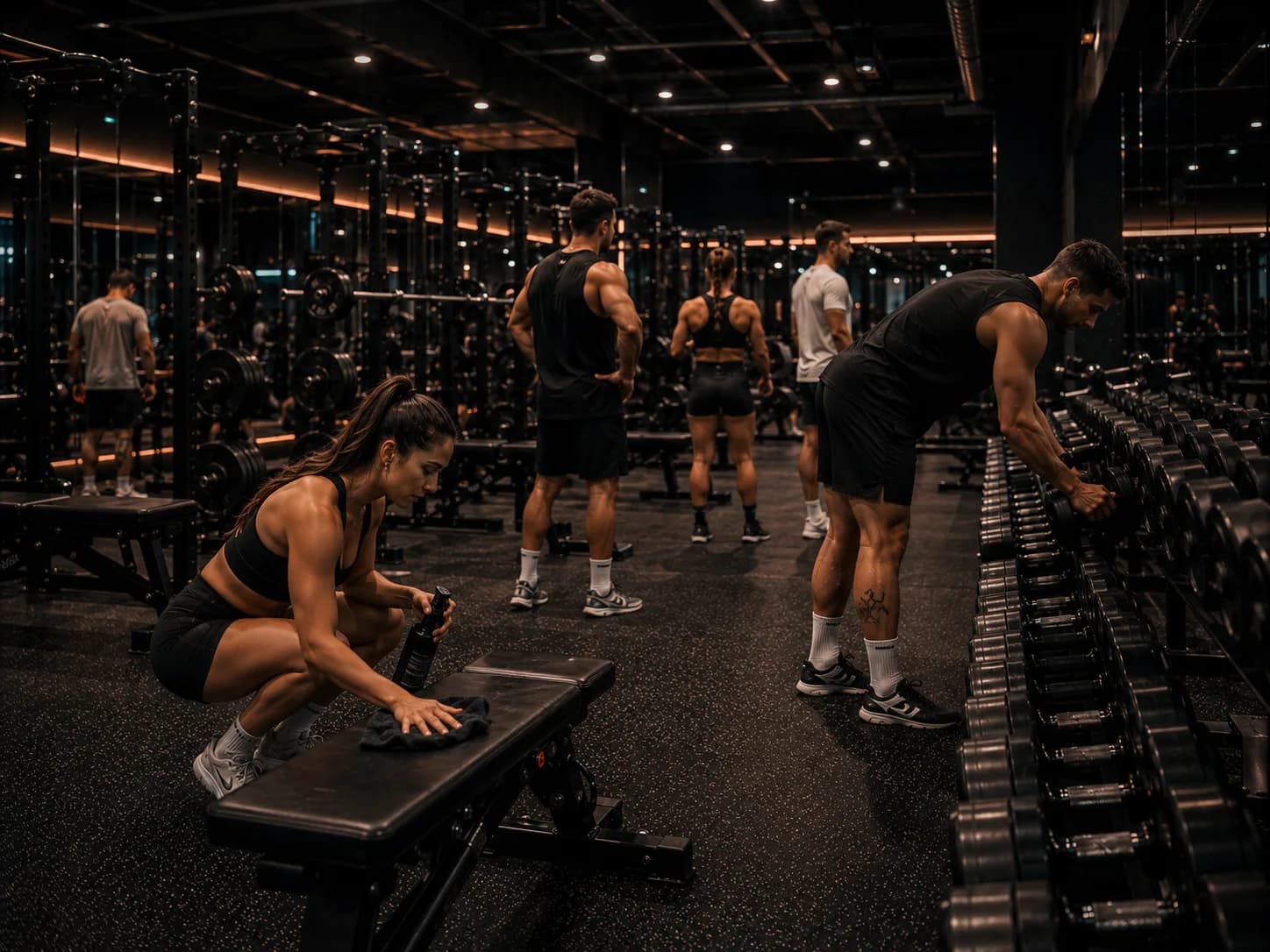
Every gym has its written rules, usually posted on the wall or in the membership agreement. Then there are the unwritten rules, the ones experienced gym-goers know intuitively but nobody formally teaches. These are the behaviours that make a gym either a pleasure to train in or a frustrating, inconsiderate environment.
At Inception Gym, the professional and welcoming culture is one of the things members mention most often across the gym's 1,078 Google reviews. That culture doesn't maintain itself. It's built and sustained by the shared behaviour of everyone who trains here. This guide covers gym etiquette: what to do, what not to do, and why it matters.
Why etiquette matters
A gym is a shared space. Unlike training at home, your actions directly affect the experience of everyone around you. The person who leaves plates on the bar inconveniences the next lifter. The person who monopolises equipment while checking their phone creates artificial queues. The person who skips re-racking turns a well-organised facility into an obstacle course.
Good etiquette isn't about following arbitrary rules for their own sake. It's about mutual respect: acknowledging you share the space with people who have the same right to a quality training experience as you.
When everyone observes basic etiquette, the gym runs smoothly, people train better, and the culture stays positive. When it breaks down, even a small number of inconsiderate members can make the environment unpleasant for everyone.
The core rules
Re-rack your weights
The single most important etiquette rule in any gym, and the one most commonly violated. When you've finished using dumbbells, plates, or any weighted equipment, return them to their designated position.
This means:
- Dumbbells back on the rack in ascending size order
- Plates removed from barbells and returned to storage
- Weight stacks on machines set back to a neutral position (or at least to a reasonable default weight)
- Kettlebells, resistance bands, and other portable equipment returned to their designated storage spots
The logic is simple. If you were strong enough to use it, you're strong enough to put it back. Leaving weights strewn around the gym floor is a safety hazard, an inconvenience to other members, and disrespectful to the facility.
Wipe down equipment after use
Sweat is unavoidable in a gym. Leaving it on equipment isn't. After using any machine, bench, or pad, wipe it down with the antibacterial spray and cloths provided. Not optional.
The areas most commonly missed:
- The neck support and headrest of benches
- The seat and back pad of cable machines
- Cardio machine handles and display screens
- The floor or mat area where you were lying
It's a hygiene issue as well as a courtesy issue. Skin infections, including MRSA, can spread through shared gym surfaces. Wiping down equipment protects you as much as the next person.
Give people space when they're lifting
When someone is in the middle of a set, don't walk through their line of sight, reach past them for equipment, or start a conversation. The set takes under a minute. Wait.
That applies particularly to heavy lifting. A maximum effort squat or deadlift requires complete concentration. Interrupting someone's focus in a moment like that is genuinely dangerous. If you need a barbell or dumbbell that's near someone actively lifting, wait until their set is done and make eye contact or give them a moment to acknowledge you before reaching in.
Ask before working in
If someone is using a piece of equipment you need, you have two polite options: wait, or ask to work in. Working in means sharing the equipment during their rest periods. "Do you mind if I work in" is a normal, acceptable question in any gym.
Most gym-goers will happily share if asked directly and politely. What's not acceptable is taking equipment without asking, adjusting another person's settings without permission, or hovering impatiently in a way that pressures someone to rush their rest.
Phone courtesy
Using your phone for music, tracking workouts, or checking your programme is normal. However:
- Don't sit on equipment scrolling while others are waiting
- Keep calls brief and your voice low; not everyone wants to hear your conversation
- Don't film others without their knowledge or consent
- Keep video calls off the gym floor
General principle: your phone use shouldn't extend into another person's space or hold up their session.
Respect the mirror
Gym mirrors exist for form checking, not selfies during busy periods when others are waiting. They're practical training tools, particularly for exercises where you need visual feedback on technique. Don't stand directly between someone and a mirror when they're actively using it for technique feedback.
Cardio machine time limits
During busy periods, many gyms post time limits on cardio equipment. Observe them. If someone is waiting for a treadmill or bike and the machine has a posted limit, honour it. If the gym is quiet, use your common sense.
Loading etiquette on barbells
When using a barbell in a rack that others may want to use:
- Use the lightest barbell that suits your purpose; don't monopolise a specialist bar if a standard bar will do
- Strip all plates when you're done, regardless of how long you were using it
- Don't occupy a squat rack for exercises that don't require it (barbell curls in the squat rack is the classic example; use a free barbell or dumbbell alternative instead)
Hygiene beyond equipment wiping
Come to the gym clean. Sounds obvious, but there are a small number of people who arrive in a state that makes training next to them unpleasant. Similarly, be aware of strong cologne or perfume. In an enclosed gym environment with elevated breathing rates, strong fragrances can genuinely affect other members with sensitivities or asthma.
If you have a skin condition that produces open wounds, cover them. If you're visibly unwell, stay home. The gym will be there when you've recovered.
How to handle uncomfortable situations
What do you do when someone isn't observing basic etiquette? It's awkward, and the right approach depends on the situation.
For minor issues (someone not re-racking). Politely mention it. Most people simply didn't think about it or are new to the gym. "Hey, just a heads up, would you mind putting those back when you're done" is reasonable in a friendly tone.
For safety issues (someone using unsafe technique near you). If it directly affects your safety, a quiet word is appropriate. If it's only their own safety at risk and they aren't interfering with your space, it's generally not your place to correct another adult's training method unsolicited.
For persistent or serious issues. Speak to the gym staff. That's what they're there for. Inception is owner-operated, so that kind of feedback reaches the people who can actually act on it, whether you raise it during staffed hours or send it through directly.
Inception Gym's culture
The 5.0 rating Inception Gym holds across 1,078 Google reviews isn't only about equipment and facilities. It reflects the culture of the membership.
The clientele skews toward working professionals who train during weekday business hours, people who take their health seriously, value their time, and behave like adults in a shared space. The culture is professional and welcoming without being cliquey or intimidating.
Worth actively preserving. Every new member who joins and observes good etiquette contributes to that culture. Every member who ignores it chips away at it.
If you're new to Inception and feel uncertain about any of the above, don't be anxious about it. Genuinely asking "is this the right way to do this" or "do you mind if I use this" is always the right instinct. The people here are approachable, and staff are on hand during staffed hours to answer questions without judgment.
For a broader look at what to expect as a new member, see the first day at Inception Gym guide. For more on the culture that makes Inception different, see building community, not just a gym.
A note on advice-giving
One final etiquette point for more experienced lifters: unsolicited training advice is rarely welcome.
Unless someone is doing something actively dangerous, or has specifically asked for feedback, keep your technical opinions to yourself. Everyone is at a different stage, and what looks "wrong" to you may be intentional, may suit their specific goals or physical limitations, or may simply be a different approach than yours.
If you genuinely want to help a newer member, offering to share equipment or pointing them in the direction of a staff member or the PT team is far more useful than unsolicited form corrections.
For structured guidance, Inception's personal training team is the right resource. Contract members get a free initial PT consultation included with their membership. For nutrition and programme support, Inception Nutrition runs PhD-led coaching that provides the kind of personalised guidance that should come from qualified professionals, not gym-floor commentary.
The simple summary
Good gym etiquette comes down to one principle: be considerate of the people you share the space with. Put things back. Keep the equipment clean. Give people space when they need it. Ask before taking. Communicate briefly rather than quietly resent.
Observe these and you'll be the kind of member every gym needs more of. And you'll train in the kind of environment those standards collectively create.
See it for yourself. Start your free trial and train in a gym where those standards hold.