Nutrition · Diet
Gym nutrition basics: what to eat before, during, and after training
Practical gym nutrition guide covering pre, intra, and post workout eating. How to fuel your training for better performance and faster recovery.
By Inception Gym · 20 December 2025
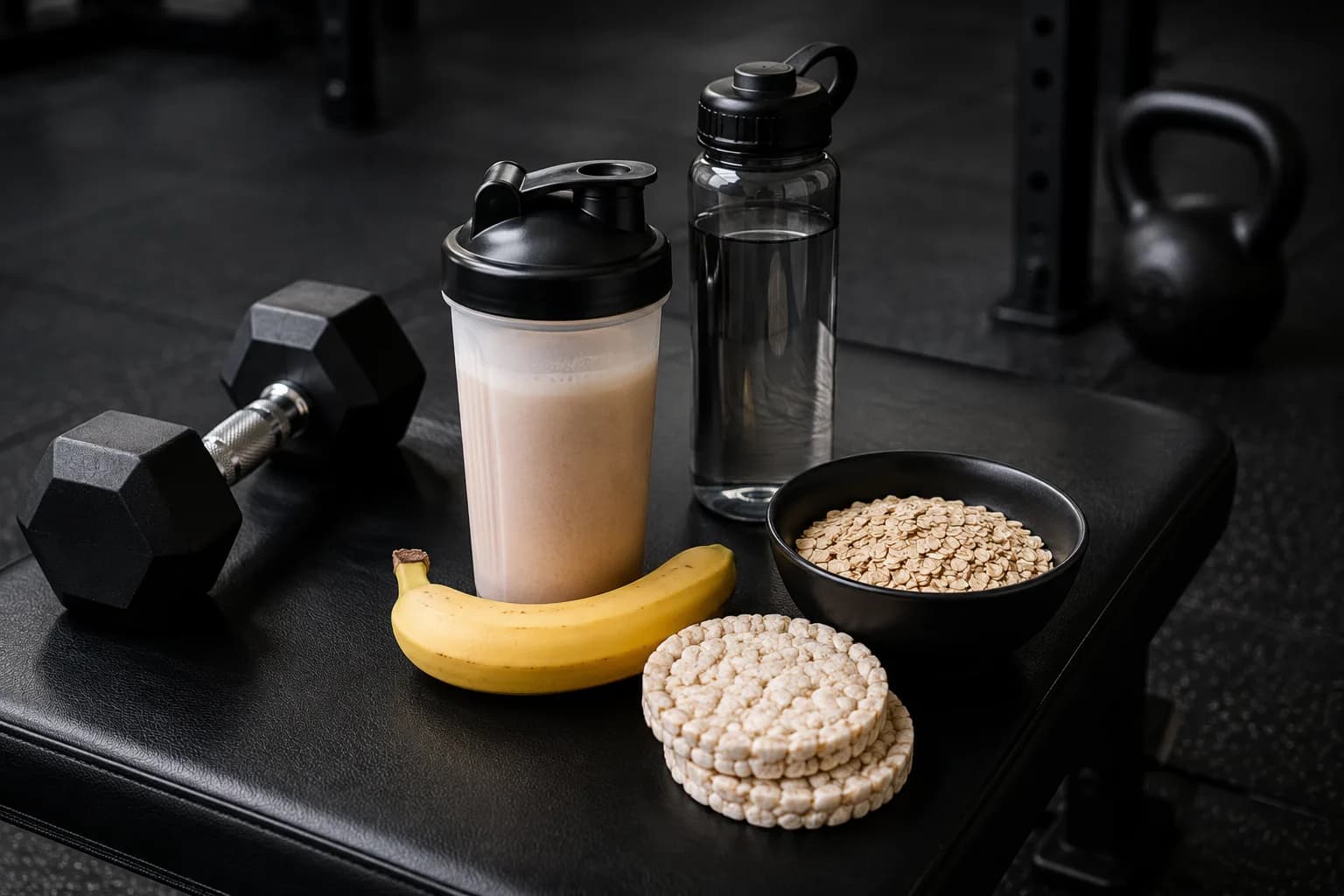
Training hard is only half the equation. What you eat before, during, and after your sessions determines how well your body performs, how quickly it recovers, and how effectively it adapts to the training you're doing. Getting gym nutrition right doesn't require a PhD in dietetics. It requires understanding a small number of principles and applying them consistently.
The short answer: eat a meal containing carbohydrate and protein 2 to 3 hours before training, drink water during a standard session, and get 20 to 40g of protein within 1 to 2 hours afterwards. Underneath all of it sits a daily protein target of 1.6 to 2.2g per kilogram of bodyweight and enough total calories to support your training.
This guide covers the fundamentals: what to eat around training, why timing matters, how macronutrients function, and how to fuel different training styles. At the end, we cover when the fundamentals aren't enough and what personalised nutrition support looks like for members who want to take things further.
The macronutrient foundation
Before timing, a quick note on the three macronutrients and their roles in training.
Protein: the building block
Protein is composed of amino acids, the raw material for muscle repair and growth. Every training session creates micro-damage in muscle tissue. The process of repairing it is what makes muscles stronger and larger over time. That process requires adequate protein.
The current evidence-based recommendation for people training regularly is 1.6 to 2.2 grams of protein per kilogram of bodyweight per day. For a 75kg person, that's 120 to 165g of protein daily. Most people eating a standard diet fall short of that without deliberate attention.
Good protein sources: chicken, beef, fish, eggs, dairy, legumes, and protein supplements where dietary intake is insufficient.
Carbohydrates: performance fuel
Carbohydrates are the primary fuel source for high-intensity training. During strength training and conditioning work above moderate intensity, your body relies predominantly on glycogen (stored carbohydrate) for energy. When glycogen stores are depleted, performance drops, fatigue increases, and the body begins breaking down muscle tissue for fuel.
Carbohydrate needs vary with training volume and intensity. Someone training four to five times per week at moderate to high intensity needs more carbohydrate than someone doing two lower-intensity sessions. Blanket carbohydrate restriction is one of the most common nutritional mistakes among gym-goers.
Fat: hormonal and sustained-energy functions
Dietary fat is essential for hormone production, including testosterone and oestrogen. It also supports fat-soluble vitamin absorption and provides a fuel source for lower-intensity, longer-duration activity. For gym-goers, the key is making sure fat intake isn't so restricted that it impairs hormonal function or creates a calorie deficit that undermines recovery.
Healthy fat sources: olive oil, avocado, nuts, fatty fish, eggs.
Pre-workout nutrition
What you eat before training affects performance more directly than any other nutritional variable. The goal of a pre-workout meal is to arrive at your session with available energy (glycogen) and amino acids circulating in the bloodstream, without digestive discomfort.
Timing
The ideal pre-workout meal sits 2 to 3 hours before training for a full meal, or 30 to 60 minutes before training for a smaller snack. That timing allows for partial digestion while keeping nutrients available during the session.
Composition
A pre-workout meal should contain:
- Carbohydrates. Primary fuel for the session. Moderate to high glycaemic options if training within an hour, lower glycaemic options if eating 2 to 3 hours before.
- Moderate protein. 20 to 40g to provide circulating amino acids.
- Low fat, low fibre. High fat and fibre slow gastric emptying and can cause digestive discomfort during training.
Practical examples.
| 2 to 3 hours before | 30 to 60 minutes before | |-----------------|---------------------| | Rice, chicken, and vegetables | Banana with a scoop of protein powder | | Pasta with lean mince | Rice cakes with peanut butter | | Oats with protein powder and fruit | Greek yoghurt with berries |
Pre-workout supplements
A quality pre-workout supplement like Inception Labs Valor provides energy, focus, and ergogenic support beyond what food alone delivers. The 350mg caffeine dose with Alpha GPC targets sustained performance and nootropic focus. Taking it 20 to 30 minutes before training, on top of a pre-workout meal, gives you both the substrate (food) and the stimulus (supplement) in place before you start.
The Inception Labs supplement range is available on-site at the Supplement Solutions store at Inception Gym, with member pricing up to 40% below retail.
Intra-workout nutrition
For most gym-goers doing sessions under 90 minutes, intra-workout nutrition (eating or supplementing during the session) isn't necessary. Water is enough. The exceptions where intra-workout nutrition matters:
- Sessions over 90 minutes at high intensity. Glycogen depletion becomes a real factor, and fast-absorbing carbohydrates (sports drinks, gels, bananas) can sustain performance in the back half of a long session.
- Training fasted in the early morning. If you're training first thing with no pre-workout meal, a small carbohydrate source during the session can prevent the drop in performance associated with low glycogen.
- Endurance athletes or concurrent training (lifting and cardio in one session). Higher carbohydrate demands during the session justify intra-workout nutrition.
For standard 45 to 75 minute strength sessions, focus on pre-workout nutrition and carry a water bottle. That covers most training scenarios.
Post-workout nutrition
The post-workout window has been mythologised in gym culture. The "anabolic window" (a 30-minute period after training where you must consume protein or miss out on all gains) is an oversimplification of the research.
What's accurate: muscle protein synthesis is elevated for several hours after training, and adequate protein intake during that period supports recovery and adaptation. The period is hours long, not a 30-minute emergency window.
What to prioritise post-workout
1. Protein. Non-negotiable. 20 to 40g of high-quality protein in the 1 to 2 hours after training drives muscle protein synthesis during the period when the muscle is most receptive. A protein shake is a convenient and effective option. Inception Labs Collagen Whey Protein is particularly well suited: it combines whey isolate (fast-absorbing, high in leucine) with bovine collagen peptides that support connective tissue repair, which is relevant after heavy training sessions.
2. Carbohydrates. Restoring glycogen after a session matters, particularly if you're training again within 24 hours. A post-workout meal containing carbohydrates alongside protein covers both recovery needs.
3. Hydration. Training causes fluid loss through sweat. Replacing it post-workout supports every physiological process involved in recovery, including protein synthesis.
Practical post-workout options
- Protein shake on the way out of the gym, followed by a full meal within 2 hours
- Chicken, rice, and vegetables as a complete post-workout meal
- Greek yoghurt with fruit and a handful of granola for a lighter option
Nutrition for different training styles
Strength training focus
Higher protein requirements, moderate to high carbohydrate to support training intensity, sufficient calories to support muscle growth. The goal: provide the raw materials for adaptation. Protein for muscle repair, carbohydrate for energy and glycogen replenishment, calories above maintenance if the goal is adding muscle.
Fat loss focus
A calorie deficit is required for fat loss, but the composition of that deficit matters. Keeping protein intake high (1.8 to 2.4g per kg) during a calorie deficit preserves lean mass. Insufficient protein during a deficit leads to muscle loss alongside fat loss, which is both counterproductive for body composition and metabolically disadvantageous long-term.
Keeping carbohydrates sufficient to support training performance matters even in a deficit. Cutting carbohydrates too aggressively tanks training quality, which reduces the stimulus for maintaining muscle.
Endurance training
Higher carbohydrate requirements than strength training. Training for events or sustained cardio performance needs substantial glycogen availability. Pre-loading with carbohydrates before longer sessions and restoring glycogen straight after is more critical for endurance athletes than for gym-focused lifters.
Common mistakes gym-goers make
Under-eating overall. Many people train hard but don't eat enough to support the metabolic demands. Chronic under-eating raises cortisol, impairs recovery, reduces training quality, and eventually produces a hormonal environment that resists body composition improvement.
Protein at one meal only. Protein synthesis is optimised by distributing protein intake across 3 to 5 meals rather than consuming most of it in one sitting. A post-workout shake doesn't compensate for insufficient protein across the rest of the day.
Ignoring carbohydrates out of fear. Carbohydrate phobia, driven by low-carb diet culture, leads many gym-goers to under-fuel their training. The result: reduced performance, increased fatigue, impaired recovery. Carbohydrates aren't the enemy. Poorly timed, excessive calorie intake is.
Relying on supplements without dietary foundations. Supplements work on top of good nutrition. Creatine, protein powder, and pre-workouts don't compensate for a diet that doesn't support training.
When to seek personalised support
The principles above are well-established and apply to the majority of people training at a standard gym intensity. Individual variation is significant. Factors that may require personalised adjustment include:
- Body composition goals that require precise calorie and macro tracking
- Specific medical conditions or dietary requirements
- Athletic performance goals where marginal gains matter
- Confusion about why standard approaches aren't producing expected results
Inception Nutrition runs PhD-led nutrition coaching that works from your body composition scan data (free to all Inception Gym members), your training demands, and your individual context. The combination of objective data from a body scan and personalised nutrition guidance produces significantly better outcomes than a generic approach.
If you're serious about your results, integrating professional nutrition coaching is the single highest-leverage action you can take outside the gym.
Getting started
The practical starting point:
- Eat a carbohydrate- and protein-rich meal 2 to 3 hours before training
- Have a protein source within 1 to 2 hours after training
- Make sure total daily protein hits 1.6 to 2.2g per kilogram of your bodyweight
- Eat enough total calories to support your training demand
Apply those four principles consistently for 8 to 12 weeks before evaluating results. The fundamentals, applied consistently, produce the majority of available gains.
For Inception Gym members, the on-site Supplement Solutions store has the Inception Labs range to support these nutritional goals, and contract membership options include a free initial consultation where you can discuss both training and nutrition approaches to get started on the right foot.
Nutrition isn't complicated when you know the principles. Apply them, be consistent, and the results will follow.