Lifestyle · Culture
Overcoming gym anxiety: a practical guide for new and returning members
Gym anxiety is real and common. Practical strategies for walking in confidently, and why Inception Gym's culture makes it easier than most.
By Inception Gym · 18 October 2025
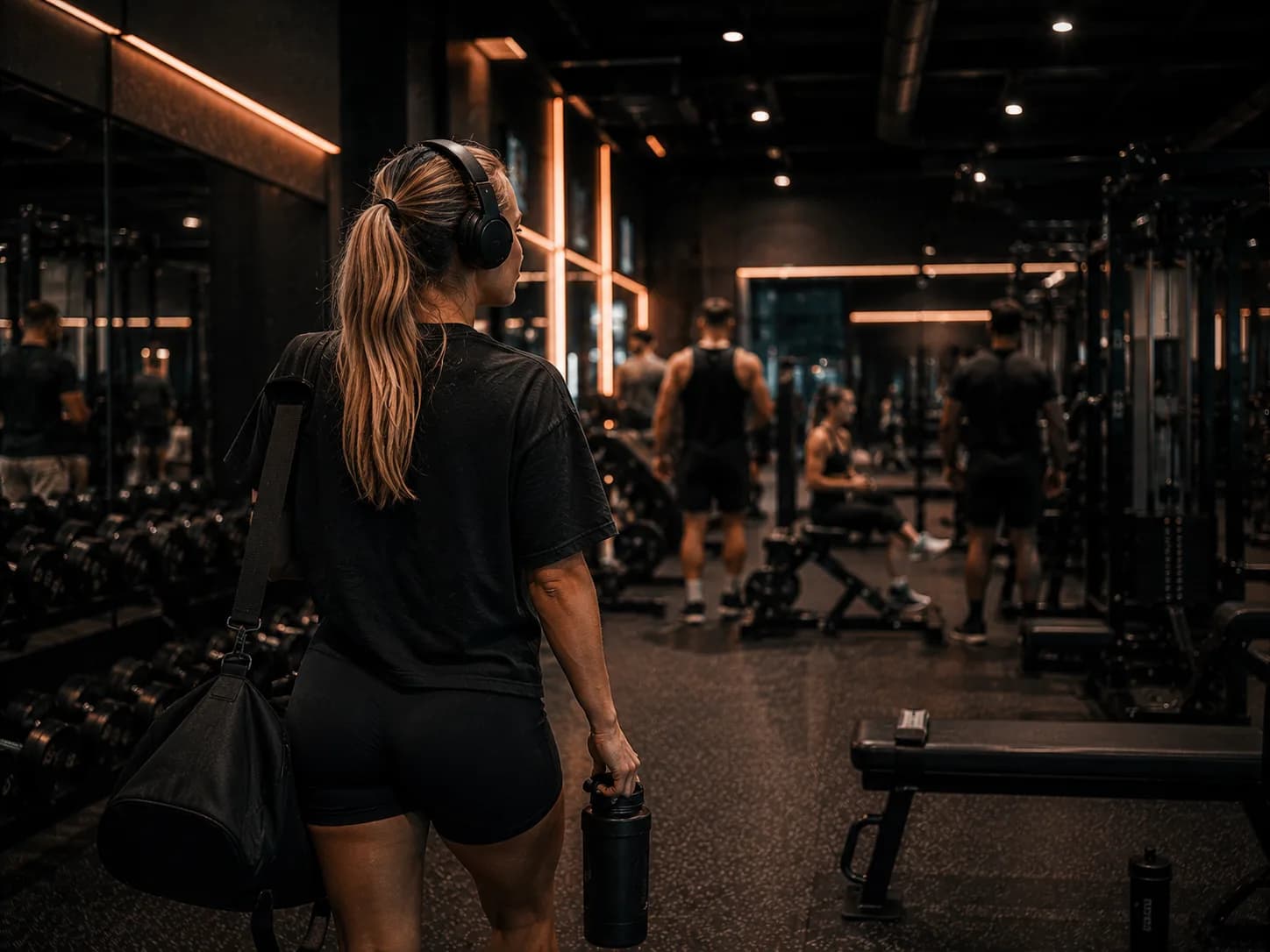
Feeling anxious before walking into a gym for the first time, or returning after a long break, is one of the most common experiences in fitness. Research suggests gym-related anxiety affects a majority of new members to some degree. Knowing that doesn't automatically fix the feeling, but it means there's nothing unusual about experiencing it.
The short answer: gym anxiety fades with familiarity, and you can speed that up. Arrive with a written plan, treat the first visit as reconnaissance rather than a workout, train at quieter times, and pick a gym whose culture works in your favour. This guide covers the most common sources of gym anxiety, practical strategies for each, and why the culture at Inception Gym Christchurch makes it an easier place to start than many alternatives.
Where gym anxiety comes from
Understanding the source is the first step. Gym anxiety usually clusters around three distinct fears.
Fear of not knowing what to do
The most commonly reported anxiety is simply not knowing how the gym works. Which machines do what. How do you use equipment you've never seen. What's the unwritten etiquette. Where do you put things. How long is a reasonable amount of time to spend on a machine.
That's a rational concern. Gyms have equipment with no obvious instructions, social norms that are rarely stated, and an assumption of prior knowledge new members aren't supposed to have. The anxiety isn't irrational; it's the natural response to being in an unfamiliar environment with unclear rules.
Fear of being judged
The second cluster is being watched and evaluated, whether for physical appearance, fitness level, technique, or ability to use equipment. This fear is particularly acute for people who feel they aren't the "gym type," however they define that.
The evidence on whether this fear is accurate is reassuring. Research on the actual behaviour of experienced gym members shows they're predominantly focused on their own training, not observing or evaluating others. The internal self-consciousness of a new gym-goer rarely matches actual external judgment.
Knowing that intellectually doesn't always quieten the feeling. The anxiety is real even when the premise isn't.
Fear of doing something wrong or looking incompetent
A subset of both of the above. The specific worry about using equipment incorrectly, either causing injury or looking incompetent in the process. Reinforced by the fact that incorrect technique on some exercises does carry real injury risk, so the concern isn't entirely without basis.
Practical strategies that actually work
Arrive with a plan
Uncertainty fuels anxiety. Walking into a gym with no idea what you'll do creates maximum uncertainty and maximum anxiety. Walking in with a specific, written plan for the session removes most of that.
Your plan doesn't need to be sophisticated. "I'll start with the leg press, then the cable row, then the lat pulldown, then finish with the treadmill for 15 minutes" is enough. The specific exercises matter less than having a predetermined sequence that removes the "what do I do now" decision point.
Most beginners benefit from a simple, equipment-based programme of 3 to 5 exercises covering major movement patterns (push, pull, hip hinge, squat). You can put this together with a quick search for beginner gym programmes or, better, during an initial consultation with a trainer at the gym (included free on contract memberships).
Use your first visit as a familiarisation session
Give yourself permission for the first visit to be purely about learning the layout and getting comfortable with a few pieces of equipment, not about completing a full training session. Arrive, walk the floor, identify where things are, try two or three machines you already have some familiarity with, and leave.
That removes the pressure of a "proper session" from the first visit and replaces it with a low-stakes exploration goal. Most anxiety comes from high-stakes situations. Reframing the first visit as reconnaissance rather than performance lowers the perceived stakes significantly.
Ask for help
Every gym member was a beginner at some point. Every gym employee's job includes helping members use the facility. Asking staff for a brief orientation, or asking another member how to adjust a machine you can't figure out, isn't an imposition. It's the intended use of the resources available to you.
The concern about looking uninformed by asking questions is usually inverted from reality. Asking how to use a machine correctly signals that you care about doing things properly, which most experienced gym-goers respect rather than judge.
Train at off-peak times
If the anxiety is specifically about being observed in a crowded environment, training at off-peak times dramatically reduces that pressure. Early mornings (before 7am), mid-morning, and mid-afternoon sessions at most gyms are significantly quieter than the 6 to 8am and 5 to 7pm peak windows.
At Inception Gym, 24/7 access means you can choose any hour. Training at 9am, 2pm, or 8pm removes the crowded environment variable entirely for the first few weeks while you build familiarity and confidence.
Focus on process, not performance
A significant portion of gym anxiety comes from comparing yourself to others in the room, and measuring your session against an imagined standard. Shifting your attention from "how am I doing compared to everyone else here" to "am I completing the plan I came in with" removes the comparison dynamic.
Not a motivational platitude; a practical attentional strategy. Your eyes and your attention are things you can deliberately redirect. Focus on your breathing, your form, the weight you're lifting, and the next exercise on your list. When attention drifts to the room, bring it back to the task.
Why Inception Gym's culture makes a difference
Culture isn't something a gym can fully control, but it can be actively shaped by how the space is set up and how the people who run it behave. The 5.0 Google rating at Inception Gym, sustained across 1,078+ reviews, reflects something real about the experience members have here.
Reviews consistently mention the atmosphere, the cleanliness, the quality of the equipment, and the professional but welcoming environment. For someone managing gym anxiety, that social proof matters. That many people trained here and chose to leave a five-star review. Negative experiences are not hidden at that volume.
Owner-operated, not franchised
Inception Gym was founded in 2022 by Matt Walley, who holds a PhD, and Elise Walley, and they still run it directly. That changes the feel of the environment compared to the big franchise gyms, where the people making decisions about the space have never trained in it. Here, the layout, the equipment selection, and the way new members are welcomed all reflect choices made by owners whose names are on the business.
For new members, that means questions about training, nutrition, or simply getting started reach people who built the place, not a call centre.
No-judgment culture
The review data and the community at Inception Gym reflect a membership of working professionals, serious athletes, and dedicated recreational trainers focused on their own goals. The prevailing culture is one of shared commitment to improvement, not competition or judgment toward those at earlier stages.
That doesn't mean the gym is only for experienced lifters. The free trial, the free body composition scan for every member, and the initial consultation included with contract memberships are all designed to make the entry experience as supported as possible.
Professional rather than intimidating
Many commercial gyms have a social atmosphere that can feel cliquey or competitive, particularly for new members. Inception Gym's membership culture, shaped partly by time-of-day demographics (lots of professionals training during and around work hours), tends toward focused, purposeful training rather than social performance. That creates a less self-conscious environment for those who are new.
Use the free trial to test the waters
One of the most practical tools for managing gym anxiety is a free trial. Rather than committing to a membership before you know how the environment feels, a 24-hour free trial at Inception Gym lets you experience the facility, the culture, and the equipment without any financial or contractual pressure.
That changes the emotional context of the first visit completely. You're not deciding whether this is the gym for you. You're just seeing what it's like. No wrong answer, no commitment, no expectation. That reduction in stakes reliably reduces anxiety.
The free trial also includes a free body composition scan. Knowing your starting point in measurable terms, rather than relying on how you feel or how you look in a mirror, gives you objective data and a concrete baseline to work toward.
Building a support structure for long-term success
Gym anxiety typically diminishes with familiarity. Most people who persist through the first three to four weeks find the anxiety either disappears entirely or reduces to a manageable background level. Familiarity with the equipment, recognition from regular members and staff, and the accumulating confidence of consistent attendance all work together.
The key is getting through those first few weeks. The strategies above give you the tools. The culture at Inception Gym gives you a more supportive environment to apply them in.
For members who want nutrition support alongside training, Inception Nutrition runs PhD-led coaching built around your body composition data and training goals. A clear plan for both training and nutrition removes two major sources of uncertainty at once.
The first step
The anxiety you feel before walking into a gym for the first time is shared by most people who've done it. The experienced athletes you see on the gym floor felt it too. They got through it by doing the thing anyway, finding the anticipation was worse than the reality, and gradually building a relationship with the environment that made it feel normal.
You don't need to wait until you feel ready. That feeling rarely arrives on its own. The readiness comes from showing up, and the anxiety drops from there.
---
Take the lowest possible first step. [Book a free 24-hour trial](/memberships/free-trial) and experience Inception Gym Christchurch with no obligation or pressure. No commitment, no sign-up fee, just the gym.