Guides · Body Scans
Body composition tracking: real progress beyond the scale
The scale lies. Body composition scans show what's actually changing: fat, muscle, visceral fat. How to track real progress, read your results, and use the data to train and eat smarter. Free with every Inception Gym membership.
By Inception Gym · 2 August 2025
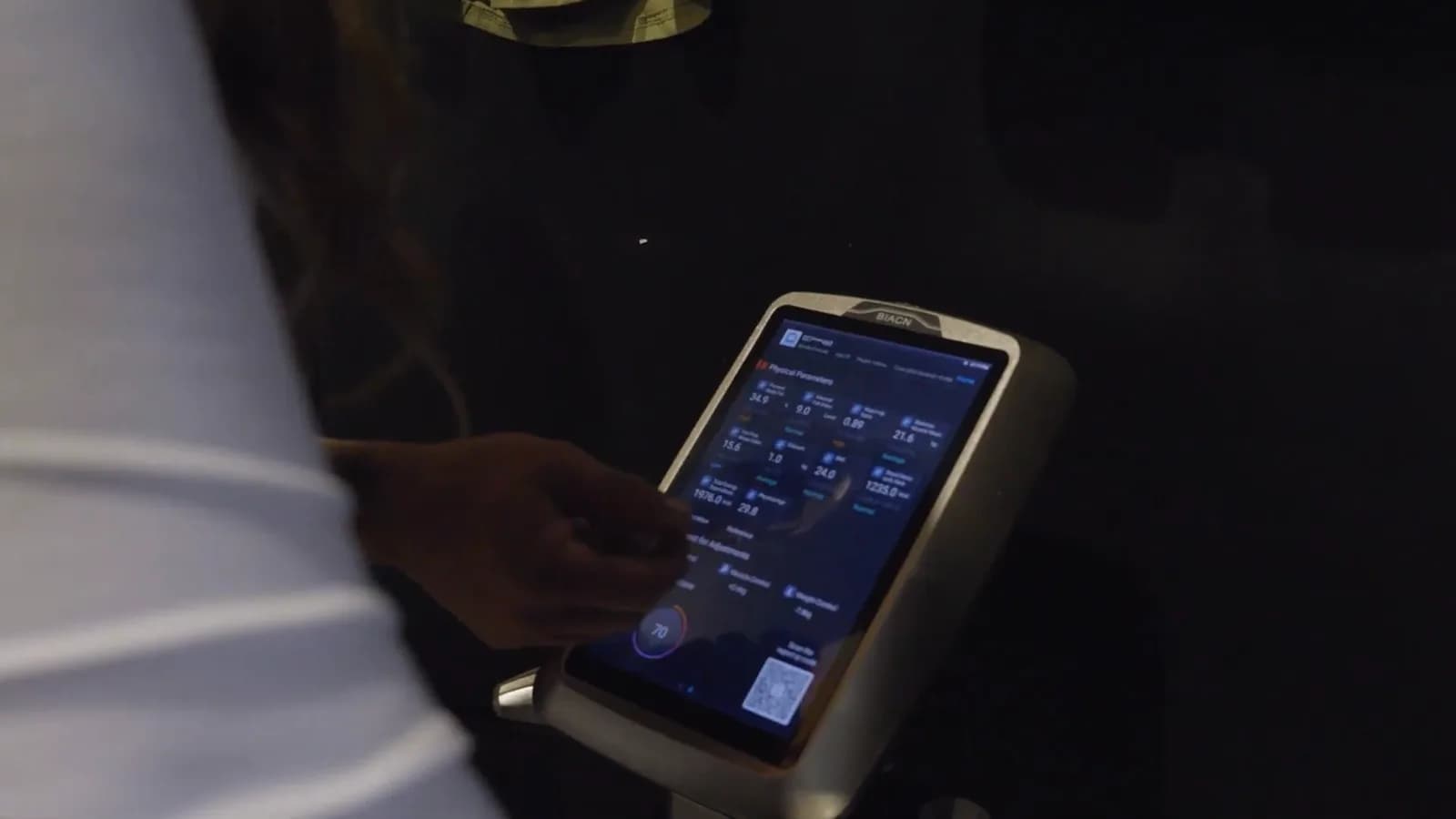
The bathroom scale is one of the most misleading tools in fitness. It measures one number, total body weight, and tells you nothing about what that weight is made of. Two people can weigh 80kg and look entirely different. One might carry 65kg of lean mass and 15kg of fat. The other might carry 55kg of lean mass and 25kg of fat. The scale treats them identically.
Worse, the scale can mislead you about whether your training is working. You can lose 2kg of fat and gain 2kg of muscle in the same month and see no change on the scale. Without a body composition scan, you might conclude a month of consistent training and disciplined eating produced nothing. In reality, it produced a significant change.
This guide covers what body composition tracking measures, why it matters more than weight alone, how to read your results, and how to use the data to make smarter training and nutrition decisions. If you train at Inception Gym, the tracking itself costs nothing: body composition scans are free for every member, on every plan.
What the scale measures and what it misses
Weight, as measured by a scale, is the sum of every component of your body: muscle, fat, bone, water, organs, everything. Changes in any of those affect the number.
That creates a measurement problem. In a given week your weight can swing by two or more kilograms from hydration alone. Glycogen storage, which fluctuates with carbohydrate intake and exercise, adds several hundred grams per unit of glycogen plus the water stored with it. A high-sodium meal causes water retention. A heavy training session depletes muscle glycogen and fluid, temporarily lowering weight in a way that has nothing to do with fat loss.
The information in a daily scale reading is so contaminated by these fluctuations that it can genuinely obscure meaningful trends. People who weigh themselves daily and see random variation often can't separate genuine fat loss or muscle gain from the noise.
More fundamentally, weight tells you nothing about the composition of what's changed. That matters because the goal of most people who train and manage diet is not to lose weight; it's to lose fat while preserving or gaining muscle. Those are distinct objectives the scale can't tell apart.
What a body composition scan actually measures
Body composition analysis, as run at Inception Gym, uses bioelectrical impedance analysis (BIA) to measure the different components of your body independently. A weak electrical signal passes through the body, and because different tissues conduct electricity differently (muscle has high water content and conducts well; fat conducts poorly), the measurement can separate them.
The key metrics.
Fat mass. The absolute weight of body fat. More informative than body fat percentage alone because it accounts for total body size.
Fat-free mass (lean mass). Everything that isn't fat: muscle, bone, organs, body water. Changes here mainly reflect changes in muscle.
Skeletal muscle mass. An estimate of skeletal muscle mass specifically, separate from other lean mass components.
Body fat percentage. The proportion of total weight that is fat. Useful as a normalised comparison point over time and against reference ranges.
Visceral fat. Fat stored around the abdominal organs, distinct from subcutaneous fat. Visceral fat is more metabolically active and more closely linked to metabolic disease risk. Particularly relevant for health-focused members.
Body water. Total body water. Useful for assessing hydration status and tracking acute fluid changes.
Segmental analysis (where available). Some BIA devices provide segmental readings, measuring the composition of individual limbs and trunk independently. Identifies significant muscle imbalances between sides or between upper and lower body.
Why this data changes training decisions
When you have consistent body composition data over time, a range of training and nutrition decisions become easier and more grounded.
Separating fat loss from muscle loss
The most important application. During a caloric deficit, the body can draw on both fat and muscle for energy. The goal is to lose fat while preserving muscle. A scale can't tell you which one's leaving. A body composition scan can.
If your scans show weight decreasing but lean mass holding steady (or increasing), you're getting the ideal outcome. If you're losing weight but lean mass is also declining, the scan tells you to act: increase protein intake, increase training stimulus, or reduce the caloric deficit. Without this data, muscle loss during dieting can continue undetected for months.
Tracking muscle gain in a surplus
During a building phase where you're eating above maintenance to support muscle development, some fat gain is inevitable. The question is whether the ratio of muscle to fat is acceptable, or whether surplus calories are mostly going to fat storage.
Scan data every four to six weeks during a building phase tells you whether the programme is working. If muscle mass is increasing meaningfully alongside modest fat gain, the approach is working. If fat is piling on with minimal lean mass increase, something in the training or nutrition needs to change.
Motivation through the noise
Body composition scan data gives you objective evidence of progress that the scale and mirror can't. If you're recomposing (losing fat and gaining muscle at the same time, slower than doing either alone but real, particularly in newer trainees), scans show progress is occurring even when your weight is unchanged.
That's strong motivation compared to relying on subjective appearance and a scale that moves randomly.
Health beyond aesthetics
For members who prioritise health and longevity over aesthetics, body composition data is clinically meaningful. Visceral fat levels, lean mass relative to body weight, and trends in fat mass over time are all relevant health markers. Maintaining muscle mass as you age is one of the strongest predictors of functional independence and health outcomes in later life.
Getting the most from your scans at Inception Gym
All Inception Gym members get free body composition scans. Using the benefit well requires consistent measurement conditions and a sensible scan frequency.
Consistency
Body composition scans, particularly BIA-based, are sensitive to hydration status, food intake, recent exercise, and time of day. To make measurements comparable over time, aim to measure:
- At the same time of day (morning, before food and water, is standard)
- In the same hydration state
- At least 12 hours after your last significant meal
- At least 24 hours after intense training
- Without diuretics (including large amounts of caffeine) in the preceding hours
You won't always hit all of these. The more consistent your conditions, the more meaningful your trends will be.
Frequency
For most people, scanning every four to eight weeks gives enough data to track progress and adjust, without generating unnecessary noise from short-term fluctuations. Weekly scanning tends to produce confusing variation that obscures the actual trend.
Suggested timing.
- Initial scan: at or before starting a new programme or phase
- Four to six weeks: first progress check, enough time for meaningful adaptation
- Three months: quarterly review, appropriate for assessing progress toward longer-term goals
- Six months and twelve months: major review points
If you're in a serious cutting or building phase, monthly scans are reasonable. In a maintenance phase or when progress is slower by design, every six to eight weeks is enough.
Reading your results: what to expect
Realistic expectations for body composition change rates help you interpret results without frustration.
Natural rates of fat loss. 0.5 to 1% of bodyweight per week is a sustainable rate for most people in a caloric deficit. Faster than that typically involves more muscle loss and metabolic adaptation.
Natural rates of muscle gain. For untrained individuals in their first year: up to 1kg per month for men, roughly 0.5kg per month for women is achievable. For trained individuals (2+ years of consistent training): significantly slower, around 0.5kg per month for men, 0.25kg for women. Rough upper ranges, not averages.
Recomposition. Simultaneous fat loss and muscle gain. Most pronounced in beginners and people returning after a break. Slower than focused cutting or building phases. Needs adequate protein and consistent training. Scan data matters here because weight may not change even while composition improves significantly.
Short-term fluctuations are normal. Even with consistent measurement conditions, scan-to-scan variability of one to two percent in body fat readings is common. Look at three to four month trends rather than single data points.
Using your data to adjust
The real value of scan data is not in the individual readings but in what they say about whether the current approach is working and how to adjust it.
If muscle mass is declining. Increase protein intake, check training volume is enough to give a muscle-preserving stimulus, and consider whether the caloric deficit is too aggressive.
If fat isn't decreasing despite a perceived deficit. Review actual calorie intake (most people underestimate), increase training volume or intensity, or check the deficit calculation. The scan data confirms or refutes whether the strategy is working.
If both muscle mass and fat mass are increasing at acceptable rates. You're on an effective building phase. Continue and rescan in six to eight weeks.
If nothing is changing. Usually means training, nutrition, or both are not at the required level. More often a nutrition problem than a training problem, particularly for body composition goals.
Bridge to personalised nutrition
Scan data tells you where you are. It doesn't automatically tell you what to eat or how to train to get where you want to go. That translation from data to protocol is where personalised nutrition coaching adds the most value.
Inception Nutrition runs PhD-led coaching that works directly from your body composition data. The approach is built around your specific numbers, your training context, and your goals, producing a nutrition protocol that is calibrated to you rather than to a generic model. The combination of objective scan data from Inception Gym and a structured plan from Inception Nutrition gives you both the measurement system and the action plan.
For members who've been training consistently but not seeing the results they expect, this combination frequently reveals training is fine but nutrition is the limiting factor; a conclusion generic advice can't reliably reach but scan data and expert analysis can.
The long view
A single body composition scan is useful. A series of scans over years is genuinely powerful. The ability to look back at your data across two or three years and see the arc of progress, understand how different training phases affected your composition, identify the periods when your approach was most effective, and use that to inform future decisions is one of the most valuable things a gym member can have.
This long-term perspective is one reason Inception Gym includes free scans for all members; not just a nice perk, but an investment in the quality of your decision making about training and health over time.
The scale isn't useless. But it's one data point. Body composition scanning gives you the full picture, and the full picture is what separates training that produces results from training that produces effort.
---
Free body composition scans are included with all memberships at Inception Gym, Tower Junction, 65 Blenheim Road, Addington, Christchurch. [Join now](/memberships/options) or [book a free trial](/memberships/free-trial) and get your baseline scan at no cost.